
1219

Posted 3 years ago

A trailblazing work on environmental issues, updated for the twenty-first century.
“Leiss weaves a complex and frequently scintillating theme that sometimes poses old questions in new ways and also raises new questions that might provoke a measure of lucidity in a discussion, now deeply obfuscated.” Richard J. Neuhaus, The Annals of the
American Academy.

Concern over ecological and environmental problems grows daily, and many believe
we’re at a critical tipping point. Scientists, social thinkers, public officials, and the
public recognise that failure to understand the destructive impact of industrial
society and advanced technologies on the delicate balance of organic life in the global
ecosystem will result in devastating problems for future generations.
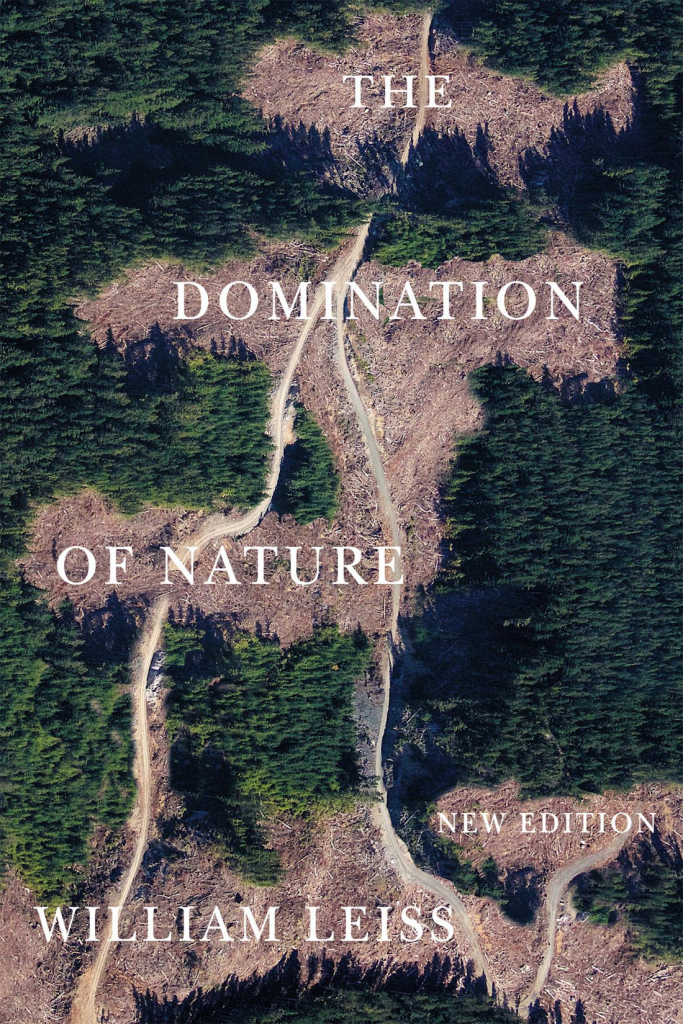

In The Domination of Nature William Leiss argues that this global predicament must be
understood in terms of deeply rooted attitudes towards nature. He traces the origins,
development, and social consequences of an idea whose imprint is everywhere in
modern thought: the idea of the domination of nature. In part 1 Leiss traces the idea
of the domination of nature from the Renaissance to the nineteenth century. Francis
Bacon’s seminal work provides the pivotal point for this discussion, and through an
original interpretation of Bacon’s thought, Leiss shows how momentous ambiguities
in the idea were incorporated into modern thought. By the beginning of the twentieth
century the concept had become firmly identified with scientific and technological
progress. This fact defines the task of part 2. Using important contributions by
European sociologists and philosophers, Leiss critically analyses the role of science and
technology in the modern world. In the concluding chapter he puts the idea of mastery
over nature into historical perspective and explores a new approach, based on the
possibilities of the liberation of nature.

Originally published in 1972, The Domination of Nature was part of the first wave of
widespread interest in environmental issues. In a new preface Leiss explores the
concept of eco-dominion and the moral obligations of human citizens of the twentyfirst
century.
William Leiss is a fellow and past president of the Royal Society of Canada, an officer of the Order of Canada, and professor
emeritus at the School of Policy Studies, Queen’s University. He is the author of several books, including Mad Cows and Mother’s
Milk: The Perils of Poor Risk Communication.

304 pp • 6 x 9 • April 2023 Environmental Studies • History of Ideas
ISBN 9780228017240 • Cloth $130.00 $91.00 CAD • $130.00 $91.00 USD • £110.00 £77.00
ISBN 9780228017257 • Paper $37.95 $26.57 CAD • $37.95 $26.57 USD • £32.99 £23.10

Use 30% discount code MQSP until 31 August 2023

Order online at www.mqup.ca (except UK & Europe) or directly with the distributor in your area
Canada UTP Distribution 1-800-565-9523 utpbooks@utpress.utoronto.ca
USA & Rest of World Chicago Distribution Center 1-800-621-2736 orders@press.uchicago.edu
UK & Europe Marston Book Services Ltd. +44 (0) 1235 465500 direct.orders@marston.co.uk

1344

Posted 3 years ago

Following World Earth Day, AGC take a dive into the world of sustainability, within the Interior Design Industry. AGC, Accouter Group of Companies, is Britain’s first B Corp interior design collective and sustainability is definitely on their radar, but they’re wondering if it is on everybody else’s. 22 million pieces of furniture are thrown away every year in the UK*. Shocking stats that made them think, “we can all do better”! 

What does it mean to be B Corp certified, on a macro level?

AGC have discovered that the industry has a long journey ahead with just a 1/3rd of the surveyed supply chain being actively sustainable with defined sustainability targets or a manifesto in place. That means that 2/3rds either have limited focus or are passively addressing the behaviours of their own manufacturing and supply chains. What’s even more interesting is that even those with sustainability targets issued, are only on the start of their journey and therefore they have probably still not made the changes that we need to see.


Being part of the B Corp movement, surrounded by a group of like-minded companies that are banging the same drum, will give AGC the strength and gravitas to be able to challenge the organisations within their own industry. 

How AGC is leading the change?
In the summer of 2021, AGC committed to their B Corp journey and 18 months later they are honored to be certified. Stella Gittins Co-Founder states:

“We are proud to be the first British Interior Design Collective to join this community of change-makers, alongside a global movement of people using their business as a force for good,” said Stella in a statement. “B Corp is a holistic approach for us. It shapes our culture and encourages us to acknowledge our business impact and act. Most importantly, it gives us a framework for continuous improvement, so that every day, we become a little bit prouder of what we do”. “We plan to prove that the breath-taking world of interiors can also be a beneficially breath-taking world” she finishes.

Working in the luxury sector, which is often negatively associated with over-consumption and a slight disregard for environmental impact, AGC wanted to set a better standard and encourage others to up their game too. They are proud to partner with Walpole and its members to work towards a shared ambition of creating a more sustainable industry for the top British Luxury Brands. You can read their aligned sustainability ambitions here

To demonstrate their commitment and belief in B Corp, they created a focused team internally to ensure that the improvements whey wished to make as a business are fully embedded into their culture. 

“We believe every initiative needs a passionate leader at the helm, which is why we elected Lauren Stoltzman, as our dedicated B-Keeper’’ Stella Gittins explains. Teamwork and collaboration was key when embarking on this journey. Lauren adds, “Our enthusiastic B Corp team worked together to identify all our processes to ensure we are practicing what we preach when it comes to responsible business practices. We now have a village of internal people rooting for change, which makes us a powerful force towards achieving better things as a business. We wanted to come together and step up, and we’re proud to have done exactly that”.  

They have also created internal DEI and Sustainability teams that meet regularly to ensure their improvements are forever evolving across their business. Their Head of DEI Veronica Martinis, explains “We are working to create a level playing field in our industry, and a workplace where everyone has equal opportunity, everyone has visibility and everyone has a voice, all barriers removed”. “We know there is more work to do in creating opportunity within our industry and that’s why our educational pledge is currently a huge focus. We will be out in the schools and career fayres and working with United in Design to encourage a conversation and communicate our message with authenticity” she finishes. 

Leading their Sustainability goals is the inspirational, Adele Bird. “In our business, there are so many ways we can embed environmental initiatives into our everyday processes. By identifying where we can do better, we have been able to not only change our own internal processes, but in doing so are able to influence our suppliers and industry partners to do the same, making these changes all the more powerful” Adele says.

A key part of their Sustainability Manifesto is to guide suppliers towards sustainable practices. Their Head of Buying and Procurement, Sabrina Mehra explains “All suppliers are now required to complete an environmental questionnaire to give us visibility of the current environmental performance of our supply chain and traceability of our products. With this information, we can start to collaborate as an industry and understand where we can assist and educate to make the most impactful environmental improvements”.

*North London Waste Authority, 2021.

What is next for AGC and the Industry?

The interior design industry has a responsibility to come together and be more sustainable with designers and suppliers taking steps towards creating eco-friendly spaces from the manufacturing stages. By incorporating sustainable materials, using renewable energy sources, and implementing eco-friendly practices, designers and suppliers can make a positive impact. It is important for the industry as a whole to embrace sustainable design as the norm, rather than a trend. 

As for AGC, this is not the end, in fact, becoming certified only marks the beginning of their journey. AGC have now commenced a comprehensive carbon audit of operations and with B Corp by their side, they will continue to better their practices and increase their score by reducing their impact, and further educate and inspire a global movement around them. 

Read their Responsibility Page to find out more about their mission.