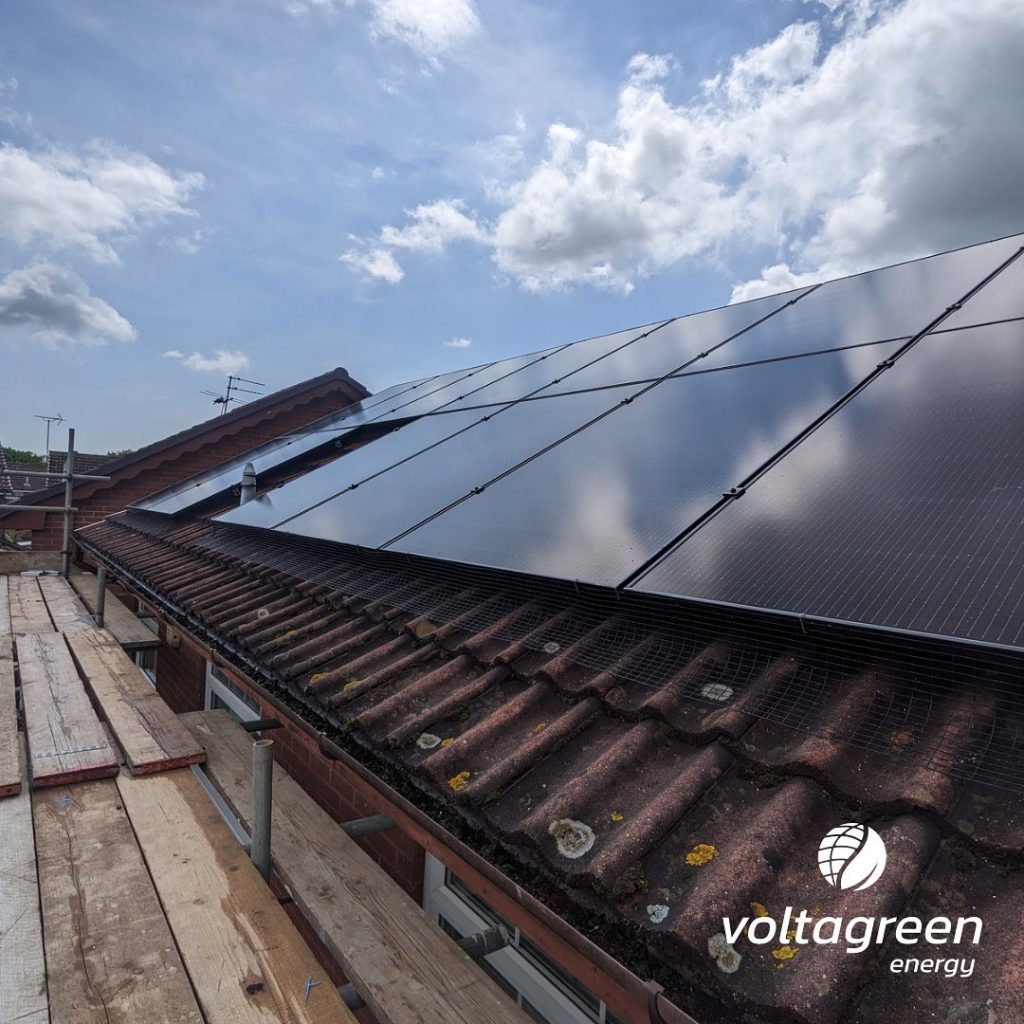
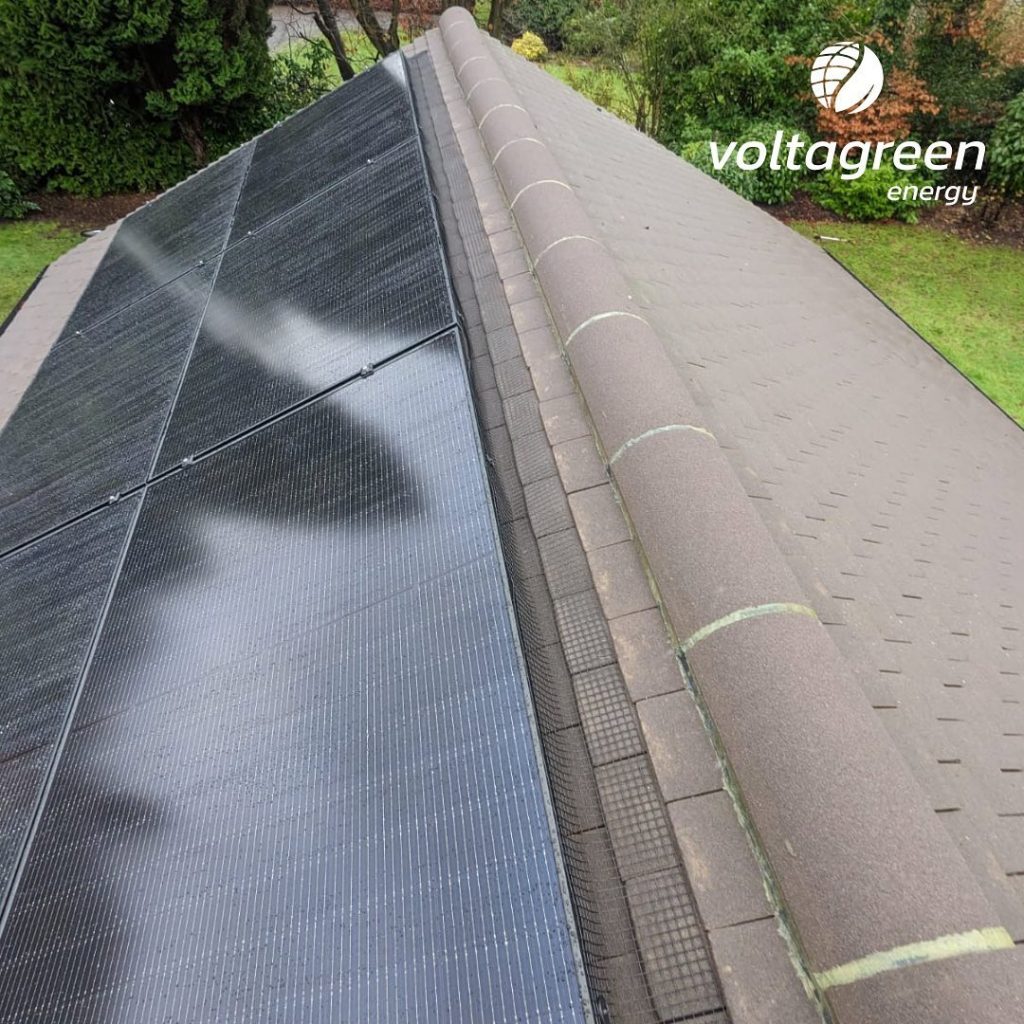
Volta Green Energy Ltd are a Kent based business, passionate about renewable energy and specialists in solar panel & solar battery storage systems. Solar panels play a significant role in mitigating the climate crisis by addressing two key aspects: reducing greenhouse gas emissions and promoting renewable energy.
Greenhouse Gas Emissions Reduction: Solar panels generate electricity by harnessing the energy from sunlight, a renewable and clean source. This process avoids the burning of fossil fuels, such as coal, oil, and natural gas, which are major contributors to greenhouse gas emissions. When fossil fuels are burned, carbon dioxide (CO2) and other harmful pollutants are released into the atmosphere, trapping heat and contributing to global warming. By replacing fossil fuel-based electricity generation with solar power, we can reduce greenhouse gas emissions and mitigate climate change.
Promotion of Renewable Energy: Solar panels are a key component of the renewable energy sector. Unlike fossil fuels, sunlight is an abundant and freely available resource. By utilizing solar panels, we can tap into this virtually limitless source of energy and reduce our dependence on finite and polluting fossil fuels. Increasing the share of renewable energy in our energy mix helps to diversify our energy sources, improve energy security, and reduce the overall environmental impact associated with traditional energy generation.
Solar panels offer numerous environmental benefits beyond reducing greenhouse gas emissions:
a. Air Quality Improvement: Solar energy production produces minimal air pollution compared to fossil fuel-based power plants. The combustion of fossil fuels releases pollutants like sulfur dioxide, nitrogen oxides, and particulate matter, which contribute to respiratory problems and other health issues. By transitioning to solar energy, we can improve air quality and protect public health.
b. Water Conservation: Traditional power plants often require large amounts of water for cooling and other processes. Solar panels, on the other hand, do not require water for their operation, except for occasional cleaning. By reducing the reliance on water-intensive energy generation, solar panels contribute to water conservation, especially in regions facing water scarcity.
c. Land Conservation: Solar panels can be installed on a variety of surfaces, including rooftops, parking lots, and unused land. Utilizing these spaces for solar energy generation minimizes the need for land-intensive energy infrastructure. Additionally, solar farms can coexist with agriculture or be integrated into urban areas, reducing the pressure to convert natural habitats or agricultural land for energy purposes.
d. Energy Independence: Solar panels enable individuals, communities, and even entire countries to generate their own electricity. This decentralization of energy production promotes energy independence and resilience, reducing reliance on centralized power grids and vulnerable fossil fuel supply chains.
Volta Green Energy are based in Kent, but operate across the South East. We’ve completed solar pv installations in Bearsted, Maidstone, West Malling, Ashford, Burgess Hill, and more. By choosing a reputable installer like Volta Green Energy, installing solar panels and supporting the expansion of solar energy infrastructure, we can take significant steps towards addressing the climate crisis and transitioning to a sustainable and low-carbon future.
Photos attached and can also be seen on our social media channels:
Illustrator Lucy Deaner has been picked to create new meadow flower-themed packaging for Scottish beauty company, Seilich. Lucy Deaner comes from Muckhart near Kinross in Scotland both her mother and grandmother were florists, and she feels that could be where her love of flowers comes from. She now lives and works in Richmond, London. Although […]
Angela Terry, CEO of One Home and leading environmental scientist lists her top five budget and eco-friendly ideas for entertaining kids during the holidays. (Thursday 27 June, 2024) With the school holidays looming large on the horizon across England and Wales, it’s no surprise that many parents and caregivers will be worrying about the cost of […]
Leading global retail technology business and specialists in preventing food waste, Gander, has announced a major milestone in its journey towards reducing food waste and fostering sustainability within Australia’s grocery retail industry. Since making its debut in Australia in July 2023, the SaaS company has already launched with independently owned SPAR Chevron in the Gold […]
The year’s highest-scoring recyclable, reusable, refillable, “no plastic” and planet-positive beauty and wellness brands have been revealed at the 4th annual ECO Awards and the winners include: BEST CONSUMER AWARENESS CAMPAIGN Winner (beauty) WELEDA “Save Earth’s Skin” Campaign to raise awareness of the crucial impact soil health has on our planet, quality of food and […]
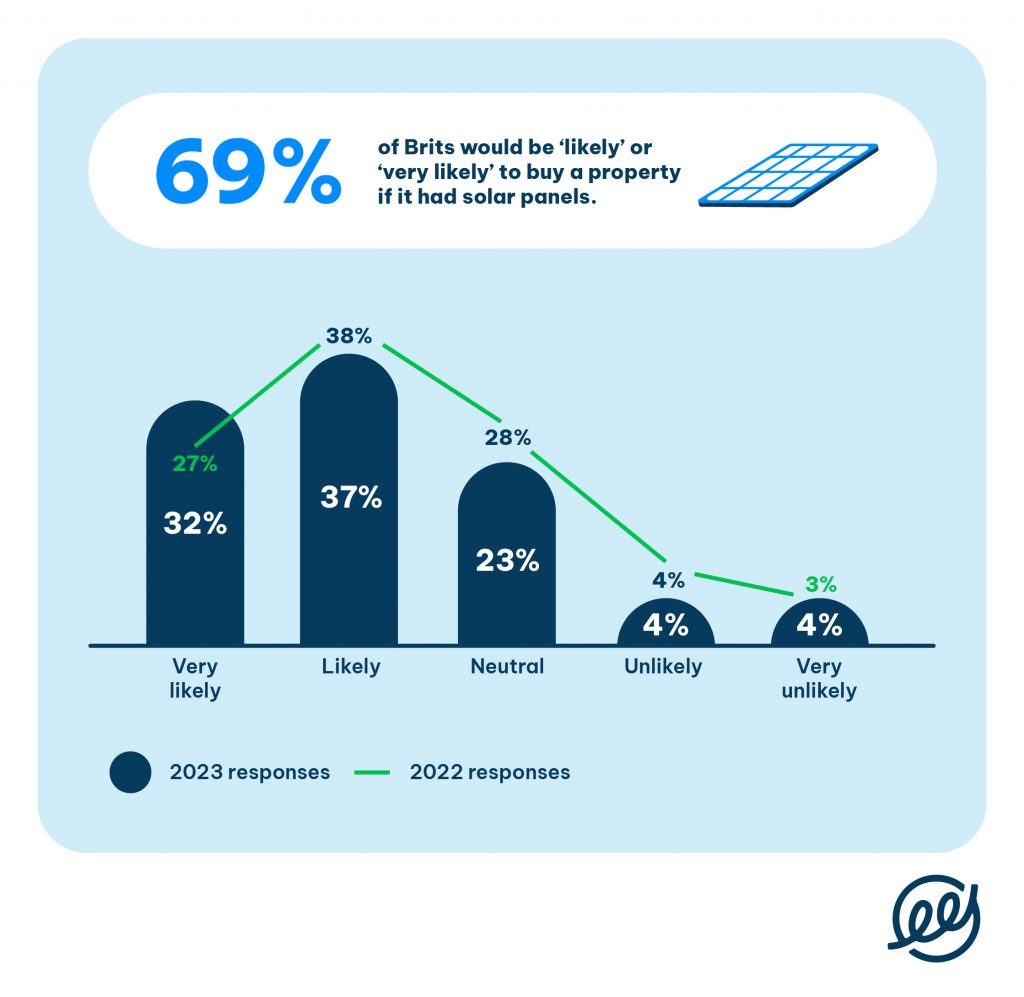
New data from theecoexperts.co.uk has revealed that 69% of the UK would purchase a home with solar panels. This is up from 65% the previous year, signifying the rising popularity of domestic solar panels.
The ongoing energy crisis over the last 12 months has led to a shortened break-even point for solar panels, now on average taking just 12.9 years to pay for themselves. Domestic solar panels can save you on average £608 a year on your electricity bills. Therefore, making solar panels a much more affordable option for homeowners who will now have the added comfort of knowing it could also add to their curb appeal.
According to the survey, Gen Z and Millennials are especially enthusiastic, with 74% of these groups saying they’d be likely or very likely to buy a property with solar panels.
This hike in willingness to purchase solar panelled properties could also be due to concerns surrounding climate change. With rising concern, the number of people investing in renewable energy has also risen. The market size of the UK solar panel installation industry has grown by an average of 18.3% per year between 2018 and 2023. This trend has been encouraged by the cost of solar panels falling by about 80% in the past decade.
Not only do solar panels reduce energy bills, they can also increase the value of your property. Installing solar panels on your property can increase its value by around 4.1%, which can equate to tens of thousands of pounds. No doubt this has also influenced the increasingly positive attitude toward solar panels.
“Buying or renting a home with solar panels makes perfect sense in the current climate, with the high cost of electricity and the extreme effects of climate change becoming more obvious each year. Solar panels cut a typical three-bedroom home’s energy bills by 62%, which is huge considering the price of electricity is unlikely to fall any time soon. With global disruption to energy prices caused by Russia’s war against Ukraine, and the post-pandemic increase of demand for energy, solar panels provide genuine energy security that doesn’t rely on fossil fuels.”
Illustrator Lucy Deaner has been picked to create new meadow flower-themed packaging for Scottish beauty company, Seilich. Lucy Deaner comes from Muckhart near Kinross in Scotland both her mother and grandmother were florists, and she feels that could be where her love of flowers comes from. She now lives and works in Richmond, London. Although […]
Angela Terry, CEO of One Home and leading environmental scientist lists her top five budget and eco-friendly ideas for entertaining kids during the holidays. (Thursday 27 June, 2024) With the school holidays looming large on the horizon across England and Wales, it’s no surprise that many parents and caregivers will be worrying about the cost of […]
Leading global retail technology business and specialists in preventing food waste, Gander, has announced a major milestone in its journey towards reducing food waste and fostering sustainability within Australia’s grocery retail industry. Since making its debut in Australia in July 2023, the SaaS company has already launched with independently owned SPAR Chevron in the Gold […]
The year’s highest-scoring recyclable, reusable, refillable, “no plastic” and planet-positive beauty and wellness brands have been revealed at the 4th annual ECO Awards and the winners include: BEST CONSUMER AWARENESS CAMPAIGN Winner (beauty) WELEDA “Save Earth’s Skin” Campaign to raise awareness of the crucial impact soil health has on our planet, quality of food and […]
BotaniVie is a female-led family business aiming to deliver sustainable, plastic-free & cruelty-free skincare choices, including an extensive range for vegans. We are passionate about our impact on our beautiful planet and hope our eco-conscious collections can help the environment by reducing plastic waste whilst using natural ingredients to feed the skin, body & hair.
Samantha and her husband, Brendan, have chosen to primarily champion independent UK brands. These are often also female-led small businesses passionate about incorporating sustainability into their product development to drive change for the future.
The BotaniVie story begins with Samantha, having lived in the French Alps surrounded by nature, and Brendan, having worked at sea, which opened both their eyes to the extent of litter and plastic waste damaging our land and sea ecosystems. BotaniVie was born to offer a range of products for both men and women looking to make conscious skincare choices. Every brand we represent has been carefully curated and researched to ensure we provide top-quality products from eco-conscious brands, each trying to make a small change in the world.
We pride ourselves on our friendly and professional customer service, and we are always plastic-free, cruelty-free, reef-safe & sustainable. For future earth-friendly, eco-swaps or gift ideas for family and friends, please visit us at www.botanivie.co.uk. We offer a gift wrapping & personal card writing service to add a personal touch to your thoughtful gift.
Please use our discount code ECONEWS to enjoy 10% off your first order, valid until 30th June 2023.
Discount Code: ECONEWS / 10% Off Entire Order / Limit – One use per customer / Can’t be combined with other discounts / Minimum Purchase of £35.00 / Offer Expires 30 June 2023
Illustrator Lucy Deaner has been picked to create new meadow flower-themed packaging for Scottish beauty company, Seilich. Lucy Deaner comes from Muckhart near Kinross in Scotland both her mother and grandmother were florists, and she feels that could be where her love of flowers comes from. She now lives and works in Richmond, London. Although […]
Angela Terry, CEO of One Home and leading environmental scientist lists her top five budget and eco-friendly ideas for entertaining kids during the holidays. (Thursday 27 June, 2024) With the school holidays looming large on the horizon across England and Wales, it’s no surprise that many parents and caregivers will be worrying about the cost of […]
Leading global retail technology business and specialists in preventing food waste, Gander, has announced a major milestone in its journey towards reducing food waste and fostering sustainability within Australia’s grocery retail industry. Since making its debut in Australia in July 2023, the SaaS company has already launched with independently owned SPAR Chevron in the Gold […]
The year’s highest-scoring recyclable, reusable, refillable, “no plastic” and planet-positive beauty and wellness brands have been revealed at the 4th annual ECO Awards and the winners include: BEST CONSUMER AWARENESS CAMPAIGN Winner (beauty) WELEDA “Save Earth’s Skin” Campaign to raise awareness of the crucial impact soil health has on our planet, quality of food and […]
Home grown food from kitchen gardens is firmly on the menu this summer as 44 percent of Brits will plant and grow fruit and vegetables in their gardens, window boxes or balconies this season. For one in three people (31 percent) it is with the intention to lead a more sustainable life by eating what they yield.
Strawberries, tomatoes and potatoes are the top three fruits and vegetables people are growing at home this year, according to the YouGov research for Readly digital magazine and newspaper app.
– With cost on the agenda this year, you may be surprised that salads are perhaps the best money-saving crop out there because they are incredibly productive on a small scale and can be continuously picked and eaten. If flavour is important then planting a diverse herb garden is one of the simplest ways to greatly influence the taste of what you create in the kitchen.
If you are new to growing this season or taking it to the next level then now is the perfect time to get your hands dirty, says Huw Richards, gardener, author and a leading voice in permaculture and kitchen gardens
Five tips for growing your own food from Huw Richards, gardener, author, expert in permaculture and Readly gardening spokesperson:
Focus on growing high-value crops that are cheap to grow but rather expensive to buy! One example is salads and annual herbs – a packet of lettuce seed could keep a whole family self-sufficient in lettuce from spring to autumn if you stagger the sowing!
Utilize vertical spaces as much as possible; grow climbing crops up walls and fences such as peas, cucumbers, climbing beans, and even pumpkins if you tie them! A great way to grow strawberries or salads is in gutters attached to a boundary. One fun project is to create an archway using wood (hazel or bamboo) between two beds or large containers to grow peas or runner beans up.
Buy a mint or basil plant from a supermarket and take some cuttings from them and place in a pot of water. These will soon send out roots that you can then pot on into compost and grow into big plants. Continue taking more cuttings so you get an unlimited supply!
Research ideas for what you will grow and plant by getting inspiration from friends and family, gardeners or reading all the gardening magazines on an app such as Readly.
Grow veggies and eat the leaves: Did you know that many vegetables also have edible leaves? Beetroot, carrots, turnip, broccoli, swede, garden peas, and onions all have leaves which you can eat; providing you with an additional harvest from one crop.
When it comes to time invested in kitchen gardening this year, almost one in ten people (8 percent) believe they will spend 6-8 hours a week in their garden. A third (22 percent) will spend 1-2 hours or 3-5 hours (30 percent) each week.
In terms of spaces, 9 in 10 people (88 percent) will grow in outdoor spaces, whilst one in three (27 percent) will be planting indoors and 6 percent will work on balcony boxes or allotments.
The top 10 fruits and vegetables UK respondents said they will grow at home this year are:
Strawberries
Tomatoes
Potatoes
Raspberries
Apples
Cucumber
Blueberries
Rhubarb
Runner beans
Blackberries
The Readly app has a magazine or article for every type of kitchen gardener, from the beginner to the advanced from the allotment owner to the balcony or window boxes. Readly is giving 2 months of unlimited reading to over 7,000 digital magazines and newspapers including top food and gardening titles this season with a special offer until 31st May 2023, visit www.readly.com/gardening.
Illustrator Lucy Deaner has been picked to create new meadow flower-themed packaging for Scottish beauty company, Seilich. Lucy Deaner comes from Muckhart near Kinross in Scotland both her mother and grandmother were florists, and she feels that could be where her love of flowers comes from. She now lives and works in Richmond, London. Although […]
Angela Terry, CEO of One Home and leading environmental scientist lists her top five budget and eco-friendly ideas for entertaining kids during the holidays. (Thursday 27 June, 2024) With the school holidays looming large on the horizon across England and Wales, it’s no surprise that many parents and caregivers will be worrying about the cost of […]
Leading global retail technology business and specialists in preventing food waste, Gander, has announced a major milestone in its journey towards reducing food waste and fostering sustainability within Australia’s grocery retail industry. Since making its debut in Australia in July 2023, the SaaS company has already launched with independently owned SPAR Chevron in the Gold […]
The year’s highest-scoring recyclable, reusable, refillable, “no plastic” and planet-positive beauty and wellness brands have been revealed at the 4th annual ECO Awards and the winners include: BEST CONSUMER AWARENESS CAMPAIGN Winner (beauty) WELEDA “Save Earth’s Skin” Campaign to raise awareness of the crucial impact soil health has on our planet, quality of food and […]
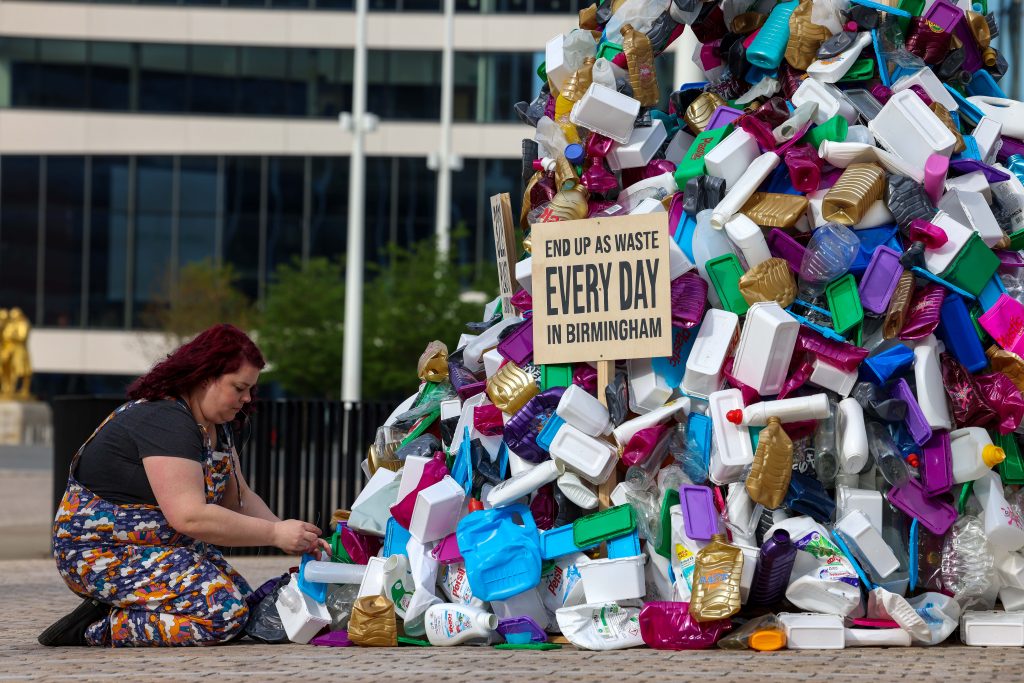
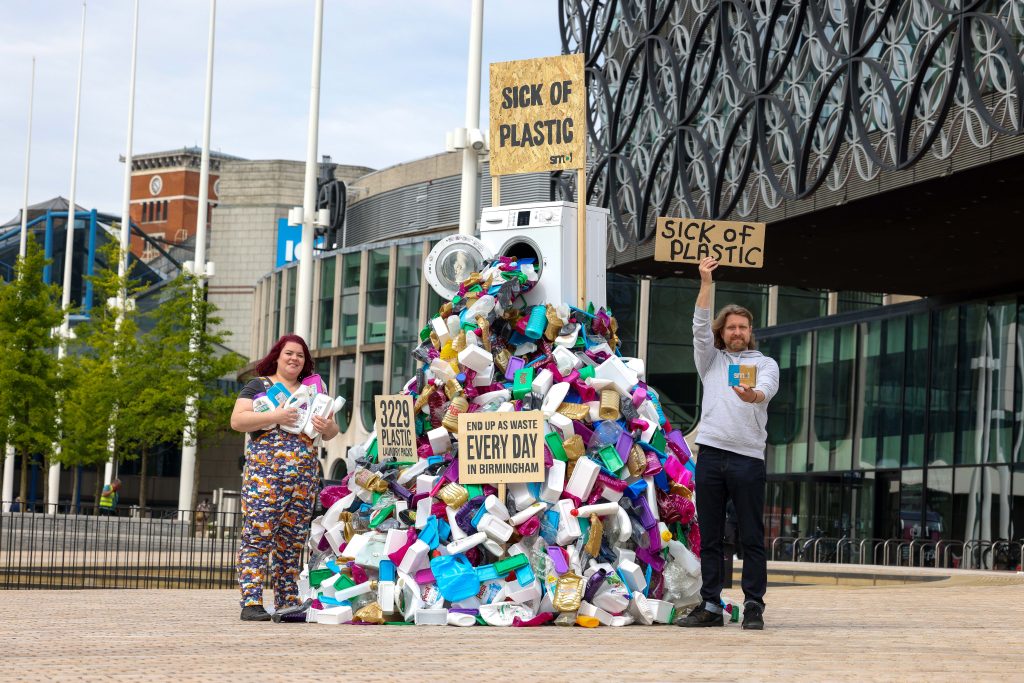
● Sculpture created by laundry challenger brand, smol, in collaboration with Midlands eco-artist, Sarah Turner
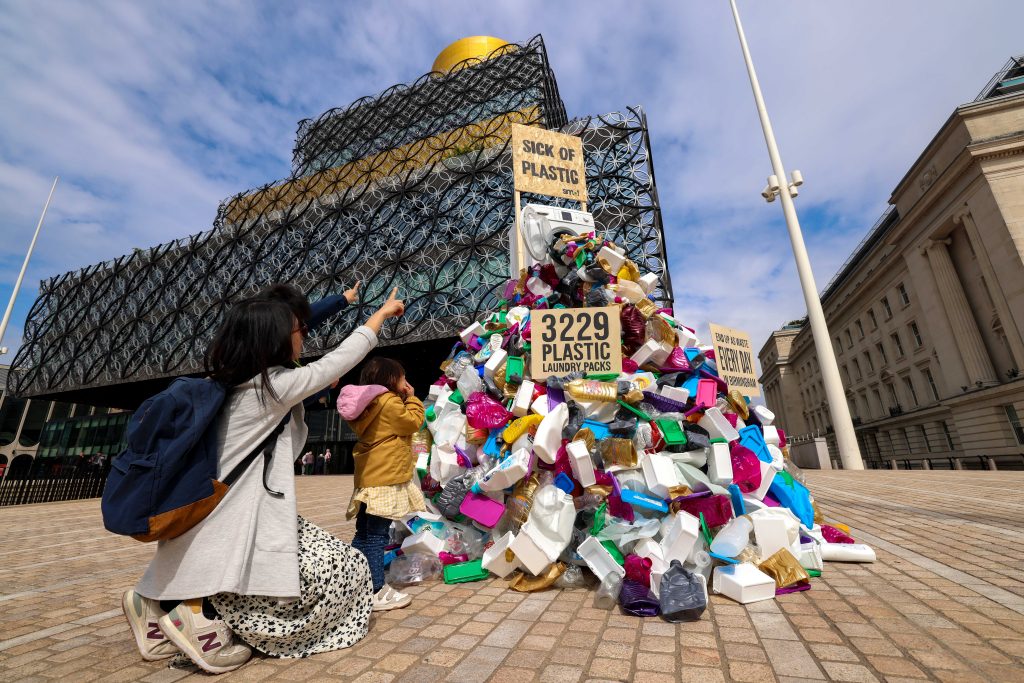
● Piece made from 3229* pieces of laundry plastic representing the amount not recycled and ending up as waste from Birmingham every single day
● The campaign will support the charity, Surfers against Sewage, who are tackling Birmingham’s plastic waste with their Plastic Free Communities initiative.
● Follows recent news that Birmingham has some of the worst recycling rates in the UK**
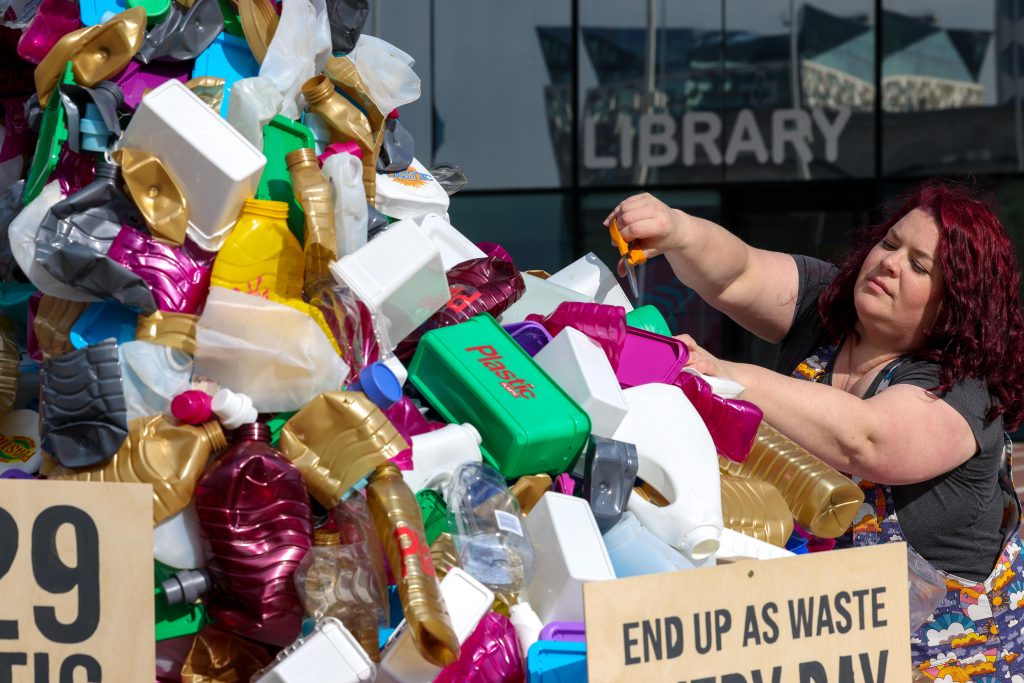
Birmingham, 19th May: A huge sculpture titled ‘Sick of Plastic’, featuring a washing machine ‘vomiting’ thousands of pieces of laundry plastic, has been revealed in Birmingham’s Centenary Square to bring attention to the daily amount that ends up unrecycled, and incinerated or in landfill, from Birmingham’s households.
Midlands eco-artist, Sarah Turner, to place a spotlight on the ‘invisible’ issue of the environmental impact of plastic from the laundry industry.
The sculpture has been commissioned by smol, in its ambition to revolutionise the laundry industry by offering Birmingham plastic-free alternatives which make a big difference to the environment.
Made from 3,229* pieces of recycled laundry plastic – representing the amount of unrecycled laundry plastic which ends up in landfill or incinerated every day in Birmingham alone – the sculpture is the brainchild of smol, in collaboration with Midlands artist, Sarah Turner, renowned for her work using waste materials.
Midlands eco-artist, Sarah Turner, to place a spotlight on the ‘invisible’ issue of the environmental impact of plastic from the laundry industry.
The UK laundry industry is responsible for sales of 110 million*** plastic laundry packs each year, many of which use needless plastic despite alternatives being available. And with just 12% of the UK’s plastic reported to be recycled**** , something has to change; Birmingham was recently revealed as one of the nation’s worst cities for recycling** so it’s not surprising that smol has found that a huge 1.19 million plastic laundry packs end up as waste each year from Birmingham alone. The city’s recycling system has come under fire in recent weeks with the council’s decision to continue using a waste incinerator despite targets set to improve recycling rates not being met.
The Sick of Plastic sculpture will also support the charity, Surfers Against Sewage to tackle plastic waste in Birmingham by donating £5,000 to support the charity’s Plastic-Free Communities work in the city: a scheme which supports individuals, community leaders and businesses in Birmingham to reduce avoidable plastic.
The arresting sculpture uses the very same washing machine which locals may recognise from smol’s new Midlands TV advert; Sick of Plastic. smol has launched the campaign to call on the public to join its revolution by switching to sustainable alternatives, with smol having unveiled the UK’s first plastic-free laundry and dishwasher packs in 2020.
The sculpture will be displayed in front of The Library of Birmingham in the city center’s Centenary Square on the 19th of May, from 10am-6pm.
Eco artist, Sarah Turner, said: “I’m delighted to collaborate with smol, whose values and ethics align with my own- having utilised materials which are causing the most environmental damage in my work. Together, we want to draw attention to the laundry plastic problem and inspire the public to make a small change in their day to day, to make a positive impact.”
Hilary Strong, CMO of smol said: “People are well aware of the need to reduce their plastic waste, but few dwell on laundry – one of those things that we all have to buy and use, and a huge generator of single-use plastic waste. At smol, we’re proud of pioneering the UK’s first 100% plastic-free laundry capsule packaging; if the people of Birmingham alone made the switch to plastic-free, we’d prevent over 1 million plastic laundry packs ending up in landfill every single year. The creation of this sculpture is a bold statement about our commitment to the environment and our belief that with just small changes like switching brand, we can all make a difference. We hope that it will inspire others to join us in the fight against plastic waste.’’
Tabitha McCormick, Corporate Partnerships Officer of Surfers Against Sewage said: “We too are Sick of Plastic and are thrilled to endorse this campaign. It’s great to see the issue of laundry plastic being highlighted as it supports one of our campaigning goals – to put an end to plastic pollution. We’re grateful to receive a donation from smol to create positive action on the issue; our Plastic Free Communities programme helps communities across the UK, including in Birmingham, to tackle plastic pollution at the source.”
smol is giving away 100 plastic-free smol laundry packs to the people of Birmingham from 12pm, to give away to the first 100 people that find the smol team and say “I’m sick of plastic!”. For those who don’t get a free laundry pack, smol is offering an exclusive discount code. Enter SICKOFPLASTIC50 when you sign up for your free trial to get 50% off your first full laundry pack. T&Cs: Offer valid until end of June, for the first 5000 new customers.
Illustrator Lucy Deaner has been picked to create new meadow flower-themed packaging for Scottish beauty company, Seilich. Lucy Deaner comes from Muckhart near Kinross in Scotland both her mother and grandmother were florists, and she feels that could be where her love of flowers comes from. She now lives and works in Richmond, London. Although […]
Angela Terry, CEO of One Home and leading environmental scientist lists her top five budget and eco-friendly ideas for entertaining kids during the holidays. (Thursday 27 June, 2024) With the school holidays looming large on the horizon across England and Wales, it’s no surprise that many parents and caregivers will be worrying about the cost of […]
Leading global retail technology business and specialists in preventing food waste, Gander, has announced a major milestone in its journey towards reducing food waste and fostering sustainability within Australia’s grocery retail industry. Since making its debut in Australia in July 2023, the SaaS company has already launched with independently owned SPAR Chevron in the Gold […]
The year’s highest-scoring recyclable, reusable, refillable, “no plastic” and planet-positive beauty and wellness brands have been revealed at the 4th annual ECO Awards and the winners include: BEST CONSUMER AWARENESS CAMPAIGN Winner (beauty) WELEDA “Save Earth’s Skin” Campaign to raise awareness of the crucial impact soil health has on our planet, quality of food and […]
– Endura joins up with the world’s most fearless animal to help Brits stand up to badgering bosses – as research shows four out of five Brits (81%) spend some of their free time thinking about work1.
– The honey badger has held the title of ‘most fearless animal in the world’ for more than two decades, since it was named in the 2002 Guinness Book of World Records.
– As one of the UK’s leading cycling brands, Endura wants to encourage riders to enjoy the great outdoors to the maximum by clearing their minds from the worries of work.
Scottish cyclewear manufacturer Endura has acquired the help of honey badgers, Horace and Hilda, to suggest fearless out-of-office emails for workers. The service, which will aim to fend off badgering bosses, colleagues, and clients, has been launched on behalf of Brits spending too much of their free time thinking about work and less time playing on the pedals.
The announcement comes in response to an Endura study that shows more than two thirds of UK office workers admitted to checking their work emails outside of hours1, with more than half (52%) wishing they were braver when it comes to ignoring work emails during free time1. The study also showed 63% feel the ‘always on’ work culture is damaging to their mental health1.
Endura recognises that the last thing out-of-office workers want to receive during their time off is the dreaded ‘after work drinkie-poos’ invite or the lunchtime ‘pret-a-moo-moo’ email, unnecessarily putting work firmly back to the forefront of their thoughts. The service aims to stand up to the increasingly widespread expectation for employees to work around the clock.
Having held the title of the world’s most fearless animal for over two decades, with a history of attacking lions and crocodiles, the honey badger’s courageousness in managing your out-of-office will eradicate cringeworthy inbox threats of this nature, supporting workaholic Brits to focus all their energy on the best of the UK’s mountain trails and terrain.
On the announcement, Noah Bernard, Brand Director, Endura, comments: “At Endura, we want to ensure customers’ minds are as clear as fresh mountain water in springtime when experiencing the great outdoors. When we discovered the extent to which work plays on people’s minds during free time, we asked ourselves, what kind of character can we seek help from to fearlessly take on such an issue? There was only one answer; honey badgers!”
The Fear.Less honey badger concept was launched to celebrate the launch of a new range of Endura helmets in the US, with a hilarious ad that features a woodland confrontation between the creature and a rider. The rider eventually comes out on top, gaining a new sense of confidence from the quality of his Endura helmet, and taming the honey badger in the process.
Now, Endura has obtained the help of its new-found friends to help its riders tackle their most common fears and hopefully spend more time enjoying the best riding experiences that the UK has to offer.
Honey badgers Horace and Hilda are available to support Brits with their out-of-office email responses today. All cyclists and outdoor enthusiasts need to do is email dontbadgerme@wcommunications.co.ukto receive their out-of-office message from an expert in fearlessness.
On offering his help to Endura, Horace the honey badger said: “As a honey badger, the two things that define me are giving zero f***ks and loving the great outdoors. Now I get to merge the two, by playing my part in allowing the brilliant Endura customers to enjoy the UK’s wonderful outdoor environment, all while standing up to irritating bosses and clients by telling them to do one!”
While cyclists can now ride safe in the knowledge that their inboxes are protected, Endura is also ensuring its riders are kitted out in the toughest and most durable gear, giving them an added sense of fortitude to fear less.
The brand believes that helmets are an integral part of rider safety, which is why it not only applies all its engineering knowledge to their development, but also works with some of the best expert technology partners around to ensure its helmets are second to none. With Endura’s support, riders have the power to overcome whatever the day’s ride throws at them, whether that be challenging hill climbs, tough terrain or even the odd honey badger!
Customers that contact Endura’s honey badger email support service will receive an entry link to a prize draw, where one of ten £100 vouchers is available to spend on Endura’s market-leading cycling gear. Entries are open until 11:59PM on Friday 12th May.
—–
1 OnePoll 2023: Survey from Endura taken of 2000 UK office workers
Illustrator Lucy Deaner has been picked to create new meadow flower-themed packaging for Scottish beauty company, Seilich. Lucy Deaner comes from Muckhart near Kinross in Scotland both her mother and grandmother were florists, and she feels that could be where her love of flowers comes from. She now lives and works in Richmond, London. Although […]
Angela Terry, CEO of One Home and leading environmental scientist lists her top five budget and eco-friendly ideas for entertaining kids during the holidays. (Thursday 27 June, 2024) With the school holidays looming large on the horizon across England and Wales, it’s no surprise that many parents and caregivers will be worrying about the cost of […]
Leading global retail technology business and specialists in preventing food waste, Gander, has announced a major milestone in its journey towards reducing food waste and fostering sustainability within Australia’s grocery retail industry. Since making its debut in Australia in July 2023, the SaaS company has already launched with independently owned SPAR Chevron in the Gold […]
The year’s highest-scoring recyclable, reusable, refillable, “no plastic” and planet-positive beauty and wellness brands have been revealed at the 4th annual ECO Awards and the winners include: BEST CONSUMER AWARENESS CAMPAIGN Winner (beauty) WELEDA “Save Earth’s Skin” Campaign to raise awareness of the crucial impact soil health has on our planet, quality of food and […]
The UK’s first ever ‘bee therapy’ experience is set to open at Perthshire this summer.
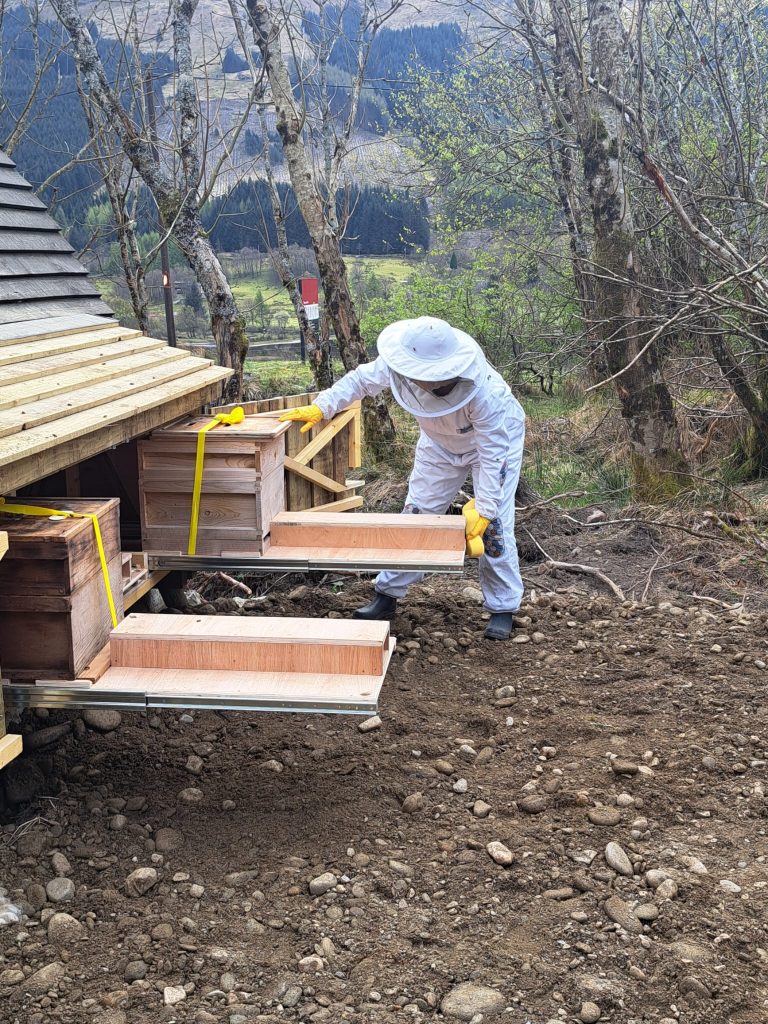
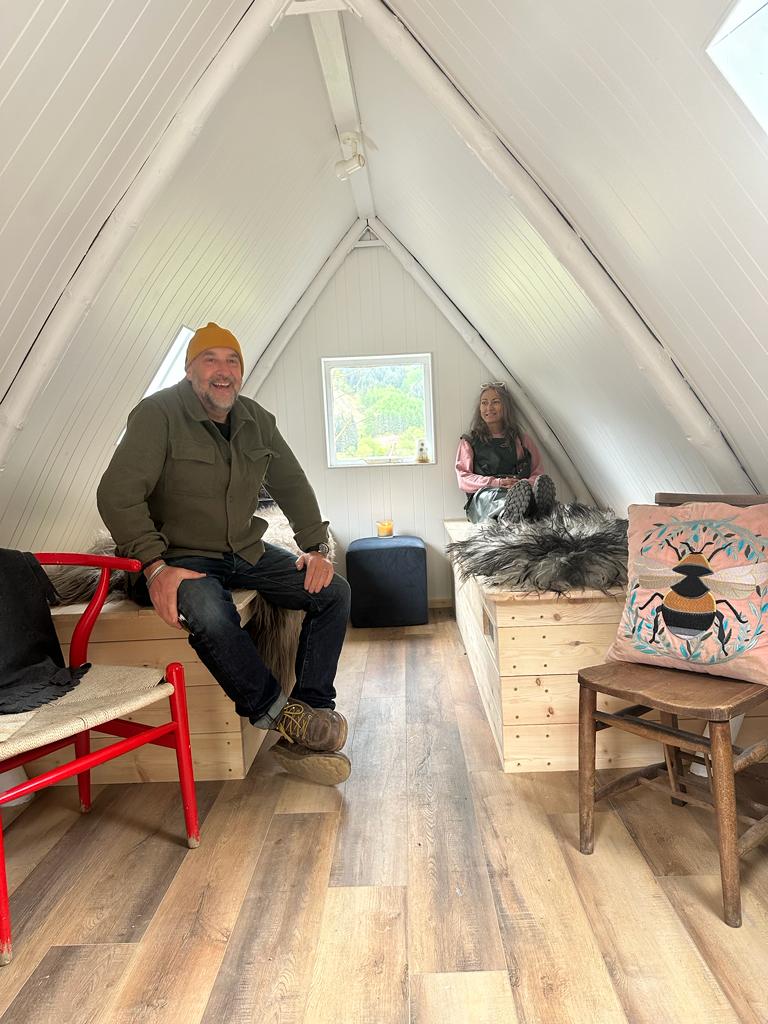
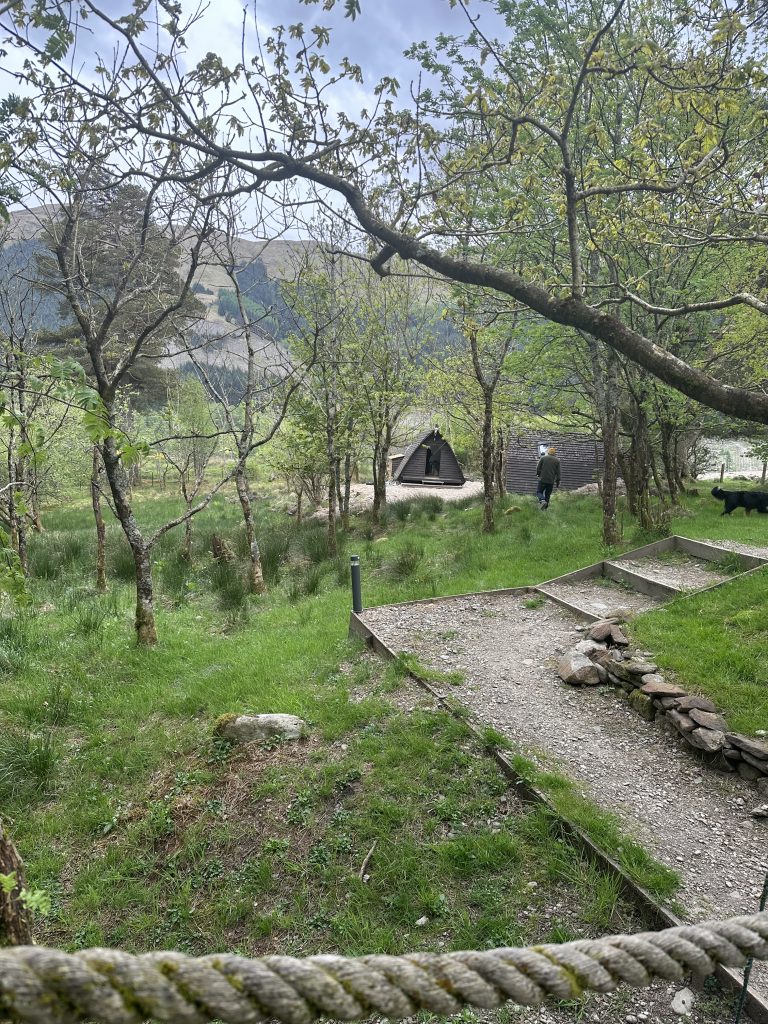
A specially designed wooden triangular structure, known as an ‘apipod’ has been installed at award-winning Monachyle Mhor, a boutique hotel near Balquhidder.
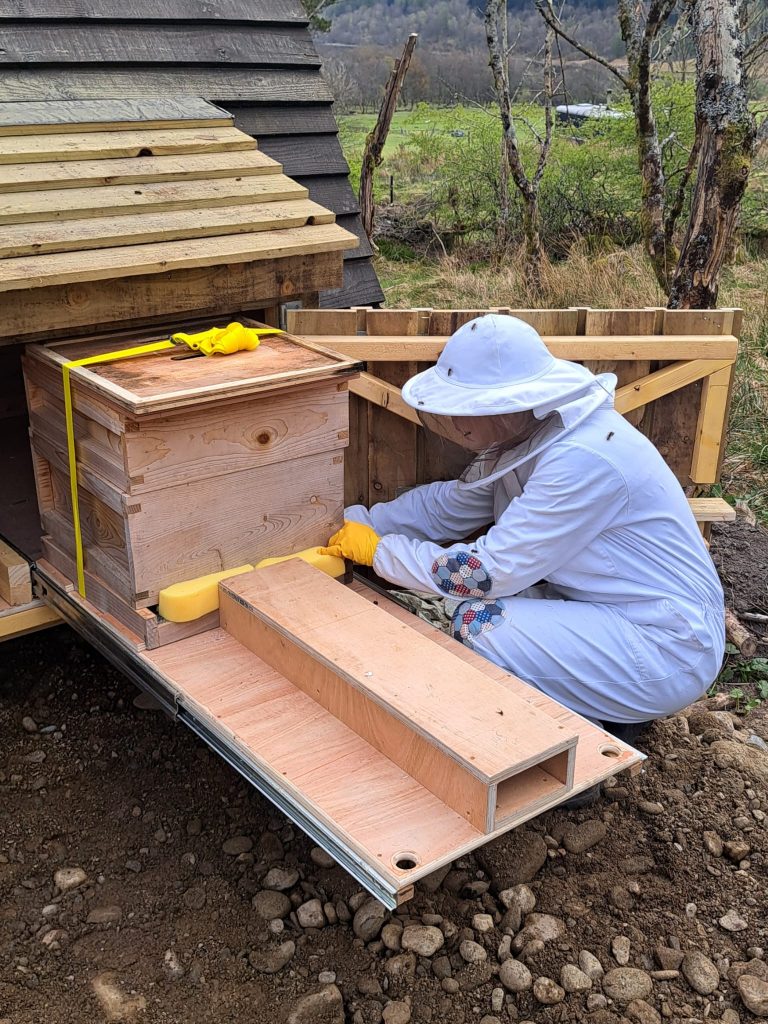
Six beehives housing a total of 60,000 honey bees have been placed in compartments underneath the pod, which is situated in a wooded glade at Monachyle Mhor. The bees come and go freely through their own special entrance.
A metal mesh between the walls and the hives ensures only sounds and smells infuse the interior, but the bees are contained, so there is no risk of bee stings to visitors.
Sustainable bee-based therapy, known as apitherapy, is a fast-growing trend in Eastern Europe. Crieff-based business woman, Charlotte Blackler, who is introducing it to Scotland, recently visited apitherapy centres in Slovenia, and decided she wanted to bring it home to Scotland.
Charlotte, who runs a company called Herb Majesty, selling free-range turkey, pork, lamb and chicken raised and grazed on wild herbal pastures, is convinced the therapy will fly in Scotland. She also founded Mena-pause.com , a food company that makes Mena bread, and a Mena snack bar that harnesses the power of nature to create a healthy and nutritious range of menopause-friendly food.
Charlotte says: “It really is the most relaxing experience – and it’s so good for you. Guests can relax or fall asleep on two sheepskin-covered beds inside the apipod which are situated directly above the hives.“
“You de-stress listening to the sounds of the bees going about their daily life, surrounded by the aromas of honey, propolis, nectar and pollen. The vibrations caused by bees’ wings also have a positive energising effect which calms and relaxes.”
She explains: “Monachyle Mhor is the perfect place to get back in touch with nature. I work closely with the Lewis family, who own Monachyle Mhor raising milk-fed Mangalica cross pigs in the woodlands here, so we already have a good working relationship. So I knew it would be something which they would love.”
Tom Lewis, chef patron says, “We absolutely love the idea of working in harmony with the bees to create this unique experience. It has been a really tough few years for the hospitality, but we always do things differently at Mhor. The apipod fits with what we already do here, which is to provide our guests with great food, warm hospitality and unforgettable memories. ”
The Apipod will be open for bookings in June, offering well-being sessions in the apipod and summer workshops with natural practitioners are also being planned.
Charlotte says, “Why not spend the day immersed in nature, wild swimming, hiking and relaxing over lunch before being lulled to sleep by the gentle vibration of thousands of tiny wing beats enveloped in the heavenly scent of warm honey from the hives beneath you?”
Its arrival has already created a buzz, with a top celebrity filming a BBC tv show at Monachlye Mhor which should air in July.
Pod well-being sessions:
Price £80 single use £120 for 2 people each 45 min session includes a guest refreshment hamper of fresh lemon balm tea, picked from the kitchen garden, raw honey on our unique Mena bread, and a Mena snack bar for optimal natural nutrition.
Charlotte’s long-term plan hopes to offer Bed & Bees overnight stays, offering visitors the chance to spend a night in the company of honey bees.
Illustrator Lucy Deaner has been picked to create new meadow flower-themed packaging for Scottish beauty company, Seilich. Lucy Deaner comes from Muckhart near Kinross in Scotland both her mother and grandmother were florists, and she feels that could be where her love of flowers comes from. She now lives and works in Richmond, London. Although […]
Angela Terry, CEO of One Home and leading environmental scientist lists her top five budget and eco-friendly ideas for entertaining kids during the holidays. (Thursday 27 June, 2024) With the school holidays looming large on the horizon across England and Wales, it’s no surprise that many parents and caregivers will be worrying about the cost of […]
Leading global retail technology business and specialists in preventing food waste, Gander, has announced a major milestone in its journey towards reducing food waste and fostering sustainability within Australia’s grocery retail industry. Since making its debut in Australia in July 2023, the SaaS company has already launched with independently owned SPAR Chevron in the Gold […]
The year’s highest-scoring recyclable, reusable, refillable, “no plastic” and planet-positive beauty and wellness brands have been revealed at the 4th annual ECO Awards and the winners include: BEST CONSUMER AWARENESS CAMPAIGN Winner (beauty) WELEDA “Save Earth’s Skin” Campaign to raise awareness of the crucial impact soil health has on our planet, quality of food and […]
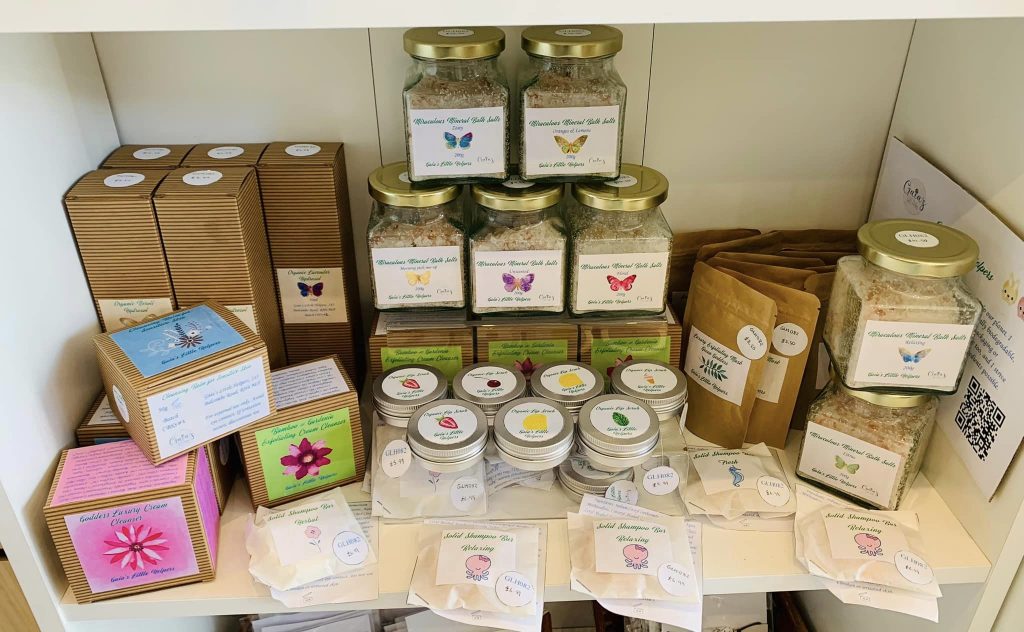
Learning to make cosmetics was something I was basically forced into. I have Mast Cell Activation Syndrome, which results in an inordinate amount of allergies. In particular, synthetic preservatives and fragrances are an absolute no-no for my skin, which rules out almost all mainstream cosmetics. I therefore had little choice but to train in cosmetic science in order to be able to make products for myself. By the time I’d completed my training, I’d also come to realise that the problems with the mainstream beauty industry went far beyond synthetic ingredients, and I decided to launch an artisan skincare brand selling products that seek to solve the biggest problems of the industry.
According to statistics, the cosmetics industry generates 120 billion units of packaging every year, most of which consists of plastic, treated cardboard, cellophane and other non-recyclable elements. Many companies make claims that their plastic bottles can be recycled, but just because something theoretically can be recycled, doesn’t mean it is. Experts say that cosmetics bottles are virtually never recycled, due to being too small and low-grade to make it economically viable.
The simple solution to this problem is to eliminate plastic packaging altogether. However, this isn’t as easy as it sounds. For my products, I’ve used glass jars with aluminium lids wherever possible, but some products have to be packaged with airless pumps in order to comply with safety legislation and so make them legal for sale. These pumps are only available in plastic, so even if the bottle is glass, the dispenser is still made from rigid plastic. So far, the best solution I’ve come up with for this is to offer my customers a discount off their next purchase for every bottle they return to me. I can then sterilise these for reuse.
Outer packaging is also a problem. Although many cosmetics are sold in card boxes, these are often decorated with metallic foil or shiny coatings which more often than not render the card non-recyclable. And that’s not to mention the often toxic glues used on boxes and labels, or the plastic in the labels themselves. The more I researched different packaging options, the more environmentally damaging substances I found lurking in unexpected places. For my labels, I chose recycled paper with non-toxic glue, or for some of my products I went for a bio-plastic made from wood chips. I’ve also gone for Kraft boxes where necessary, eliminating boxes entirely in cases where I can fit all the required information on the bottle or jar. Since unfortunately most customers are far more swayed by shiny boxes than we like to admit when it comes to purchasing choices, I’m currently working on a range of customised boxes, which will still use recycled paper and be fully recyclable, but will also be printed in attractive colours and have a more branded look.
And then there are the ingredients themselves. The cosmetics industry is just like many other industries when it comes to jumping on the latest trend without really considering its impact. Every few months a new ingredient will make headlines and be promoted by celebrities for its alleged revolutionary skin benefits. Often, these ingredients are derived from plants in delicate environments, such as the Amazon rainforest or deserts in Africa. Argan oil, Kukui nut oil and jojoba oil are just some recent examples of this. The problem is that most consumers are just purchasing the name, without any understanding of the chemistry of the ingredient in question. A bit of research usually reveals that the same chemical properties of any given plant oil can be found in many other types of plant oil, so it’s usually possible to find an ingredient that could do the same job but is available much closer to home. Oils like camelina, echium, apple and blackberry seed oils may not get so much publicity, but they have tremendous application in skincare too, and are all produced in the UK.
It’s taken me several years of research and experimentation to develop products which meet the requirements I’ve identified for sustainability. All of the ingredients are use are vegan, natural (so no synthetic ingredients), and cruelty-free. Animal testing for cosmetic ingredients has been banned in the EU for a long time, and that applies to the UK too, but is still allowed in many countries and even required in several. This is another reason to buy local ingredients, as you can then be sure that they were not used in unethical testing. By focusing on local ingredients, I’ve reduced the total air-miles of my products, and any more exotic ingredients I’ve included are fair trade. I’ve also gone for certified organic ingredients where possible, and insist on suppliers who use sustainable packaging. For packaging my products, I’ve chosen a range of option, from glass bottles and jars to biodegradable pouches made from recycled paper. I hope that this enables me to make a contribution, however small, to reducing the catastrophic impact our species is having on our fragile planet.
Illustrator Lucy Deaner has been picked to create new meadow flower-themed packaging for Scottish beauty company, Seilich. Lucy Deaner comes from Muckhart near Kinross in Scotland both her mother and grandmother were florists, and she feels that could be where her love of flowers comes from. She now lives and works in Richmond, London. Although […]
Angela Terry, CEO of One Home and leading environmental scientist lists her top five budget and eco-friendly ideas for entertaining kids during the holidays. (Thursday 27 June, 2024) With the school holidays looming large on the horizon across England and Wales, it’s no surprise that many parents and caregivers will be worrying about the cost of […]
Leading global retail technology business and specialists in preventing food waste, Gander, has announced a major milestone in its journey towards reducing food waste and fostering sustainability within Australia’s grocery retail industry. Since making its debut in Australia in July 2023, the SaaS company has already launched with independently owned SPAR Chevron in the Gold […]
The year’s highest-scoring recyclable, reusable, refillable, “no plastic” and planet-positive beauty and wellness brands have been revealed at the 4th annual ECO Awards and the winners include: BEST CONSUMER AWARENESS CAMPAIGN Winner (beauty) WELEDA “Save Earth’s Skin” Campaign to raise awareness of the crucial impact soil health has on our planet, quality of food and […]
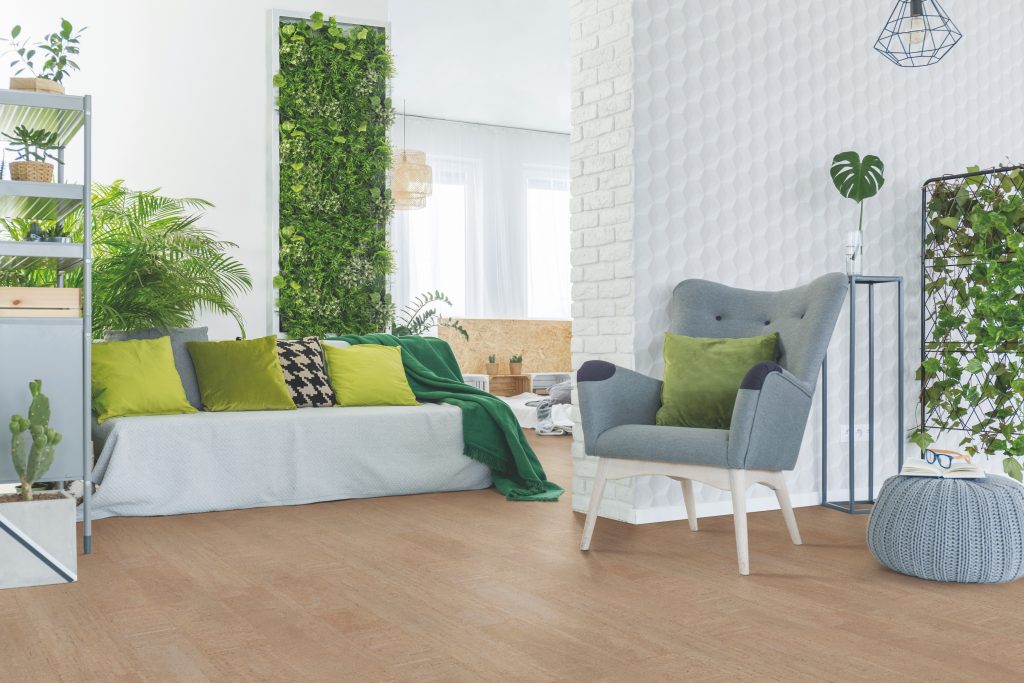
Cork click flooring is an excellent choice for those who are looking for a durable and eco-friendly flooring option that adds beauty and value to their homes.
Let’s delve into the various benefits of cork flooring. Firstly, cork is amazing and is one of the most eco-friendly materials out there. Cork trees are sustainably harvested, and only the bark is harvested every few years, allowing the tree to continue growing. On top of this, cork trees that have had their bark harvested actually consume and store up to 5 times more carbon than trees left to their own devices. This means that some cork products are actually climate positive! Cork is a truly renewable resource and makes an ideal option for those who are concerned about the environment and want to make a responsible choice.
In addition to its eco-friendly benefits, cork is an excellent insulator, making it an energy-efficient choice. It reduces noise and vibrations and can keep your home warmer in winter and cooler in summer. Additionally, cork is resistant to mould, mildew, and pests, making it a highly durable and low-maintenance option as well as being a great choice for anyone susceptible to allergies.
Cork flooring is also available in a variety of stylish options and you can choose the one that complements your home’s decor. Suitable for both classic and contemporary settings, cork flooring comes in a variety of styles, colours, and patterns. This versatile flooring will give your home a unique and sophisticated look that is sure to impress.
Cork flooring is an excellent option for those who want an eco-friendly, stylish, and durable flooring solution. If you would like to find out more about cork flooring or you’re considering upgrading your home’s flooring and would like any assistance, please get in touch with us at Flooring by Nature. Our team of friendly and experienced staff are happy to help with any questions you may have.
At Flooring by Nature we pride ourselves on being one of the best places to purchase eco-friendly flooring options, including a great range of cork flooring. We have over 40 years of experience providing flooring to our customers and will do our best to guide you through the process of selecting the best flooring for your home. We have an extensive collection of high-quality flooring options that are affordable and will add value to your home.
Illustrator Lucy Deaner has been picked to create new meadow flower-themed packaging for Scottish beauty company, Seilich. Lucy Deaner comes from Muckhart near Kinross in Scotland both her mother and grandmother were florists, and she feels that could be where her love of flowers comes from. She now lives and works in Richmond, London. Although […]
Angela Terry, CEO of One Home and leading environmental scientist lists her top five budget and eco-friendly ideas for entertaining kids during the holidays. (Thursday 27 June, 2024) With the school holidays looming large on the horizon across England and Wales, it’s no surprise that many parents and caregivers will be worrying about the cost of […]
Leading global retail technology business and specialists in preventing food waste, Gander, has announced a major milestone in its journey towards reducing food waste and fostering sustainability within Australia’s grocery retail industry. Since making its debut in Australia in July 2023, the SaaS company has already launched with independently owned SPAR Chevron in the Gold […]
The year’s highest-scoring recyclable, reusable, refillable, “no plastic” and planet-positive beauty and wellness brands have been revealed at the 4th annual ECO Awards and the winners include: BEST CONSUMER AWARENESS CAMPAIGN Winner (beauty) WELEDA “Save Earth’s Skin” Campaign to raise awareness of the crucial impact soil health has on our planet, quality of food and […]
“The best time to plant a tree was 20 years ago. The second-best time is now.” Anon
Some people are just waking up to the vital importance of trees to life on earth, and the critical need for humans to plant, protect and promote them. For others it has been a lifelong passion.
100 years ago, when the importance of trees wasn’t fully understood, an environmentalist called Richard St Barbe Baker had a vision to empower communities to plant trees that protect the planet and transform their landscapes and lives. St Barbe, as he was known, spent his life advocating for trees, promoting their pivotal role in the delicate balance of the planet. He practiced permaculture and agroecology before they were given a name and warned of the global impact of deforestation before the science caught up. His emphasis on local community-led reforestation, in conjunction with governments and on a global scale, was also ahead of its time.
In July 1922, St Barbe, along with Chief Josiah Njonjo, brought their vision to life in Kenya. That moment, in the shadow of Mount Kenya, saw the birth of International Tree Foundation and its mission to plant, protect and promote trees.
Now in its 100th year, International Tree Foundation (ITF) is the world’s oldest tree planting charity, with a long history of growing trees and restoring and conserving forests, especially in Kenya, Uganda and the UK.
Based on a ‘plant, protect, promote’ ethos, ITF projects and partners demonstrate the transformational impact of community-led tree planting. When done correctly, tree planting changes landscapes, communities and livelihoods.
At ITF, the people whose livelihoods depend upon local forests are the people who decide which trees to plant, where, and why. We have seen, time and time again, that these are the people best placed to plant and grow native trees, restore and conserve local forests and, as a consequence, strengthen community and ecosystem resilience. The relationship between people and forests determines the success of our work.
The approaches that ITF have pioneered are now mainstream. For example, the latest ‘State of the World’s Forests report’ by the Food and Agriculture Organisation stresses multiple initiatives that we have championed for decades – from the importance of agroforestry to the livelihood benefits of forest restoration.
We now know that the earth’s forests and soil absorb about 30 per cent of atmospheric carbon dioxide emissions and we understand the critical role of trees and forests in maintaining climatic equilibrium. There is a growing consensus among world leaders, environmentalists, businesses and charities, including ITF, about the need for a reforested future to help restore our delicate planetary balance and support vulnerable communities.
St Barbe’s pioneering vision of community-led forest restoration is more relevant than ever but is a long way from being realised.
Recent ITF work:-
UGANDA
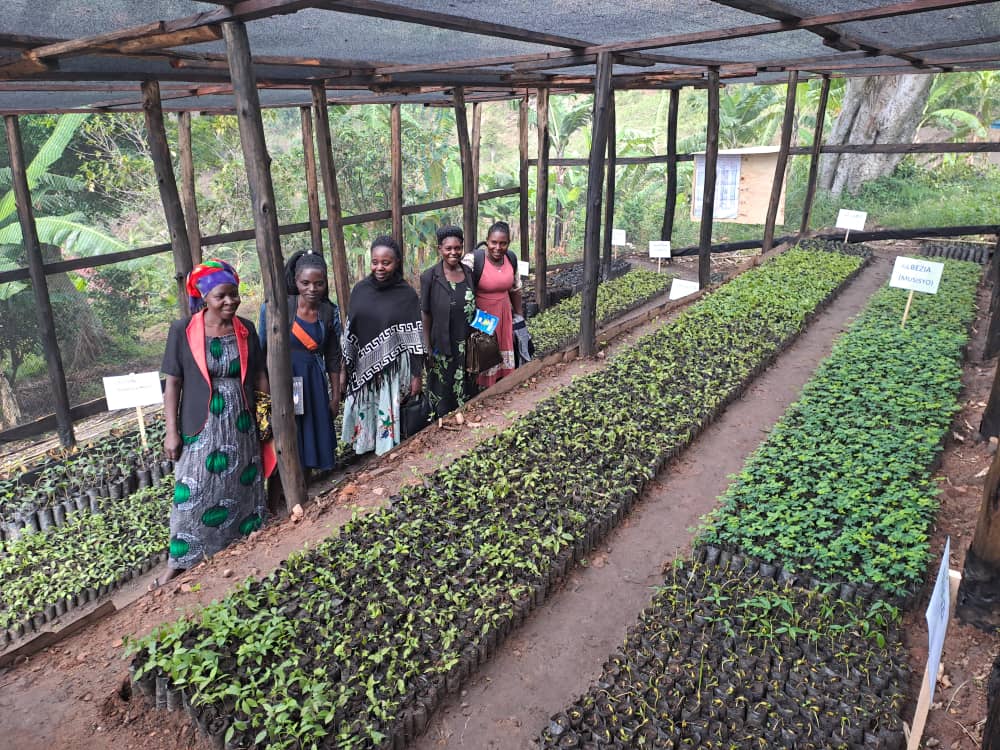
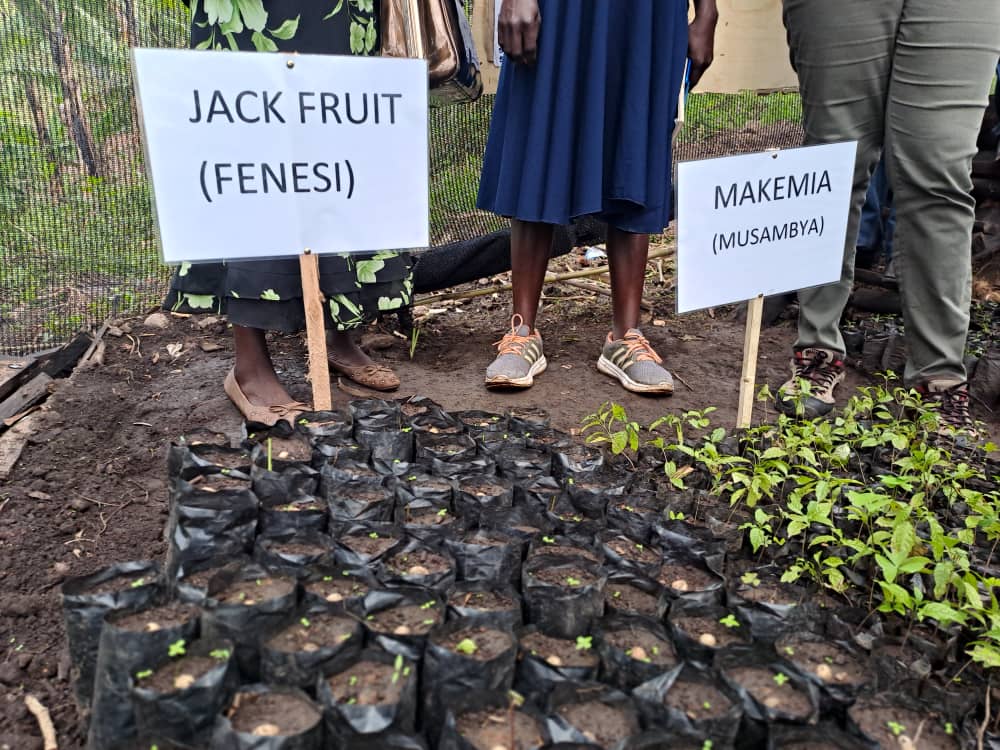
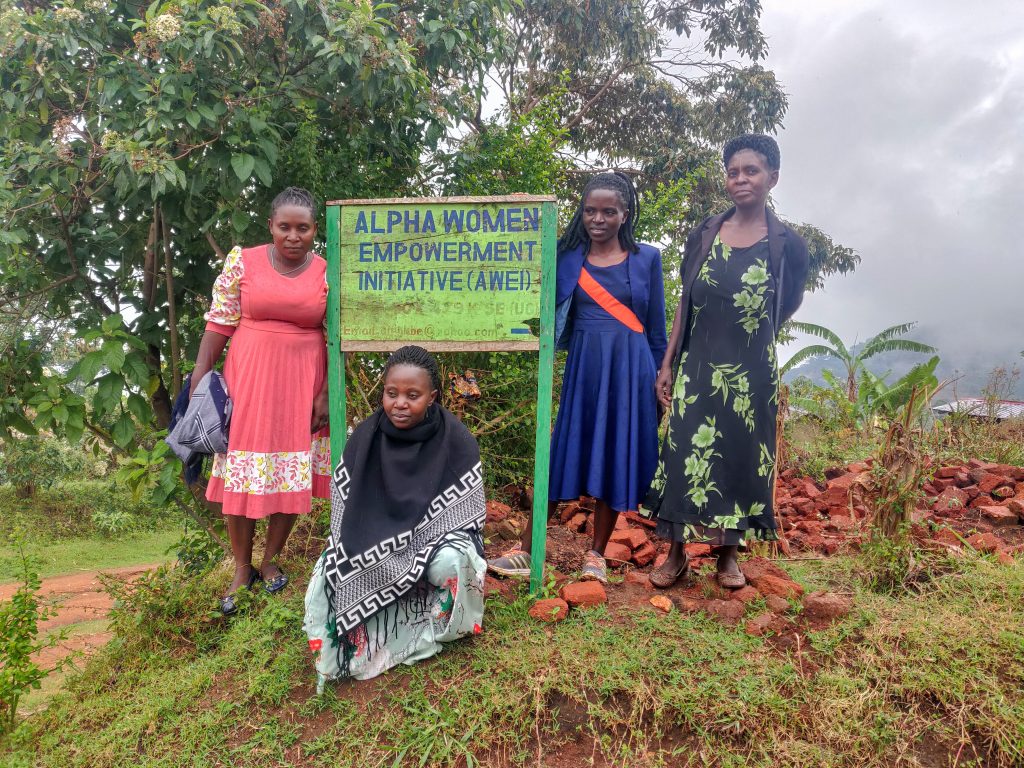
Working with Size of Wales and Masaka District Landcare Chapter Leadership (MADLACC) In Uganda’s Mbale District, ITF is supporting rural women to plant trees that build resilient futures, enhance their wellbeing and transform their local landscapes. In addition, ITF delivers gender equity training and access to resources such as seed funds, organic fertilisers, equipment and beehives, enabling women to build inclusive communities and set up nature-friendly initiatives, that facilitate financial independence while improving biodiversity and food security.
A member and chair of Nakalago Women’s Group, Joan Asiimwe is one of 44 people who undertook training to become gender and climate champions within their respective communities. Joan told us:
“Men have been not respecting women views especially in activities related to land use. Because of the training I have done and continue to do in our community, I have started having women both in our groups and those outside our groups coming to me to ask for advice and also possibly to talk to their husbands about where there is conflict in their homes. By the end of the project, I hope that women will be fully empowered but also more importantly be able to convince their husbands to support them in all their endeavours like leadership seeking.”
KENYA
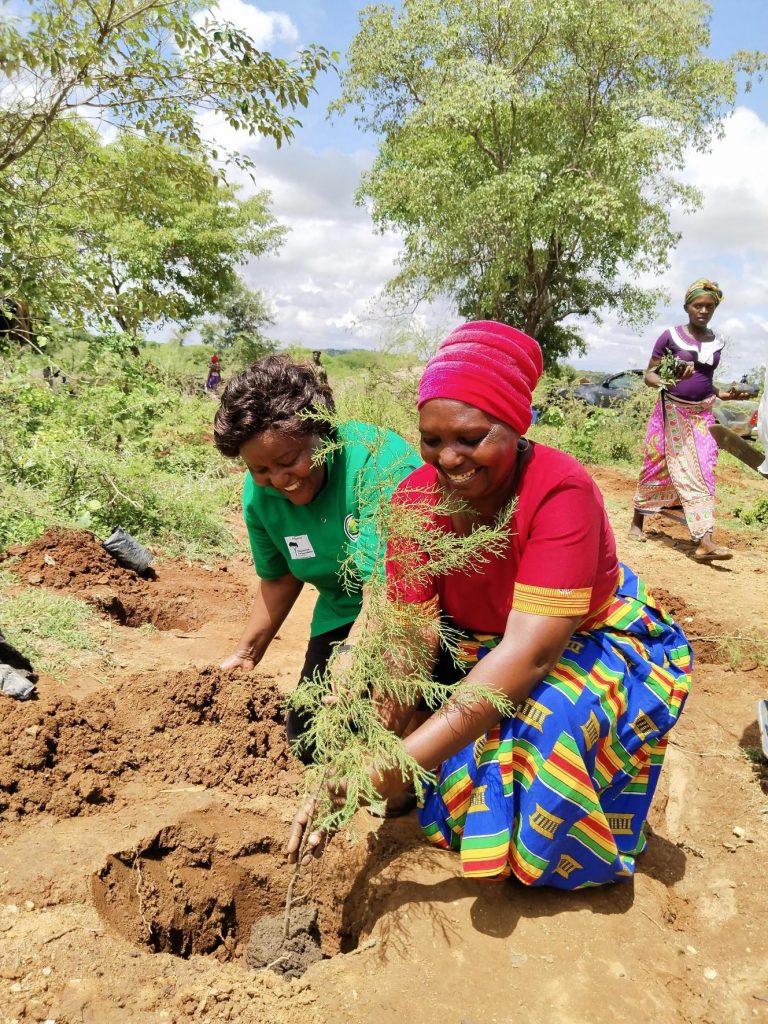
In 2022, ITF managed to plant and nurture more than 600,000 trees in Kenya in spite of prolonged drought in various parts of the country. Working closely with local communities and strategic partners, we were able to do timely planting thanks to expert weather pattern advice from Kenya Meteorological Department. More than 6,500 households across Kenya have been positively impacted by our Kenyan projects, with about 1,500 reporting improved incomes.
There is a direct connection between poverty and forest degradation and at the heart of ITF’s restoration work is community livelihood improvement. Our projects ensure that the community takes the lead in preserving their degraded landscapes, from scratch.
Seed collection, nursery establishment, planting and even after care is done directly by the community. Owning and directly benefiting from the project has led to greater impact on and success within the community for both our reforestation and agroforestry projects.
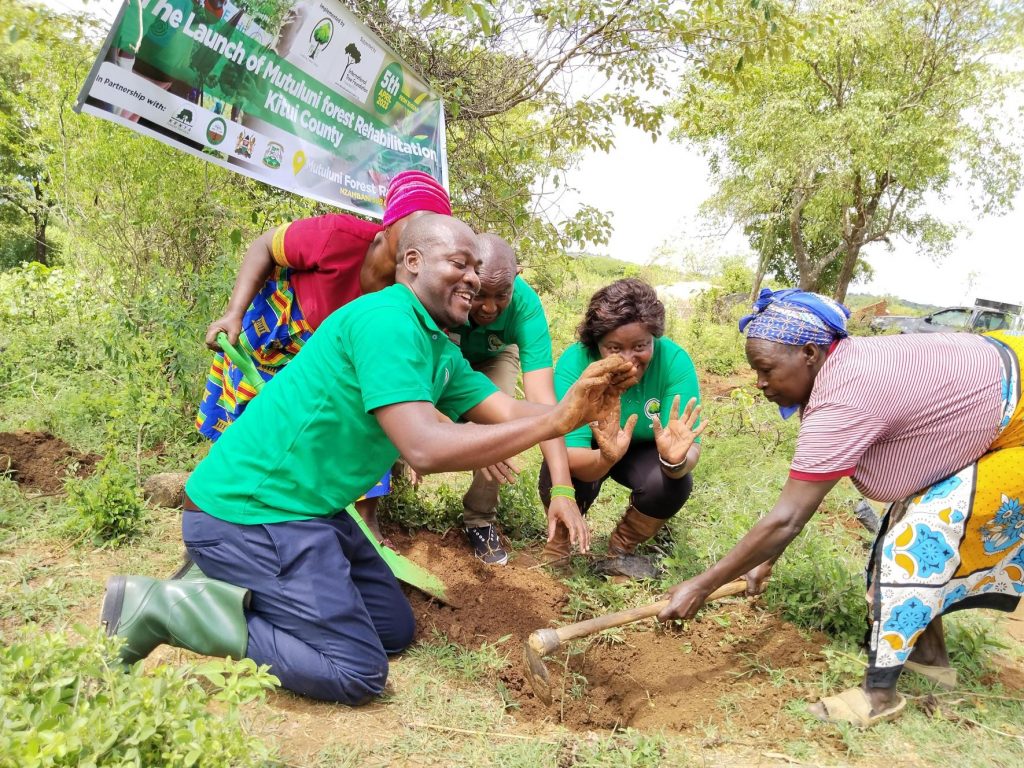
Another key ITF value is to address gender inequality, and nearly all of our Kenyan agroforestry projects are implemented by women. In Kitui County, with support from One Tree Planted, we’ve partnered with Kitui Development Centre, a women-led organisation, to plant trees that replenish and revive this semi-arid landscape. By planting indigenous and fruit-bearing trees, we’re employing agroforestry, integrating trees into farmland to improve soil health and increase yields. The results have been outstanding – with 26,650 trees planted and over 23 hectares restored, this project is literally taking root.
To establish lasting positive change, ITF is helping to establish community nurseries. We have created three created so far, supporting 94 community members with training on seed sourcing, propagation and grafting. Local farmers like Lillian are already seeing the results of this project on a personal level. Liliian says: “I have benefited from all the tree planting trainings and now am able to start my own nursery. Since we started this project, I have been able to earn more than Ksh. 70,000 (£415) from the sale of the tree seedlings. This has assisted me in paying my children’s school fees and meet other domestic needs. I have also planted about 300 tree seedlings and soon I will be harvesting and eating fruits. After a while I will be able to get firewood.”
U.K. In the last 12 months, ITF has supported community-led projects from Skye to Kent to Cornwall. We are also supporting projects adjacent to community-led tree-planting, such as community tree nurseries, woodlands and wellbeing, and refugee support.
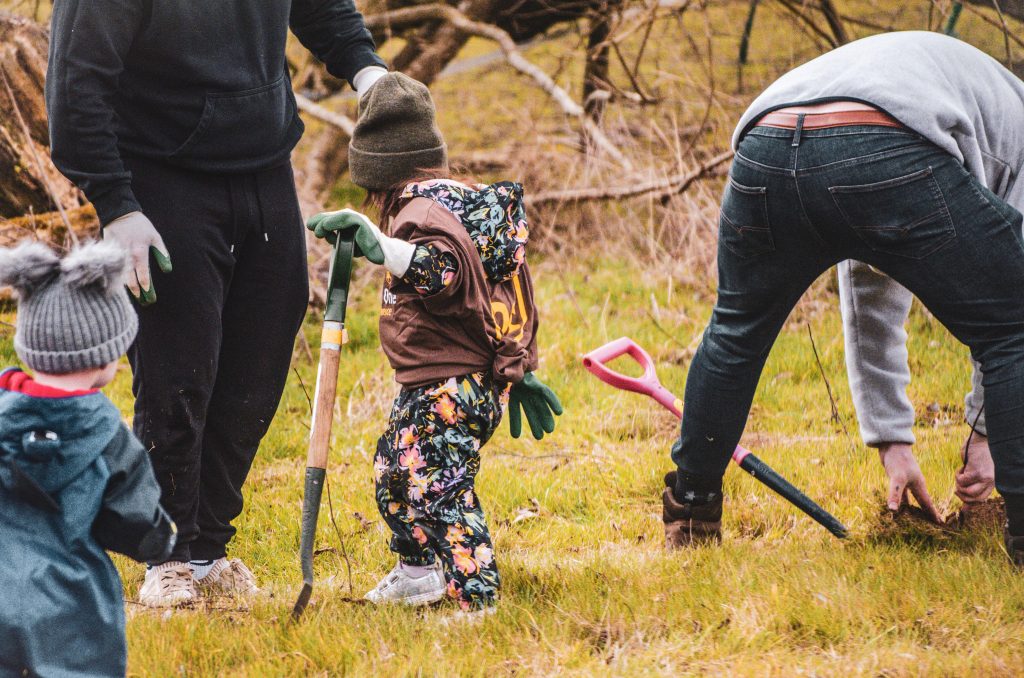
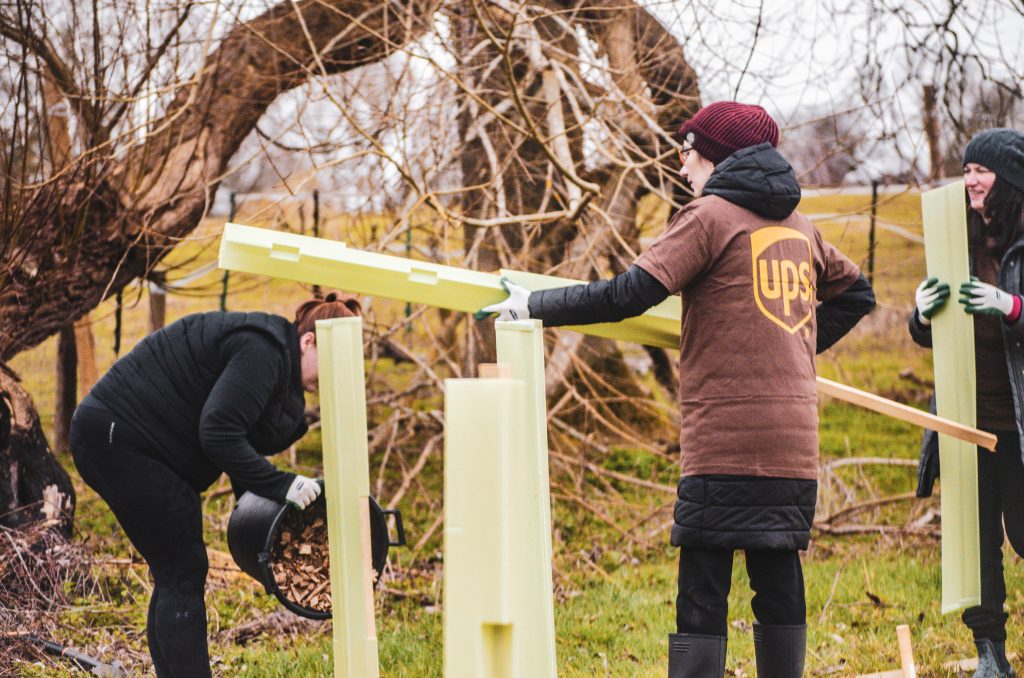
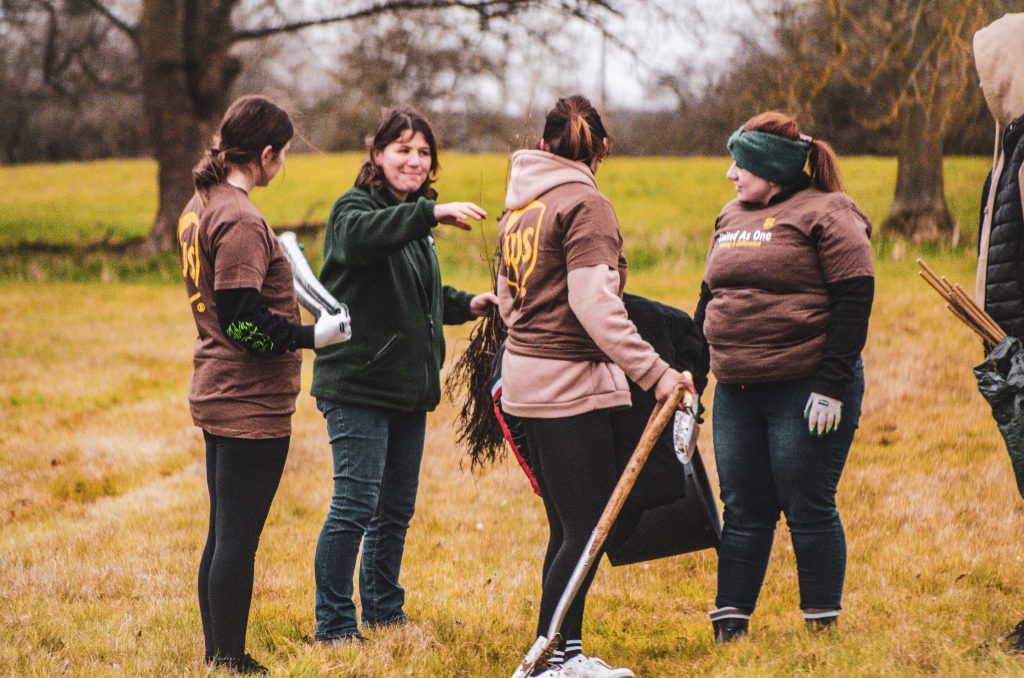
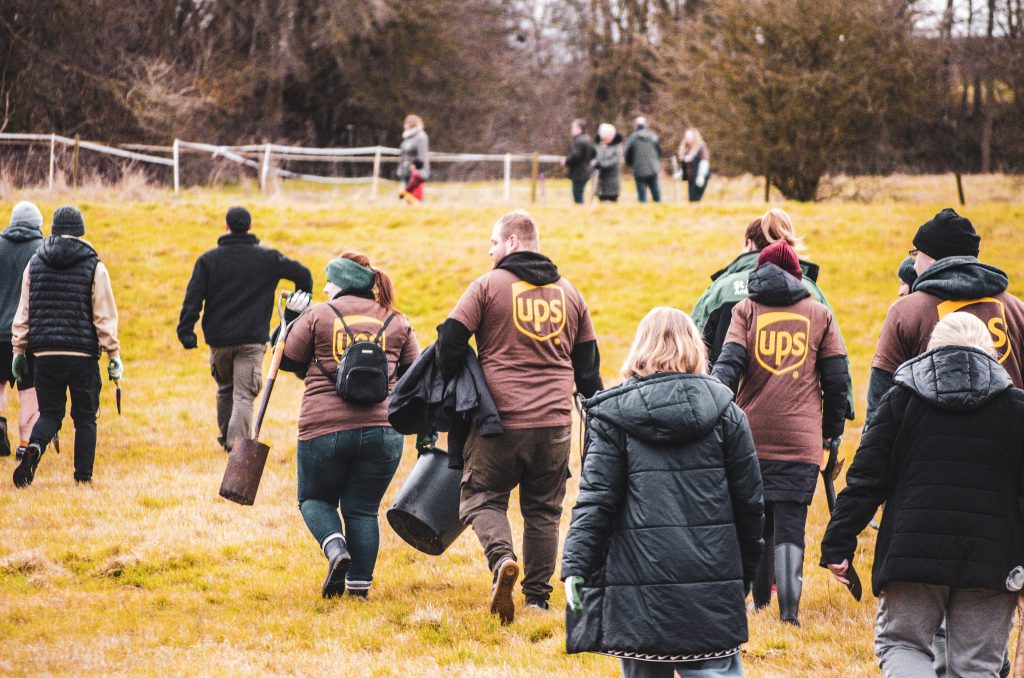
This month, ITF partnered with Creating Nature’s Corridors to offer the UPS Foundation a day of tree-planting in Northamptonshire. The aim of the project was to rewild an old field through tree planting, enabling the site to grow undisturbed for greater biodiversity, resilience and health. Local volunteers, UPS employees, their families and pets came together to plant over 500 native UK trees, which ITF will monitor and protect. Soon, the project will be expanded to develop community fruit trees and herb gardens, providing access to fresh produce for the local community.
Illustrator Lucy Deaner has been picked to create new meadow flower-themed packaging for Scottish beauty company, Seilich. Lucy Deaner comes from Muckhart near Kinross in Scotland both her mother and grandmother were florists, and she feels that could be where her love of flowers comes from. She now lives and works in Richmond, London. Although […]
Angela Terry, CEO of One Home and leading environmental scientist lists her top five budget and eco-friendly ideas for entertaining kids during the holidays. (Thursday 27 June, 2024) With the school holidays looming large on the horizon across England and Wales, it’s no surprise that many parents and caregivers will be worrying about the cost of […]
Leading global retail technology business and specialists in preventing food waste, Gander, has announced a major milestone in its journey towards reducing food waste and fostering sustainability within Australia’s grocery retail industry. Since making its debut in Australia in July 2023, the SaaS company has already launched with independently owned SPAR Chevron in the Gold […]
The year’s highest-scoring recyclable, reusable, refillable, “no plastic” and planet-positive beauty and wellness brands have been revealed at the 4th annual ECO Awards and the winners include: BEST CONSUMER AWARENESS CAMPAIGN Winner (beauty) WELEDA “Save Earth’s Skin” Campaign to raise awareness of the crucial impact soil health has on our planet, quality of food and […]