1245

Posted 2 years ago

The interiors industry is grappling with an inadequate ability to accurately quantify and convey its carbon footprint impact, a challenge recognised by the Furniture Industry Research Associate (FIRA). In a dedicated effort to transform this issue and take responsibility, leading interiors company, BoxNine7 have considered how they can put their proactive efforts to use and enact a meaningful change for the planet, pioneering the industry towards a sustainable design future.

As Britain’s first B Corp certified interior design collective, BoxNine7 recognises the importance of a comprehensive approach to responsibility and sustainability within a business. This recognition has allowed the brand, who offer turnkey furnishing solutions and interior design, to embrace a holistic perspective throughout the organisation, going beyond its design and specification processes.

As a part of Accouter Group of Companies, and in line with the collective’s Sustainability Manifesto, the company aims for 100% sourcing from responsible suppliers and achieving full traceability across their supply chain. However, the interiors industry faces significant challenges and scrutiny when considering its sustainable practices, especially positioned so far behind the fashion industry. The fashion industry has received notable and significant attention for its negative environmental impact, particularly due to its association with fast fashion and the production of clothing at a large scale.

Through a newly launched ‘Conscious Collection’, BoxNine7 have shown that there are other unique approaches to embarking on the sustainability journey, towards reaching the goal of their Sustainability Manifesto.Sustainability in interiors is starting to become a part of the larger conversation on environmental responsibility and consumers of the industry are becoming more conscious of the materials, manufacturing processes, and supply chains behind furniture and home goods. As a forward-thinking and environmentally conscious company, BoxNine7 have been looking to understand the impact of their carbon footprint of everything they purchase from suppliers. To do this, the brand have been working with the Furniture Industry Research Associate, otherwise known as FIRA who have identified that the interiors industry currently lacks standardised stamps or certifications to effectively measure and communicate its carbon footprint impact, a huge challenge in itself. As a result of this, consumers, businesses, and designers continue to struggle to assess the environmental implications of interior design products and practices accurately.

The absence of these industry-recognised stamps further hinders the industry’s progress towards sustainability and responsible consumption. However, whilst this gap is being addressed, BoxNine7 are showing that there are unique approaches to embed sustainability within its practices with its current resources through their new Conscious Collection. Through a partnership with leading real estate developers, Ghelamco, the brand states that their new Conscious Collection “isn’t labelled the ‘sustainability’ collection for a very good reason”, as the brand refreshingly admits they are “not 100% sustainable”. Although BoxNine7 are on their journey ‘towards a more sustainable design future’, and so conscious of their every step. From handcrafted and carbon conscious, to non-toxic and organic, the brand’s transparency on this is illustrated through ‘Environmental Icons’ which are labelled and explained alongside products making up the full collection. The brand states that they “believe in transparency and responsible sourcing. To forever increase our offering of responsible products, we need to seek full traceability from our handpicked suppliers. The role of the environmental icons is to grade our supply chain’s products whilst giving you clarity and confidence in buying from us”.

The collection is composed of products such as headboards crafted from recycled plastic, a coffee table constructed using carbon-neutral components, and plush accessories fashioned from eucalyptus silk, sourced from fellow B Corp certified enterprises. The collection’s show room is housed in Ghelamco’s inaugural UK development, The Arc, situated in Shoreditch. The building is fully electric, and holds triple sustainability certifications – BREEM, WELL and DGNB. With 30% lower carbon emissions than other multi-fuel operated developments, the building is full of cutting-edge technology. Doubling on the sustainability collaborations, the playful patterns and soft earthy palette of the collection pieces have been complimented by the wall colourings, adorned with the striking paints of Britain’s first B Corp certified paint company, COAT paints.


“The team at BoxNine7 approached the collaboration at The Arc with passion, bringing fresh and creative ideas which married well with sustainable credentials and carbon-conscious development. The show flat they delivered was a great representation of the vision we shared and dealing with the team throughout the process has been a pleasure.”

– James Hicks, Residential Sales Director, Ghelamco.

AGC ARE B CORP™ CERTIFIED – WHAT DOES ACTUALLY THIS MEAN?

Earlier this year, Accouter Group of Companies were proud to announce our B Corp™ certification, being the first British Interior Design Collective to achieve this. Although the discourse of sustainability has risen significantly in recent years, the definition of a B Corp™ and how it develops us as a luxury studio may not be so clear.

B Corps™ are defined as businesses that want to achieve more than just making a profit. Their company goals and values are committed to creating a positive impact on their employees, communities, clients and suppliers throughout their strategic decisions and operations.

As a B Corp™, our brands including BoxNine7 take a holistic approach, understanding that the overall design and specification process itself is not the only way for us to be responsible and considerate. Sustainable milestones, as well as our Manifesto, gives our environmental ambitions credibility, and therefore proves our mission to be both purposeful and achievable. However, our B Corp™ design practice also must pay as much attention to our Social responsibilities and Corporate governance. This certification ticks every box in relation to a full ESG strategy.

LEARN MORE ABOUT B CORP™ HERE

BUT WHAT DOES THIS MEAN FOR BOXNINE7’S PROCESS & CLIENTELE?

“Both on the run up to and after achieving our certification, our process here at Accouter Group of Companies has gradually shifted.

We are constantly working on strategies and educating our supply chains to allow for our clients to purchase fully responsible and traceable product, in environmentally friendly packaging.

The key changes we have incorporated at our studio include finding local suppliers in the areas which we are designing interiors for, instead of further national or international suppliers. Not only is this supporting local businesses, but it also helps to protect our planet.

Another change to our process, is that we work with a trusted select group of craftsmen and artisans here in the UK, saving unnecessary emissions, meaning that we are being mindful of our carbon footprint.”

  • Lucy Day-Shanks, Group Director, Accouter Group of Companies

AS BRITAIN’S FIRST B CORP™ CERTIFIED INTERIOR DESIGN COLLECTIVE, WE HAVE MADE 5 PROMISES:

  • We commit to proving to you that we can make a positive impact on the world by acting and evolving as a responsible company.
  • We promise to direct our efforts on measures that deliver the biggest impacts, aiming to continuously review and improve AGC’s environmental performance.
  • We pledge to play our part in building an industry that is filled with, and supports talent from all backgrounds, abilities, ages and identities.
  • We believe in the power of kindness, and pledge to use the powers of our business to create a positive impact on society. We support the Red Cross and charities that mean the most to our people.
  • We understand that being a ‘Force for Good’ is a journey without a destination and we are committed to continuously improve and evolve our business for good. For more information regarding our B Corp journey please click here.

993

Posted 2 years ago

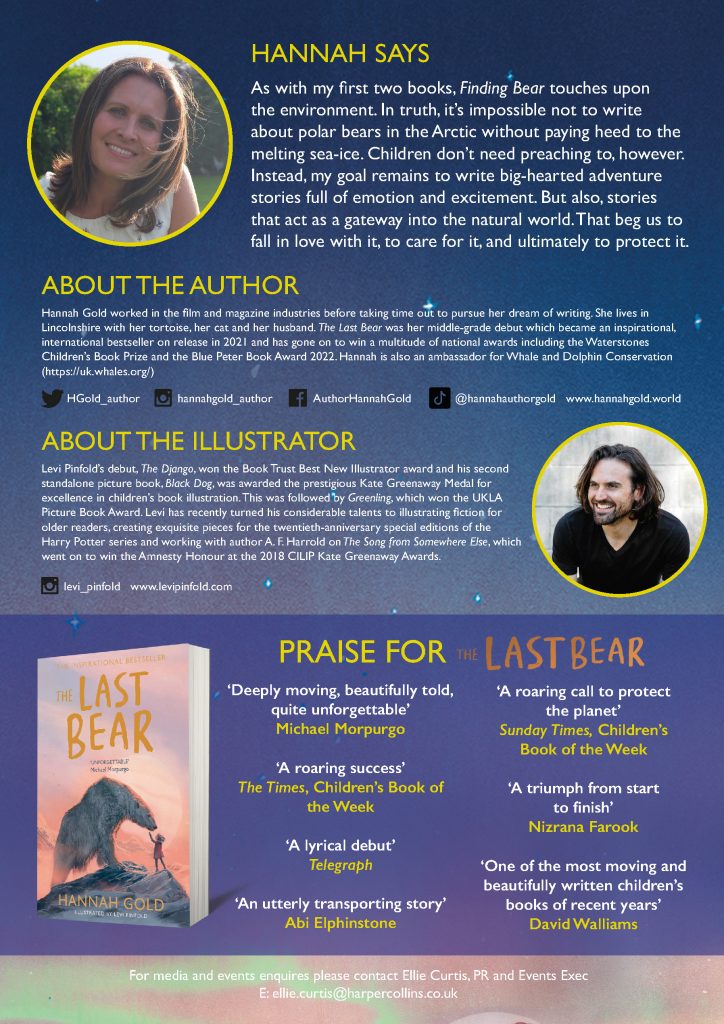
A written piece by award-winning children’s author Hannah Gold on how she writes eco adventures without preaching to or terrifying her young readers, and the inspiration for her books, which include The Last Bear, The Lost Whale and her latest book, FINDING BEAR, which publishes on 28th September.

In FINDING BEAR, Hannah reunites readers with April Wood who has returned home from her adventure on Bear Island. But over a year later, she can’t stop thinking about her best friend, a polar bear called Bear. When she hears that a polar bear has been shot and injured in Svalbard, April is convinced it’s her friend and persuades her dad to return with her to the northernmost reaches of the Arctic.

So begins an unforgettable journey across frozen tundra and icy glaciers. But along the way, April discovers much more than she bargained for – a tiny polar bear cub, in desperate need of her protection.

From Hannah:

When I wrote my debut children’s book, THE LAST BEAR, I wanted to tell a story of friendship, of love, of hope – but most of all a story about making a difference.

Inspired by my love of animals, I told a tale of a girl who becomes best friends with a wild polar bear. And somehow it became a multi-award winning smash hit!

In my brand new adventure, FINDING BEAR, when April hears that a polar bear has been shot and injured in Svalbard, she’s convinced it’s her friend and so persuades her dad to return with her to the northernmost reaches of the Arctic. Along the way, she discovers much more than she bargained for – a tiny polar bear cub in desperate need of her protection.

This is a story full of wildness, bravery and wonder but it’s also a story which touches upon the environment. In truth, it’s impossible not to write about polar bears without mentioning the melting sea-ice. I’m not here to preach though. I write about hope and beauty because I see it in the world around us every single day. And if I can inspire young readers, like you, then my heart is full.

1100

Posted 2 years ago

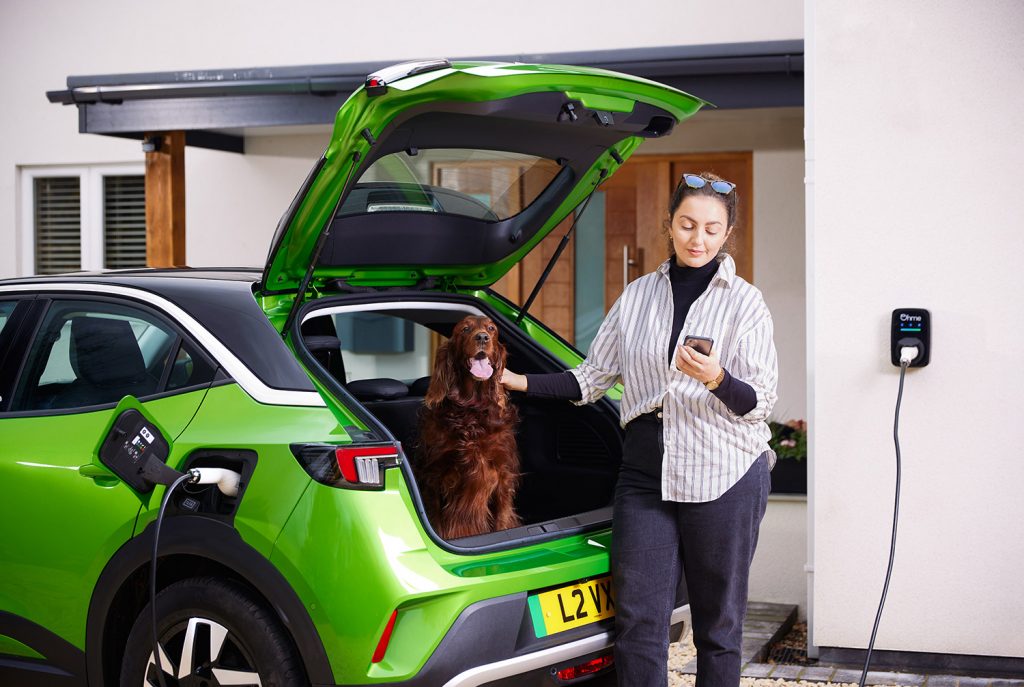
With reduced home electricity price tariffs from next month, EV drivers will be able to charge up for less, says Ohme, the UK’s fastest growing dynamic smart charging company.

However, EV drivers could make even greater savings by switching to a smart EV tariff and taking advantage of Ohme’s unique software technology. Ohme is the only charger provider that can work with both Octopus Intelligent and OVO Charge Anytime.

From 1st October, the Standard Variable Tariff for domestic electricity will be reduced to 28p/kWh, the lowest level for a year, ensuring that EV drivers can now save more money when charging. But by switching to a smart EV tariff, such as those from Octopus or OVO, EV drivers can reduce their charging costs much further.

“During the cost of living crisis, EV drivers will no doubt welcome this drop in the standard domestic electricity tariff,” said Ohme CEO David Watson. “But Ohme’s unique charger technology combined with a smart EV tariff means that they can make bigger savings and have greater control over their charging – software that no other EV charging company has.”

With the average UK driver covering 6800 miles a year, charging on a smart EV tariff in a typical EV would cost just £127.50 for a year’s worth of driving with Octopus Intelligent at 7.5p/kWh. At the new Standard Variable Tariff of 28p/kWh, that same annual mileage would cost £476. By comparison, the same mileage in an equivalent petrol car would cost a driver more than £1110*.

Ohme’s smart chargers can connect with the national grid in real time and automatically adjust their charging for drivers to take advantage of all the times of low price charging with smart EV tariffs. Ohme also offers drivers the option to charge their car when renewable energy generation on the National Grid is at its highest, further lowering their CO2 impact.

Ohme is the official charger provider for Mercedes-Benz in the UK, as well as the Volkswagen Group in the UK and Ireland and customers on the Motability scheme, the largest fleet operator in the UK. It has been named as the Best Electric Charging Point Provider by Business Motoring and recently won Fast Track Company of the Year in the 2023 Green Business Awards.

* Petrol at £1.49/litre and 40mpg average

1601

Posted 2 years ago

Take part in Oxfam Second Hand September and shop second hand to reduce waste, take a stance against climate change, and help create a fairer world – all while looking super fabulous.

WHAT IS SECOND HAND SEPTEMBER?

Second Hand September is a campaign that promotes donating, reusing, rewearing and restyling your clothes during September – and beyond!

Explore slow fashionsustainable fashion and ethical fashion, shop and donate second hand and help create a fairer world.

Since 2019, Second Hand September has inspired thousands of people to shop in a way that is kinder to people and planet.

This year, taking part will get you a free limited edition poster and postcard set, so you can spread the word about sustainable shopping, and help fight the climate crisis in style.

Fashion doesn’t have to add fuel to the climate crisis. Donate your pre-loved clothes, and give them another life. Every item you donate gives clothes a second life, reduces waste, and funds change that the world needs, now.

WHY SHOP SECOND HAND?

What you wear has never been more important. The fashion industry is one of the worst offenders for greenhouse gas emissions. Meanwhile, people who have done the least to cause the climate crisis are facing the very real consequences.

Shopping and donating second hand is one step we can take towards building a better, safer, fairer world.

WHY SECOND HAND SEPTEMBER?

Climate change is impossible to ignore – and it’s pushing people deeper into poverty. So, it’s more important than ever to act now, to prevent this global crisis from becoming a global catastrophe.

When a new pair of jeans is made, an estimated 16.2kg of CO2 is emitted – the equivalent of driving over 58 miles in a car.

So, by recirculating our clothes – buying, wearing and donating second hand – we can help to reduce the demand for new clothes. And this could in turn help to reduce the damage to our planet.

By shopping with Oxfam, you’re investing in vital work to beat poverty – standing with communities worldwide as they fight the climate crisis and speak out against the global inequalities that push people deeper into poverty.

WHO CAN TAKE PART IN SECOND HAND SEPTEMBER?

Anyone can take part! Over the past few years, thousands of people have taken up the challenge of not buying anything new for 30 days .

You can find inspiration by searching #SecondHandSeptember on Instagram – it’s full of photos of people sharing the second hand gems they’ve found. You can also find some great tips on the Oxfam blog.

CHECKOUT OUR LATEST INSTAGRAM OR TIKTOK ON HOW TO USE OXFAM DONATION BAGS:

@theeconews

#secondhandseptember @Oxfam GB I have taken part in Secondhand September to join the movement of recycling, reusing and rehoming your unwanted items. Just remember, the month is to raise awareness but really we should be doing this ALL YEAR ROUND ♻️ #waste #reducereuserecycle #reducewaste #secondhand #secondhandfashion #fashion #eco #sustainableliving #sustainabilitytiktok #reuse #recycle #vinted #september #oxfam #clothes #fashiontiktok #fashioninspo #savetheworld #savetheplanet #upcycling #charityshop #charity

♬ I See Colors – Disco Lines & Rain Radio

1157

Posted 2 years ago

A ‘Net Zero’ project at the Castle Howard estate in Yorkshire is benefitting from a share of the government’s £1.5 million Innovate UK programme, to help protect and enhance the future of the business and its natural landscape.Aimed at connecting businesses with cutting-edge digital tools that can help them reach sustainability ambitions, the Net Zero Living Digital Accelerator funding will support the use of Skylark’s strategic land use technology in combination with Fera Science Ltd’s LAND360 service at the 9,000-acre estate.

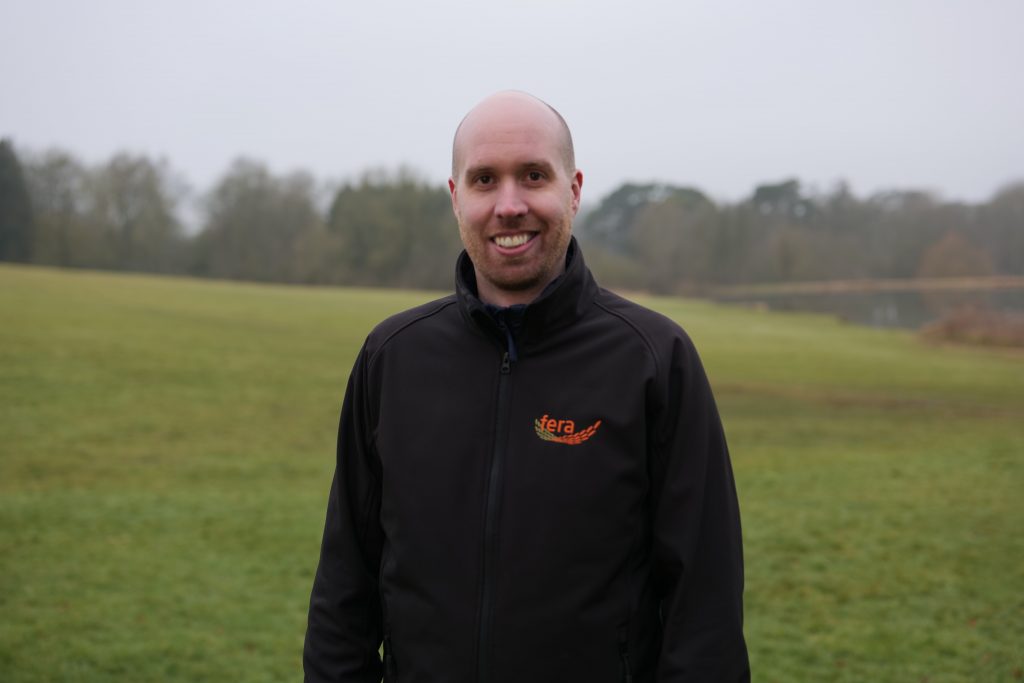
Paul Brown, head of remote sensing, GIS and spatial data science at Fera, explains how the LAND360 landscape assessment service is being used.

“Working alongside Skylark Analytics, we’re providing the Castle Howard team with as much detailed information as possible to help inform their land management plans for the next 50 years,” he says.

“The estate is looking at how they can increase biodiversity and carbon stocks, particularly in marginal farmland and parkland areas parkland. While striving towards the government’s 2050 ‘Net Zero’ goal, potential income opportunities for the business will be explored too.”

With attractive deals for habitat creation projects on offer to landowners, managers and farmers, Mr Brown says it is important to understand the options available and forecast potential results before committing to lengthy contracts.

This relies upon collating high quality, accurate data to work from.

He explains: “At Castle Howard, we’ve built a baseline that shows current biodiversity units and carbon stocks, to give us a benchmark to forecast from.

“We call this a ‘natural capital baseline’ – analysing up-to-date imagery, mainly from satellite platforms, as well as drones for more high resolution data, and on-the-ground surveys to create a habitat map of the estate that’s 90-95% accurate.

“This habitat map is then used to calculate current biodiversity units, using the Natural England metric tool, carbon stocks and carbon flux – which is the rate of carbon exchange via sequestration or emission.

“Using this, we can model potential investment plans for the estate and forecast how different decisions could work best for achieving sustainability and business income objectives.

“It also helps ensure the outcomes farmers and land owners can achieve, such as biodiversity units or carbon credits, are accurately valued. We want producers to get a fair deal, if and when they consider selling these to the marketplace.”

Fera’s collaboration with Skylark on this Innovate UK-funded project is helping to make the natural capital assessment technology as user-friendly as possible, Mr Brown adds.

“Using Skylark’s AR (augmented reality) technology, Castle Howard will actually be able to see how potential plans for the estate could look in 3D, underpinned by LAND360 data .

“Being able to play out different scenarios with real-life visualisation will build land managers’ confidence in making the right decisions, which is so vital ahead of signing up to long-term land use agreements.”

He concludes: “This in-depth analysis can also help highlight untapped opportunities for investing in biodiversity uplift or carbon sequestration, that could add a new income stream alongside what a farm or estate business is already doing.”

Jasper Hazell, CEO at Castle Howard Estates, shares his team’s excitement to be collaborating with Skylark and Fera.

He says: “This pioneering technology will help shape the way our land management decisions are made in the future, to help meet the challenges of improving biodiversity and achieving Net Zero.

“The Innovate UK Grant funding will kickstart this research, using Castle Howard as a pilot from which wider applications can be developed across the region and nationally.”

Fera’s natural capital assessment service, LAND360, helps farmers and land managers to measure, map and monitor their natural capital, so they can make more informed land use decisions. To find out more, visit: https://www.fera.co.uk/land360-land-management

1319

Posted 2 years ago

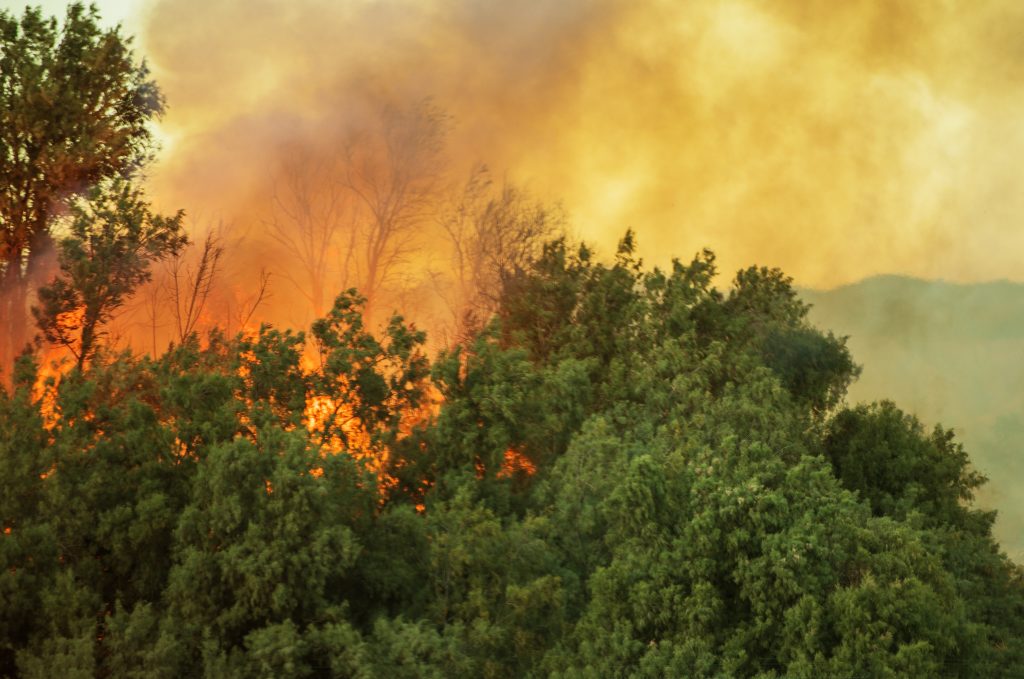
News broke earlier this week that the current wildfire in Greece’s northeast region is the biggest the European Union had ever recorded, as it continues to burn since the 19th August. 

All summer, Europe’s wildfires have burned through thousands of hectares of green space as the continent battles record heat waves for another year, and using data from the EFFIS (European Forest Fire Information System), Distrelec reveals the impact of the European countries worst-hit with wildfires so far in 2023. 

The new research explores the number of hectares lost, the estimated economic impact and, the potential cost of preventative measures governments could put in place to ease spreading:  

Which countries in Europe have been worst affected by wildfires so far in 2023? 

Few European countries have been untouched by wildfires this year, but Distrelec’s research reveals that Greece is the country with the largest area of land burned and the country with the worst estimated economic impact. 

In fact, Greece’s current wildfire in the northeast region has been declared the worst the EU has ever seen, with the EU’s civil protection service saying the fire has burned more than 810 sq km – an area bigger than New York City. 

Burning Forest. California Wildfire Closeup Photo.

Distrelec’s analysis of EFFIS data shows that Greece has seen an estimated 161,008 hectares of land burned so far in 2023 at the time of the report (30th August 2023) – roughly 3.7 times more than the annual average from 2006 to 2021, with estimated costs of €1,663,856,672.

Second was Spain, with an estimated 84,315 hectares of land burned at an estimated cost of €871,311,210.

The research found Italy as the third-worst affected European country, with 66,035 hectares burned, at an estimated cost of €682,405,690.

See the 10 worst affected countries below by hectares burned, CO2 emitted (tonnes), and financial cost: 

CountryHectares burned 2023CO2 emitted as a result (tonnes)Financial cost (euros)
Greece161,008966,048€ 1,663,856,672
Spain84,315505,890€ 871,311,210
Italy66,035396,210€ 682,405,690
Portugal29,096174,576€ 300,678,064
France22,022132,132€ 227,575,348
Romania15,30891,848€ 158,192,872
Bulgaria9,23355,398€ 95,413,822
Ireland4,30225,812€ 44,456,868
Croatia2,52115,126€ 26,052,014
Cyprus1,1226,732€ 11,594,748

Could IoT sensors be the solution? 

The earlier a wildfire is discovered, the easier it is to stop or contain. Although early detection of fires in forested regions is particularly difficult, numerous startups and firms are developing IoT systems using wireless sensors to give early warning of wildfire activity. 

These IoT sensors can bear harsh forest conditions and, according to the ultra early wildfire detection experts, Dryad, volume costs of these sensors will be about €18.30 ($20) each. Using this cost, alongside the forest density of each country (in square km), the team at Distrelec estimated how many IoT sensors each country would need and the estimated cost to help curb wildfires. 

The research estimates that wildfires in Europe have cost an estimated €4.1billion (€4,112,704,652) so far this year, yet the IoT wireless sensors that can trigger early warnings of wildfire activity could cost a marginal €1.9million (€1,885,379) to purchase across the 23 worst affected countries. 

For Greece, the estimated cost of these IoT sensors is just € 47,601.96: 34,954 times less than the estimated cost of wildfires so far this year. 

See the full estimate IoT costs for the 10 worst affected European countries below: 

CountryForest density (sq km)Number of sensors requiredTotal estimated cost of sensors 
Greece39,0182,601€ 47,601.96
Spain185,721.712,381€ 226,580.47
Italy95,661.36,377€ 116,706.79
Portugal33,1202,208€ 40,406.40
France172,53011,502€ 210,486.60
Romania69,290.54,619€ 84,534.41
Bulgaria38,9302,595€ 47,494.60
Ireland7,820.2521€ 9,540.64
Croatia19,391.101,293€ 23,657.14
Cyprus1,725.30115€ 2,104.87

1269

Posted 2 years ago

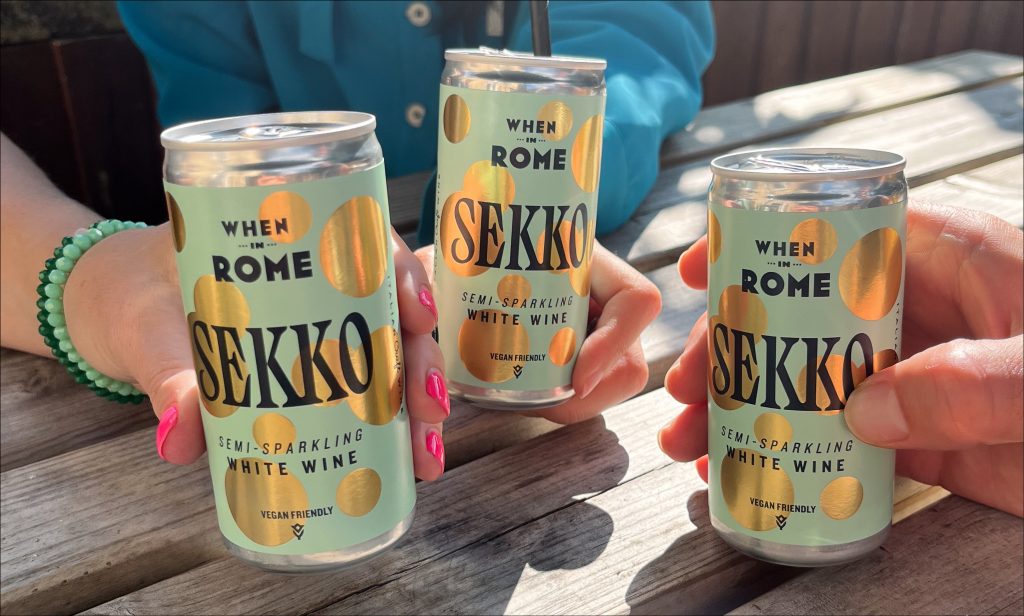
According to the UN, climate change is pushing the world into a new era of “global boiling” after July was the hottest month on record.For one UK wine brand, who are on a mission to decarbonise the wine industry, this has sparked the  launch of a new Italian sparkling wine in a can, which produces 45% less CO2 than the same sparkling wine in a single-use glass bottle.

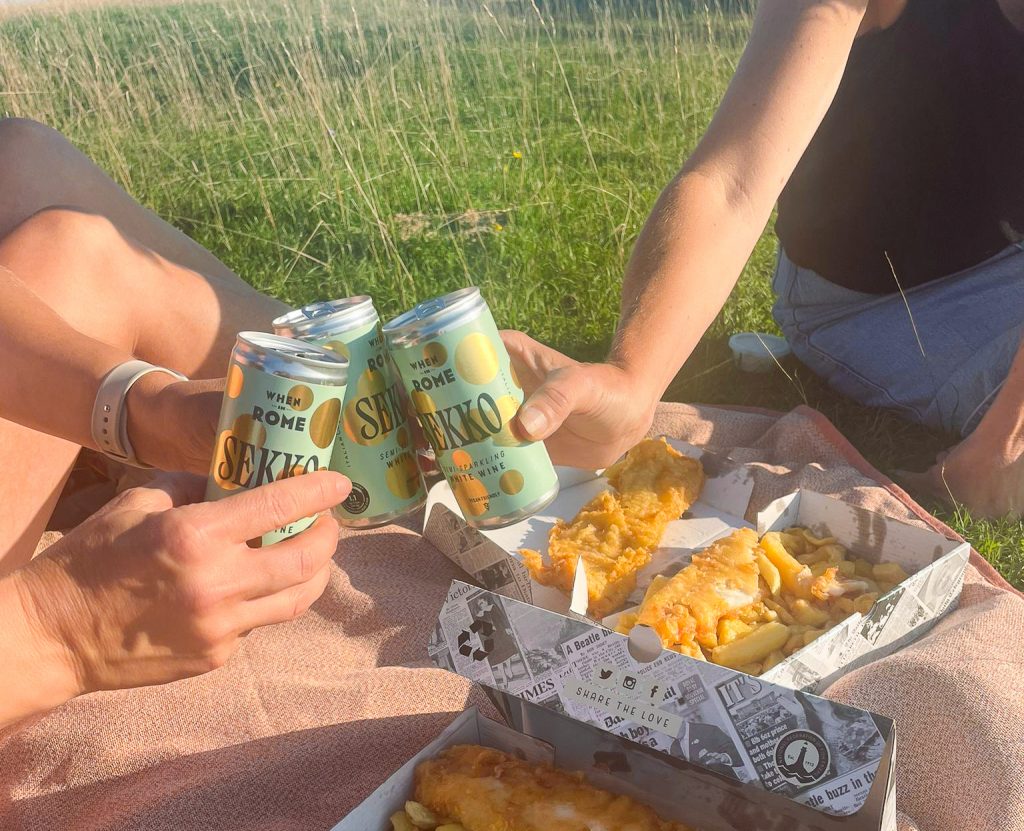
Having recently launched in both Ocado and WHSmith, ‘Sekko’ is the latest wine from Italian craft wine brand When in Rome, a crisp and fresh sparkling white made from the Glera grape.

The new, canned wine will challenge the traditional mindset of how sparkling wine is packaged, favoring a lower carbon, light-weight alternative to the carbon intensive, heavy glass bottles complete with bulky corks and cages. Rob Malin, When in Rome founder, said: “Sekko in a can is a way for us to strip back all of the unnecessary packing associated with sparkling wines and reduce its carbon footprint significantly

.“It’s got all the fizz, but none of the fuss of a single-use glass bottle, the same premium product, but in a more convenient format, perfect for picnics, festivals, train rides or for those who simply don’t want to open and finish an entire bottle of wine.”

When in Rome has been recognised for their canned wine, receiving a silver award win for their canned Pecorino at the International Canned Wine Competition earlier this year.  “39% of the wine industry’s carbon footprint globally is produced by single-use glass bottles, with smarter, lower-carbon packaging alternatives available we can change this,” added Malin.“We’re making great quality wine more easily accessible and we’re so proud of this latest addition to the When in Rome offering.”

When in Rome’s Sekko is available from Ocado, WHSmith travel and via their website For more information, visit www.wheninromewine.com

1253

Posted 2 years ago

It’s always great to hear when someone reads / hears / see’s something you do and then follows suit.  In particular, I get very impressed when people embrace their inner Greta.  As promised I said I would keep you updated on my environmental quest.  So here’s a couple of people embracing their inner Greta and an update from me.

MY MOTHER-IN-LAW HAS A DOUBLE BUTT !

Yep,  to be honest, my in-laws had a water butt before I did and it was them that introduced me to the benefits of having one.  However,  my in-laws have now purchased a second one.  After all it’s much better and environmentally friendly to have a double butt rather than a double chin.

Getting a butt is the only time that you look out the window and get all excited when it’s raining and your butt is getting a good fill. We kept going out to measure how much water we’d captured.  They’ve had the 2nd butt for a couple of weeks now and the English weather has filled it for them.  

Just make sure when you buy your butt, it comes with a decent stand. My Father-in-law found the first stand collapsed in the middle of the night, flooding the drive and left him (who suffers from arthritis) trying to recover the water butt as it went rolling down the drive way.  Oh, and they live on hill, so it was like a river down the street.  It’s a good job they have a gate, otherwise you would have seen him running down the road, in the middle of the night trying to catch it (a little bit like he does with his wheelie bin when it’s out for bin day and it blows over).  It’s just the wrong type of moon to view at that time of night.

They always have a fantastic, colourful garden though and I am sure a second butt will mean more water for them in the coming months. The garden definitely benefits from water that has no treatment chemicals added.

THE NEXT DOOR NEIGHBOUR HAS GONE GRETA

One of our neighbours followed our recommendation and got E-On to install solar panels and a solar battery.  He now regular gives updates on his energy generation and is thoroughly happy and excited. As his roof faces directly south, I am sure he is going to take full advantage over the summer.

The interesting thing is, Greta JONBerg (his name is Jon), has now started planning to label appliances in his house.  Labels on the Oven and Washing Machine to say “Don’t have on at the same time as the kettle” as he investigates the power consumption of all his appliances.  Oh, and he’s not happy at all about that 9Kwh Power Shower.  That definitely can’t go on at the same time as any other appliance in the house.  His wife is also going Rebel,  a shower followed by the hair dryer whilst cooking the Sunday roast, doing the weekly wash and shouting “Jon would you like a cuppa” is her attempt at being on the wild side.

Finally, don’t even attempt to talk to him if he’s cutting the grass whilst the sun is out.  He must have that free cut whilst the sun is on the panels.  He’ll talk to you either when the sun goes behind a cloud, or, the grass is completely cut.

WE’VE BOUGHT A WIND FARM

Well, not quite.  But I have bought shares in a wind farm that is going to be built next year.  Ripple Energy are allowing home owners like you and me to buy into a Wind Farm.

Their system allows you to estimate your annual energy consumption and you can set your level of investment accordingly (or if you just want to dabble, you can spend as a little as £25).  Then,  when it goes live,  your energy supplier (it has to be one of the ones they use e.g. Eon, Coop, Octopus) purchases your energy from your wind farm to offset against your bill.

Be aware that they purchase at a lesser rate than you buy from them, but,  it allows you save a significant amount on your yearly electricity bill.  You also get an app to see what you’re generating,  and can even decide to charge your car for example, at a period when you’re generating from your wind farm allowing you to keep motoring on your own renewable energy.  How cool is that? 

We’ve bought into the Kirk Hill Wind Farm in Scotland that goes live at the end of 2023.  It has a 25 year lifespan (maybe more),  it can move with you if you move house, can be passed on if you die. They give you back 5% of your investment  every year for 20 years as the value of the farm depreciates as well as giving you the Kw’s you purchase resulting in savings on your electricity bill.  It also makes you feel really good to support an environmental project.  Check them out at https://rippleenergy.com/.  The Kirk Hill development share offer is due to close soon,  so if Solar isn’t for you but you want a slice of the environmental action, then check it out.  It’s ideal if you live in an apartment for example.  But is still valid if you have house, solar etc.

AN ELECTRIC SUMMER

So, we’ve also just ordered an Electric Barbecue.  Yep,  instant on, ready in a few minutes, easy to clean, no more fossil fuels and free to run from our Solar panels.  I’m embracing my Inner Greta again (and the Rebel is rubbing her hands together as she sees another device to torture our solar battery).  

The rebel has also finally decided what electric car she wants and we have it on order (although due to chip shortages its not arriving until December at the earliest).  The only thing I am concerned about, is whenever I need to call her and she’s out, her mobile is always flat…… I say no more.  At least our insurance company has free electric car recovery if you run out of juice.

I CAN CRUSH A CAN – QUICK TIP

Here’s a quick and cheap item.  Anyone find their recycling bin fills really quickly.  Get a Can and Bottle crusher.  It’s great and stops the bin filling up so quickly.  Just try to get the rebel in your family trained to not put them in the bin until they’ve been crushed, otherwise you end up having to dig deep in order to retrieve and crush em.  It will hopefully stop me getting the rebel to stand in the bin to crush things down.

Ramblings of a Yorkshireman: You can call me Greta Too

1320

Posted 2 years ago

As much as we try to cut down on the amount of waste we produce, sometimes we can’t help but buy products that leave us with waste packaging. Although recycling is better than simply tossing household packaging in landfill, an even more eco-friendly option is reusing the materials and giving them a new lease of life. Here are three ideas for reusing common product packaging to give you some inspiration.

Photo by Precious Plastic Melbourne on Unsplash

1. Refill empty cleaning product bottles with homemade cleaners

Homemade household cleaners tend to be cheaper and healthier than store-bought products. With simple ingredients like vinegar, baking soda, borax, castile soap, hydrogen peroxide, salt and essential oils, you can create a variety of effective, eco-friendly cleaning products and store them in empty spray bottles. Just make sure to thoroughly clean the bottles before filling them to avoid causing unexpected chemical reactions. A simple recipe to get you started is an all-purpose cleaner made from one part vinegar, one part water, and the rind of a lemon.

Photo by Alvina Suhardjo on Unsplash

2. Make seed planters from egg cartons

Egg cartons make ideal planters for growing seedlings. Poke a few small holes in the bottom of each carton cup for drainage. Cut the lid off the carton and stack it underneath so it can catch water. Next, simply fill the cups with soil, plant your seeds and water them.

Once your seedlings have sprouted and started putting down roots, you’ll find them easy to transport out into your garden or allotment for planting. If you’re using a cardboard egg carton, you can simply cut apart the individual cups and plant each one, cup and all, in the soil. The cardboard will disintegrate over time. It can be helpful to cut a couple of slits into the base of each cup to help the plant’s roots expand.

Photo by Jenna Lee on Unsplash

3. Use plastic bottles to make bird feeders

Putting bird feed in your garden is a great way to see more wildlife, but it can also be an essential food source for birds during harsh winter weather. Plastic drink bottles can make handy bird feeders.

Use a pin to poke two holes on opposite sides of the bottle near the base. Feed one or two popsicle sticks through these holes to serve as a perch. Cut a small feeding hole just above each perch and try to make these as smooth as possible to prevent sharp edges. Poke two more holes on opposite sides of the neck of the bottle, and thread a length of string through these for hanging. Next, simply fill the feeder with seeds, replace the bottle lid, and find a sheltered location to hang it up. Attaching it to a washing line or the branch of a tree is a good idea.

Reuse packaging to reduce your environmental impact

Every small thing we can do to cut down on waste is beneficial for the environment, so try to reuse as much product packaging as possible to protect our planet.

1097

Posted 2 years ago

A fantastic idea has at last become a reality: with RINGANA as its first participating company, the newly-founded Klimapartnerschaft.at (Climate Partnership) can finally start operations. The project entails returning 138.9 hectares to nature. To ensure that the initiative is on a solid technical footing, some strong partners have already been brought on board such as Austrian Federal Forests (ÖBf), the University of Natural Resources and Life Sciences in Vienna (BoKu) and the Eberswalde University for Sustainable Development (HNEE). The aim is to promote biodiversity, slow down climate change, and to set a new standard for climate conservation. This is a further step for the Styrian fresh skin care and food supplement manufacturer in completing its sustainability mosaic. It is also hoped that other medium-sized businesses can be motivated to join this partnership.

More than 99 per cent of Austria’s entire forest area is subject to human interventions. Scientists are largely in agreement that to achieve successful environmental conservation, the few existing primeval and natural forests must be preserved, and nature reserves expanded. “They are an important gene pool and a sanctuary for European biodiversity. However, considered over the long term, the nature reserve areas are to small to compensate for species extinction. It will therefore also be necessary to take cultivated areas into consideration with regard to nature conservation,” emphasises Prof. Dr. Dr. h.c. Pierre Ibisch, from the Eberswalde University for Sustainable Development. That is exactly what RINGANA is doing as part of its climate partnership, together with scientists, Austrian Federal Forests and the Wilderness Area. This Styria-based medium-sized company is convinced that action needs to be taken – and now. Because even if Austria is one of the most species-rich countries in Europe, those species are rapidly declining, demonstrating how important it is to act immediately.


Losses such as a 40 per cent decline in vertebrates over the last 30 years, and the direct threat to around 50 per cent of mammals and breeding birds, almost 100 per cent of reptiles, and large sections of the insect populations speak for themselves,” says Prof. Dr. Georg Gratzer from the University of Natural Resources and Life Sciences, Vienna Institute of Forest Ecology. As the biggest landowner, the ÖBf AG (Austrian Federal Forests) has been working closely with the Dürrenstein-Lassingtal Wilderness Area from the start. Apart from contributing technical know-how, it also provides suitable areas for additional nature conservation projects. “We are delighted to be part of this climate partnership which represents a further important building block for greater biodiversity protection in the region,” says Stefan Schörghuber, head of the Forest-Natural Space-Sustainability Unit of Austrian Federal Forests.

One of RINGANA’s reasons for initiating this partnership is to create awareness of how companies can take responsibility for a livable future. RINGANA is providing the funding to remove an area of 138.9 hectares directly adjoining the Wilderness Area from use over the long term. This will enable the usage pressure on the ecosystem to be reduced, and allow the primeval forest to develop its particular abilities. An ecosystem that is made increasingly stable in this way can better defend itself against climate change. The natural forest that will be created will also be exceptionally good at removing CO2 from the atmosphere. This is a result that RINGANA will be able to factor into its CO2 balance as part of its sustainability strategy.

Why choose the Dürrenstein-Lassingtal Wilderness Area?

“Emissions of harmful greenhouse gases do not only have to be avoided as much as possible. Within the scope of our sustainability strategy, we already strive every day to improve in this area. But those gases must also be removed from the already overloaded atmosphere. Natural forests can safely store them over the long term, with a resulting positive effect on the climate.”

“That is precisely why we have established this climate partnership with the Wilderness Area and our strong partners,” says Ulla Wannemacher, General Manager and co-founder of RINGANA, explaining the reasons behind the project. The Styrian medium-sized company consciously chose to partner with the Wilderness Area. Just as the company intends to grow economically over the long term, it also sets long-term benchmarks for the success of its sustainability activities.

Against this backdrop, the last primeval forest in the foothills of the Alps plays a particularly important role. Framework conditions have been developed – far more stringent than the current market standard – aimed at targeted, long-term climate conservation and biodiversity protection.

“There are already some projects in place. But none of those convinced us in terms of their effectiveness or transparency. What has always been crucial for us is to find a way of effectively combatting the climate crisis. We don’t just want to “be a part”, but also want to ensure that we are excellent here as well. This climate partnership is our next great milestone – it’s an enormous effort for us, but one in which we are glad to make a long-term investment,” stresses Andreas Wilfinger, CEO RINGANA.

“Naturally, I am delighted about every new tree that is planted. But our existing tree stock is several hundred years old in places – a veritable turbo when it comes to CO2 emissions and preserving biodiversity. I am therefore all the more pleased that with the climate partnership we will be able to take further valuable forest areas out of use, and we will be supported in our work. What pleases me most, however, is that RINGANA wants to create awareness of this special project. I would expressly welcome it if this signal is recognised by other businesses, including medium-sized ones. Every hectare counts,” says Nina Schönemann, wildlife biologist at the Dürrenstein-Lassingtal Wilderness Area and Managing Director of Klimapartnerschaft.at

Summary of the key points of the climate partnership:

1. Greater biodiversity.  As a climate partner, RINGANA is providing significant funding which will allow an area of 138.9 hectares around the last primeval forest in the Alps to be removed from use over the long term, and returned to nature.

2. Climate conservation. Emissions from harmful greenhouse gases must not only be avoided as far as possible and reduced, but must also be removed from the already overloaded atmosphere. Specially protected natural forests can ensure the storage of those gases over the long term, with a corresponding positive effect on the climate. The climate-affecting added value of the forest area which RINGANA has allowed to be removed from use will be factored in as part of its CO2 offsetting within the scope of the company’s climate strategy.

3. New standard. Framework conditions – far more stringent than those currently used in the market – have been developed to achieve targeted and long-term climate conservation and biodiversity protection. The aim here is to establish the necessary climate conservation requirements.

With this climate partnership, RINGANA is making a long-term investment and will send out a signal to other medium-sized companies to get involved. Because only long-term, concerted action is effective.