1714

Posted 2 years ago

For Earth Day, secondary school students in Milton Keynes shared their biggest worries about climate change and the environment and ideas about how technology can offer solutions to the issues.

The school partnered with The Access Group, a leading provider of business management software with customers at more than 9,000 learning institutions, schools and academies in the UK, to encourage secondary students to discuss climate change and global warming, how it affects them and the impact it will have on future generations.

The Access Group – Earth Day Students from Glebe Farm

In a green assembly hosted by The Access Group, students from Glebe Farm School said their main concerns are air pollution caused by cars and fossil fuels, leading to the rise of conditions such as asthma, and polluted oceans with microplastics and dwindling natural resources.

Students also spoke about the impact of extreme weather, such as hotter summers, on the planet and wildlife. They advocated a wider use of renewable energies, and less reliance on cars as potential solutions to global warming.

In a Dragons’ Den style competition, the Year 7 pupils created designs for a piece of technology to address one of the United Nations’ Sustainable Development Goals (SDGs), which they pitched to a panel of judges, including Carla Matthews, director of sustainability at The Access Group, and their teachers.

Their ideas included a water filtration system to provide clean water to disadvantaged communities, a variety of vehicles powered by renewable energy sources, a solar powered phone case to charge smart phones and solutions to gather plastic pollutants from the sea and transfer to recycling centres.

The Access Group -Electro Bike Winning Team

First prize was awarded to a team who presented their Electro Bike idea to the judges. The concept focused on harvesting the kinetic energy generated by the bike, which they explained could be rolled out in gyms and leisure centres.

The second prize went to two students who impressed judges with their Cook-a-Sun solar powered oven, and third prize was awarded to a team who created Tippy Taps – a filtration system which sterilised water[LJ1] .

Year 7 teacher, Sherine Swan, said: “The students have taken away some valuable lessons from the challenge and had the chance to explore how innovation and technology can play a big part in addressing environmental issues.

“We were impressed with their creativity, innovation and the tech solutions they developed. Most importantly, it got them thinking about what they can do, both individually and together, to make a bigger, collective difference.”

The Access Group – Electro Bike Winner Team

Sarah Bennett, CEO of Inspiring Futures through Learning (IFtL) – the education trust that runs Glebe Farm School, added “At IFtL, days like this place great importance on our environmental responsibilities as an organisation, which are reflected in both the curriculum and daily operations. Environmental considerations are embedded throughout learning activities and common practices across all our 16 schools both in Milton Keynes and Corby, in line with our strategic aims to lower carbon emissions as set out in the environmental strategy and targets”.

Carla Matthews from The Access Group, said: “Big businesses and technology companies can learn from the earnest and insightful views of young people. Climate change and global warming will affect their future.  They’re rightly concerned about the planet and have many of their own suggestions and solutions for fixing it.

The Access Group – Glebe Farm Earth Day Cupcake

“We’ve been enthused and inspired by the students’ innovative solutions we’ve seen today. This is a credit to the school for building environmental awareness and knowledge about the United Nations’ 17 SDGs into the curriculum.  Including global issues and challenges in their lessons ensures pupils are well-informed, mindful of global issues, and more aware of how they can collectively drive change. What was also inspiring to hear about was how they have taken this on board and are seeking to change the behaviours of others.

“At The Access Group, we are passionate about sustainability and are embedding it across our organisation. Working with our customers globally gives us a deep understanding of the impact of what we do. 

“2023 was the hottest year since global records began in 1850. Weather events are becoming more extreme and frequent. Mutual collaboration with our people, our customers, our suppliers and our communities will enable us to pool resources, share knowledge, and find effective solutions.   

“We need to act quickly and with determination to make a difference.”

955

Posted 2 years ago

Tell us about you..

I’m Ben and I’m the creator of Tiny Eco Home Life. It’s a website all about inspiring people to live a more sustainable life. Through the site, I’m committed to sharing genuine, helpful and reliable information in the form of articles and guides across all major areas of your home life.

Armed with this information, you can then start to make swaps, switches and habit changes to achieve maximum positive impact for you.

Alongside running the site, I’m a full-time freelance writer from my home in Salford. Articles, blog posts, web pages, email campaigns, guides, e-books, video scripts…you name it, I’ve probably written it. 

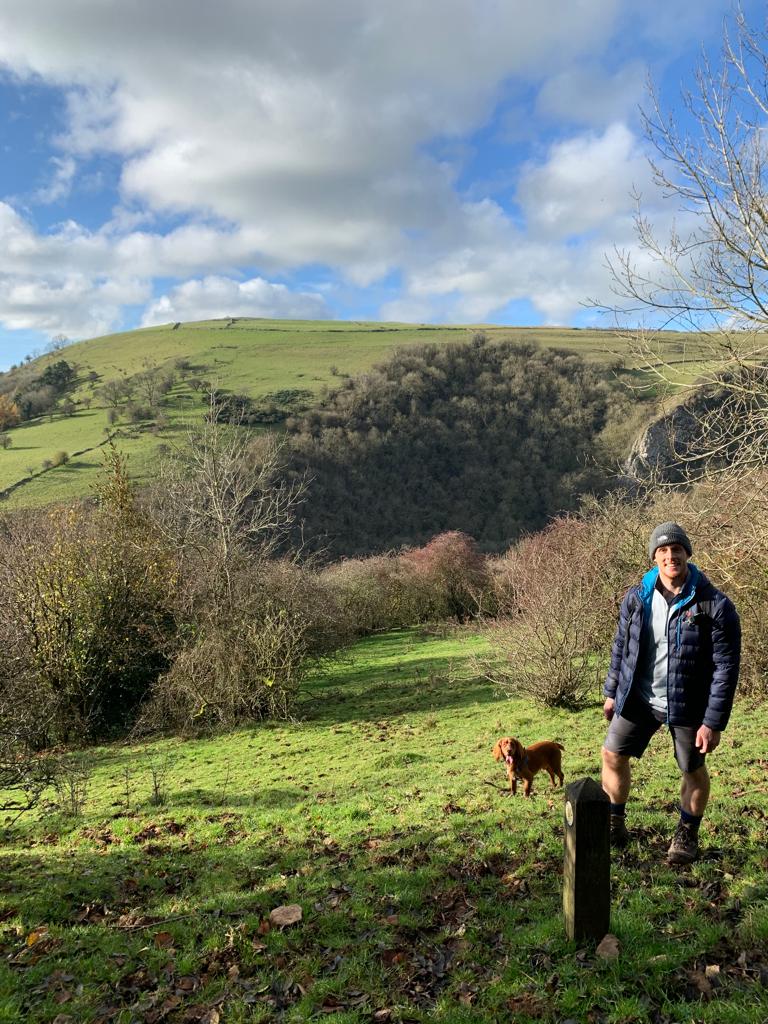
When I’m not at my laptop, you’ll find me outdoors, walking my energetic cocker spaniel Murphy, at the gym, having a coffee (several) or being a dad to my two year old son. 

How did you become a freelance writer?

My writing career started just after I graduated from the University of Sheffield back with a Biology degree in 2010. I ventured over to south-west Spain for a stint of living and teaching a bit of English. On my return I wanted to keep in touch with Spanish culture as best as I could, so I started volunteering to write for a couple of Spanish football websites. Once I got the bug, I decided to start my own website.

I eventually found myself in a digital marketing role (mainly thanks to experience of writing on the side) and for the first time in five years, I was actually paid to write. After a number of years in digital marketing and still writing on the side (but this time mostly paid), I decided it was time to take the leap into self-employment. 

What made you join us and others on a sustainable journey?

Despite growing up in an industrialised city, I was always attracted to nature and the outdoors as a youngster. One of my favourite parts of the year was our annual family trip to Chester Zoo. I loved it. I’ve since learned that zoos have their pros and cons from an ethical and sustainable perspective. 

But if it wasn’t for zoos, I don’t think I would have developed a love for animals. It led me to a period of work experience at my local Animals in Distress sanctuary and to volunteering for Lancashire Wildlife Trust. If this wouldn’t have happened, it’s unlikely that I would go on to study Animal and Plant Science at University, which is where my journey with the environment and sustainability really started. Without that, I wouldn’t have started my website.

What is your favourite advice to offer?

The best place, and perhaps the only place, to start is with the things we can control in our own homes and everyday lives.

If I was to ask you, “What do you think the biggest source of carbon emissions is for retail giant Amazon?” You might say transport. 

What about Google or Netflix? Server power, perhaps? 

No, the biggest source of emissions is their finances. It’s where they hold their cash. 

You or I might not be a tech giant, but who we bank with can have a major impact on our green living credentials. That’s because most banks, savings accounts and pension providers invest money into businesses and projects that support the fossil fuel industry, deforestation, factory farming and other unethical endeavours. 

According to the latest Banking on Climate Chaos report, big banks across the world have provided $5.5 trillion (yes, trillion) to fossil fuel companies since the 2015 Paris Climate Change Agreement. In the UK, the worst culprits are Barclays, HSBC, NatWest, Lloyds and Santander who together have provided £100s of billions of financing to fossil-fuel based businesses. 

So, switching to a bank that strives to be sustainable with its investments is a simple, yet immensely impactful way to create change. Switching to a more ethical bank means your money is not being used to fund or support environmentally harmful activities. 

What is your best sustainable decision so far? 

Starting Tiny Eco Home Life has to be one of my best sustainable decisions. Purely because of the number of people it’s had a positive impact on. It’s been incredibly rewarding to share knowledge with others and be there to support people when they decide to embrace more sustainable living practices. 

As a normal person living in a city, I’m not striving for perfection. Instead, I’m focused on making improvements and taking small, sustainable steps in my own life. Researching and writing about sustainability has been a fantastic way to discover new ideas that I can put into action myself.

Some people argue that individual actions don’t matter and won’t make a significant difference for the environment. I strongly disagree. 

I believe that starting with easy changes, such as switching to a green energy provider, choosing a more ethical bank as discussed above, reducing food waste, carrying a refillable water bottle, can create a ripple effect. Once you’ve made a few simple changes, you’ll gain momentum to evolve other areas of your life in a positive way. I’ve even written a guide featuring 100 ways to be more sustainable at home, which you can download on Tiny Eco.

My motto is to keep things ‘simple and sustainable’, focussing on small, manageable changes that can create a lasting, positive impact on the environment. It’s not lost on me that just 57 companies are linked with 80% of greenhouse gas emissions since 2016, but I think that change won’t happen with the pressure, influence and will of the people.

Checkout Bens free guide on 100 ways to live a more sustainable life!

https://www.tinyecohomelife.com/sustainable-living

1078

Posted 2 years ago

On Friday 19 April, as the World Bank and IMF Spring Meetings concluded in Washington, DC, ‘Debt for Climate’ activists from Africa, Europe and America staged global protests to declare that 80 years of debt colonialism are enough.

In Lusaka, Zambia, activists delivered a letter to the World Bank demanding debt cancellation for Global South countries to address their crippling debt crisis.

Hundreds march through Lusaka, Zambia on April 19, 2024 as part of a global day of action demanding debt cancellation for climate justice. (Angela Nandeka/AP Content Services for Glasgow Actions Team)


“Zambia is in the middle of a huge debt crisis, worsened by 80 years of crippling IMF and World Bank loans, leaving minimal funds for essential services. Zambia urgently needs to deal with the climate crisis and economic relief to protect its citizens, but instead is trapped spending billions in debt repayments to creditors. Debt cancellation is crucial for Zambia’s social, economic, and climate justice.” stated Precious Kalombwana, Debt For Climate Zambia.

In Ghana, where interest payments consume up to 100% of national revenue, Debt For Climate Ghana organized an educational event at the Strategic Youth Network for Development, attended by over 40 people.

“Hefty debt payments stifle our growth, poverty rises, and climate adaptation suffers here in Ghana. We have no chance of meeting any Sustainable Development Goals. The Global North institutions, like the IMF and predatory private lenders like BlackRock must cancel this debt to enable and support a just-transition and a sustainable future for Ghana,” stated Nana Mariam, Debt For Climate Ghana.


At the National Autonomous University of Mexico, Debt For Climate Mexico hosted a public radio show featuring prominent environmental and social justice activists, including representatives from the National Promoter for the Suspension of Public Debt Payments, National Front for the 40-Hour Work-week, and National Union of Indigenous Peoples’ Workers for Forest Care. 


Diana Cantarey, Debt for Climate Mexico, said “It’s no secret that lenders like the IMF and the World Bank impose financing conditions at the expense of the working class. A large portion of the national wealth, created in our country, is not reinvested back into the population but is instead used to pay the unsolicited development of fossil fuel infrastructure and industry, as well as the interest on a massive illegitimate public debt.”


In Hamburg, Debt for Climate Germany activists took to the streets of the annual Fridays for Future Global Climate Strike addressing their government’s role in perpetuating the colonial debt burden on the Global South.


In the United States, Debt for Climate US blocked the road outside IMF and World Bank meetings and performed street theater to illustrate how the IMF loans shackle the Global South. Reb Spring declared “Those of us in the Global North, the wealthiest nations, must demand our governments pressure these institutions and private lenders to cancel the debt. This financial colonialism must end.”

893

Posted 2 years ago

Harvest to Harvest in the Southern Wilds
The Diary of a Country Parson – Peter Owen Jones

In the Mountains Green – new book!

‘As a boy, I would walk out into the fields alone. Looking south, I set my eyes on the far ridge, wondering, not knowing, what lay beyond it. What world existed there?
Now, as a man, I stand on the top of the Downs, up on the mountains green. To the south, the land folds down to the sea, but to the north the boy is there looking back at me…’

In a series of joyous, reflec1ve and inspired diary pieces, Peter Owen Jones takes us on a voyage through the yearly cycle – a journey of inner and outer discovery. With the
variety and colour of Bri1sh seasonal life and the beauty of the Sussex countryside as his backdrop, Owen Jones observes the magical in the everyday – in the birds, bees
and buFerflies, but also in people. With lightness of touch and good humour, he calls for an awakening to the world around us, to ourselves, and ul1mately to meaning in life.

Originally published as a series of separate ar1cles in Sussex Life magazine, the essays gathered here provide a delighful glimpse into the life of a nature-loving country
parson.

PETER OWEN JONES spent his early years in the countryside before working as a farm
labourer. He was ordained, becoming a parish priest in 1992. He has since written a
handful of books – including his most recent, Conversations with Nature (2022) – and
presented several award-winning television programmes. At the time of writing he
still serves as a parish priest in Sussex, England.

16 May 2024
120 pp
21.5 x 13.5 cm
paperback
£12.99

1037

Posted 2 years ago

OUR BRAND

Print Sisters Archive, founded by the creative duo Alexia and Claudia, is a small independent female-led company born during the first lockdown. We curate a diverse archive of rare artworks, historical prints, and textile patterns, celebrating craftsmanship with a vision that blends creativity, heritage, and timeless style. Our vintage print designs reflect our passion for fashion, interior design, and love for the planet, offering affordable art for all.

THE ARCHIVE

Hosting one of the largest privately owned curated collections from the 1800s to the 1970s, our archive features rare and unique handcrafted textile design artworks. We restore, rework, and revive prints, honoring original artists through a modern approach, creating affordable and sustainable products. Limited to 500 editions per design, our process involves careful digital restoration, often adding creative flair with colour variations and mixing and highlighting unique elements. Our archive collection is always evolving. French vintage designs are sourced mostly from Lyon and surrounding textile areas. Some of the prints are from Belgium, Italy and also Britain. We currently produce blankets, cushion covers, wallpaper and prints.

OUR ROOTS

Growing up we visited a lot of vintage markets, surrounded by classic cars, dresses, jewellery and art, where we developed a natural inclination to seek and collect beauty. So it was always in our nature to seek and collect beauty. Our grandmother is from Belgium so visiting her home city, Brussels, to explore the Art Nouveau and Art Deco architectural spaces was also very inspiring to us.

OUR PROCESS

Based in Hackney, London, our hands-on collaboration involves selecting prints, forming print stories, and making poetic connections, expressing sentiments. The process is organic, influenced by seasons, films, exhibitions, and moods. We usually go with whatever feels most beautiful or resonates the most. If we did this process on another day we’d likely make a different selection, so sometimes we take weeks to let ourselves hone in and build excitement about the next wave of creativity.

SUSTAINABILITY

At the heart of our business is our gratitude to the environment around us, striving to be as eco-friendly as we can. We work with 100% recycled and sustainable papers and materials wherever possible. We are proud to be partnered with Tree Sisters, a tree planting charity which also offers unique global programs that focus on encouraging women’s leadership and nature-connection, as we make the shift from being consumers to restorers- a sentiment we reflect in our work to restore vintage designs. We are always seeking out ways we can further achieve a full circle eco approach to our products.

COLLABORATIONS

We’ve channelled our passion into an archive that has inspired fashion and interior designers alike. We have collaborated with independent designers and renowned brands worldwide such as Real Hackney Dave, Daydress, Lick and Oasis. Our brand has been seen in Vogue, House and Garden UK, Elle Decoration, and will soon be featured in TrendBible and The English Home as we’ve just received a 2024 New Year Honours Award!

WHAT’S HAPPENING IN 2024 AND BEYOND…

Currently stocked in Glassette and soon in Fenwick’s, our full range is available on our website (or line sheets attached have an array of our products for swift perusal). 

As we stride into 2024, we continue using our passion as a compass for further growth, so folk can discover true historic beauties for themselves! Recently won two awards with LUXlife : Best Sustainable Textile Design Company 2024 – UK & BUILD Family Run Business Award 2024

831

Posted 2 years ago

A new report has been launched by CleanHub to highlight the devastating amount of ocean plastic pollution in 2024, as well as looking into the complex origins of it and what the future holds in the face of rising plastic production.

Key report findings:

  • 80% of Ocean Bound Plastic (OBP) comes from Asian countries.
  • 81% of all marine litter is plastic, and 80% of it starts its life on land with the rest from marine practices.
  • Europe is the biggest exporter of plastic waste as well as the biggest importer.
  • China, the United States, and India produce the most plastic waste per year, India, China, and Brazil mismanaged the most waste. 
  • In terms of annual waste produced per person, America comes first with 105 kg of plastic, with the United Kingdom second at 99 kg. 
  • The fishing industry is responsible for around 10% of ocean waste. 

Launched ahead of Earth Day 2024 (22nd April), with this year’s theme being Planet Vs. Plastic, the ‘How Much Plastic Is In The Ocean?’ report from plastic pollution prevention startup CleanHub analyses industry data on the amount of plastic that is in our oceans, with sections focusing on plastic bags, straws, bottles, and microplastics, and the main ways that plastics enter our oceans. It also looks at the countries that produce most plastic waste, and the state of ocean garbage patches.

Currently, 14 million tons of plastic enter our oceans annually – the equivalent weight of five blue whales entering our environment every hour. By 2050, in terms of weight, there will be more plastic than fish in the ocean

On the seafloor, there are up to 11 million tons of plastic waste and 10,000 times more plastic particles than on the surface, with microplastics making up more than 14 million tons. On the surface, it’s estimated that there are an astonishing 358 trillion microplastic particles

Tracing the Origins of Ocean Plastic Waste

It’s estimated that 80% of Ocean Bound Plastic (OBP) comes from Asian countries, although much of this is shipped in from abroad. China, the United States, and India produce the most plastic waste per year, and India, China, and Brazil mismanaged the most waste, showing an imbalance between production and waste management. Poor waste management infrastructure and overspilling landfills are the key reasons so much ends up in the oceans. However, in terms of waste produced per person, America comes first with 105 kg of plastic thrown away yearly, with the United Kingdom in second at 99 kg.

Much of the data around exact plastic waste exports is omitted by some countries, making it difficult to determine the exact amount of waste thrown away by each country. As of 2020, Europe was the biggest exporter of plastic waste as well as the biggest importer, highlighting the complex nature of plastic movement around the world.

The fishing industry is responsible for around 10% of ocean waste, known as ‘ghost’ fishing gear such as fishing nets, traps, and lines that get lost. Some of the ghost nets are kilometres long, and it’s difficult to know how many are on the ocean floor as many are weighed down by the dead marine life – sometimes as large as sperm whales – caught in them. 

Drowning in Single Use Plastics

Plastic bags in particular are a huge ocean pollution issue. They quickly break down into microplastics and/or are ingested by marine life – it’s estimated that 56% of all marine life has ingested plastic. Annually, up to 300 million plastic bags end up in the Atlantic Ocean alone. Problematically, recycling rates for plastic bags are very low – up to 5 trillion plastic bags are used every year, with a 12-minute average use time, and only 1% are recycled.

Despite efforts to restrict single use plastic bags from some countries, including the US, UK and China, single use plastic production rates have actually increased. About 137 million tonnes of single-use plastics were produced from fossil fuels in 2021, and this number is expected to rise by another 17 million tonnes by 2027.

Up to 8.3 billion plastic straws are found on worldwide shorelines, with around 7.5 million on United States shores alone. They make up around 4% of plastic trash by piece, but far less by weight – their average weight is so small that they only amount to 2,000 of the nearly 9 million tons of plastic waste that annually enters the oceans.

Similar to the other plastic products, it’s hard to know just how many plastic bottles are in the ocean. As 1 million are purchased worldwide every minute, and with only 1 in 6 getting recycled, many will end up polluting the environment.  It’s been found that for each mile of UK beach there are 5000 pieces of plastic & 150 plastic bottles.

Garbage Patches and an Uncertain Future

The report also looks at ocean garbage patches, which are a culmination of ocean waste around marine gyres (whirlpool-like currents). There are five main patches – one in the Indian Ocean, two in the Atlantic Ocean, and two in the Pacific Ocean. The largest and most infamous is the Great Pacific Garbage Patch, estimated to be three times the size of France. 

Despite huge efforts to counter ocean garbage patches – with The Ocean Cleanup NGO removing about 25,000 pounds of trash during one collection in 2023, the largest gathering of patch waste – they continue to exist as more waste keeps coming to them.

The future of ocean plastic waste is difficult to predict. If the mismanagement of plastic waste doesn’t stop, it’s set to get worse – especially as plastic production is expected to grow by 10% within the next decade

There are global efforts being made – several nations signed the historic High Seas Treaty in 2023, with the aim of turning 30% of oceans into protected areas by 2030 to protect marine life and reduce harmful fishing practises. The UN also introduced the High Ambition Coalition to End Plastic Pollution that encourages countries to stop plastic pollution by 2040 through a circular economy model. However, neither of these specifically deals with existing plastic waste.

Many organisations and startups are helping to reduce ocean-bound plastic such as The Ocean Cleanup, Clean Ocean Action, and CleanHub, which empowers businesses to stop ocean-bound plastic waste and supports coastal communities in the process.

Please read the full report here: https://blog.cleanhub.com/how-much-plastic-in-the-ocean

CleanHub’s Vice President of Marketing, Nikki Stones, comments on the report:

“Ocean plastic pollution is one of the biggest environmental issues of our time. It continues to grow to shocking levels, and affects not only marine life but people too through its impact on the entire ecosystem. Products must be created with their end-of-life in mind and we need to build better infrastructure to deal with the huge amounts of waste.

At CleanHub we believe that ocean plastic pollution is solved on the land, not the sea. By introducing effective waste management where it doesn’t exist and transforming waste materials into something useful on a much larger scale. This way, we reduce our reliance on new materials and utilise waste, instead of dumping it. Without these solutions in place around the world, ocean pollution will only continue to increase.”

1195

Posted 2 years ago

Charis has been selected by npower Business Solutions (nBS) as its strategic partner for the launch of a new foundation that will support community projects in West Midlands and Yorkshire over the next two years. Charis will manage the application process, oversee project selection and distribute funding to the successful applicants.

Not-for-profit organisations such as local charities, social enterprises and schools and universities will be able to apply for grants from £10,000 up to as much as £100,000 to fund projects that help to improve the environment, encourage responsible business and support skills and employment opportunities.

The npower Business Solutions Foundation will be supporting a diverse range of projects that focus on energy efficiency, decarbonisation, recycling and sustainability, community places and spaces and the creation of social value.  Projects will need to be delivered within a 50-mile radius of nBS’ Solihull and Leeds offices to be eligible for financial support.

“Charis has worked with UK energy suppliers to distribute funding for twenty years.  Our experience managing application processes, eligibility criteria, payments, and customer communications, along with the versatility of our software makes the support of this fantastic initiative a natural fit for us,” commented Charis’s Director of Client Services, Jonathan Hunt.  “We’re excited and proud to be involved in the npower Business Solutions Foundation.”

Anthony Ainsworth, Chief Operating Officer at nBS, added:

“At nBS, we have always supported causes that mean something to us as a company, our colleagues, and our customers. The npower Business Solutions Foundation takes this a step further, allowing us to directly support projects that will make a real difference in our local communities.

“As a longstanding partner of two of our sister companies within the E.ON Group, and having a track record of successful scheme management, Charis was the obvious choice to help make it a success.

“We welcome applications from any relevant organisation, from local schools to sports groups to community arts centres to charities, who have struggled to secure funding to turn their plans into reality. These could range from improving the sustainability of their premises through energy efficiency, creating a new space that encourages responsible business or supports wellbeing.” 

More information, including how to apply to the nBS Foundation, is available at www.npowerbusinesssolutions.com/foundation . For questions relating specifically to the application process, your can email Charis direct on: nBSFoundation@charisgrants.com