1738

Published June 17, 2022

With the majority of new homes required to have electric car chargers fitted from the 15th June, multiple award-winning EV smart charger provider Ohme has seen a dramatic increase in demand from housing developers and building companies.
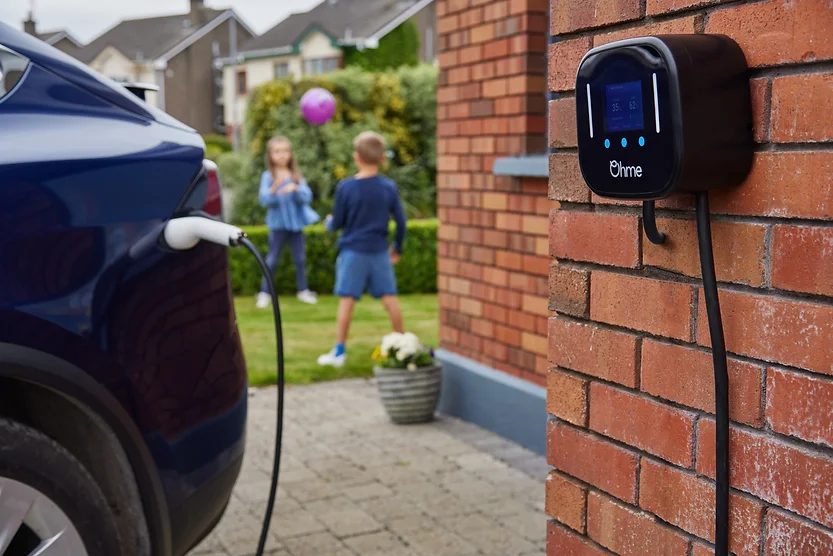
The change in building regulation requirements sees the majority of new residential developments, workplaces and supermarkets required by law to have electric vehicle (EV) charging points installed. The change, which comes into force from today, also includes those residential buildings undergoing major renovations with more than ten parking spaces which have associated parking.

The new legislation is part of the government’s wider plan to help cut carbon emissions by encouraging more drivers towards electric cars with an extra 145,000 charging points fitted each year. The move is in addition to part of the run up to the wider ban of the sale of fully petrol and diesel vehicles due to come into effect in 2030.

“We welcome the plans to encourage drivers towards electrified motoring in all its forms by enabling increased access to EV charging points for all home owners,” said Ohme CEO David Watson. “Over the past six months, even before this new legislation arrived, our enquiry levels from developers have more than doubled and we can see that building companies have embraced these new regulations. Developers are already seeking out smarter chargers such as ours as an active selling point for buyers.”

Ohme’s smart chargers can connect with the national grid in real time and automatically adjust its charging for drivers to take advantage of all the times of low price charging with smart electricity tariffs. The result is that EV drivers can potentially run their car for less than £100 a year by smart charging their EV with an Ohme charger compared to charging on standard electricity rates.

Furthermore, Ohme is also alone in offering drivers the option to charge their EV when renewable energy generation on the grid is at its highest, further lowering their CO2 impact and helping developers and building companies to meet corporate sustainability targets.

Richard Smith, National House Building Council’s Head of Standards, Innovation and Research, said: “We support the government’s proposals for more sustainable homes. The journey to net zero carbon will have significant implications for housebuilders, planners and architects. Ensuring the right electric vehicle infrastructure, including easy access to chargepoints, is key. Our own NHBC Foundation research has shown that the UK needs more than 4 million electric vehicle chargepoints by 2030, from a figure of around only 180,000 just two years ago.”

According to the NHBC, there was an increase of 25 per cent of new home registrations* in 2021 compared to 2020 with growth in 11 out of 12 UK regions. So far in 2022, sales of fully-electric vehicles are already up 71.2 per cent on 2021 with a 15-fold increase in the choice of electric models according to the Society of Motor Manufacturers and Traders.

* 153,339 new home registrations in 2021 (source: NHBC)

Visit https://ohme-ev.com/ for more information if you are looking for your home!

#electriccars #electric4x4 #electricfuture #greenenergy #electrictechnology #cars #carsales #housebuildrers #building #newhomes

1679

Published June 14, 2022

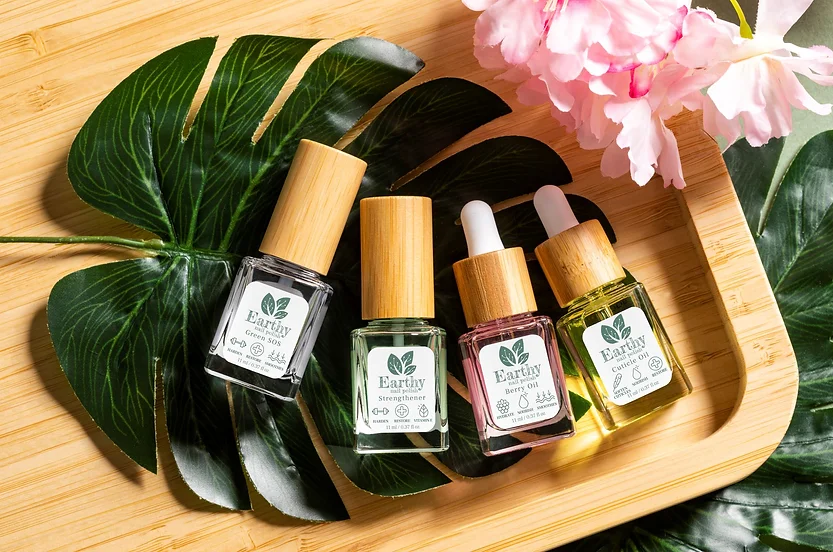
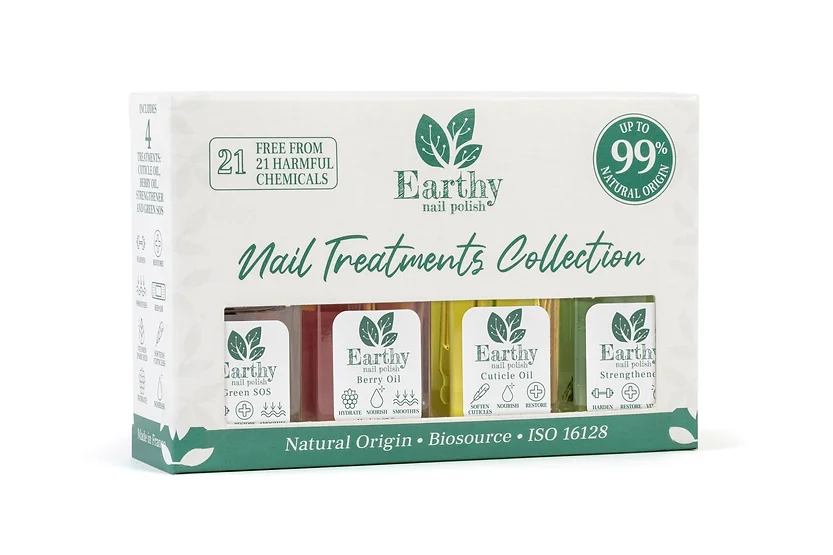
Their brand new nail treatments collection has been available since the 9th June 2022. The collection includes four indulgent treatments that are up to 99% natural origin and 21 free. The treatments come with their signature sustainable bamboo cap and brush or pipette.

The following treatments are included; Green SOS enriched with chestnut extract and vitamins B5 and C supports the repair of damaged nails. Berry Oil made with vitamin F locks in moisture and hydrates rough nails and cuticles. Cuticle Oil rich in vitamin E and C softens the cuticles and extensively nourishes nails. Our Strengthener treatment enriched with vitamin E and bamboo extract for hardening soft cracking or thin nails.

The collection is priced at £26.97, the treatments are also available to purchase singly at £8.99. The treatments are perfect when you need some pampering and self-care and clean healthy nails also help to ensure your manicure lasts that much longer. The vitamin enriched treatments will help to lock in moisture, nourish and strengthen nails and work especially well for intensive repair.

Of course, we also have a wide range of plant-based nail polishes as well as our award-winning Base Coat, Top Coat and Remover available at www.earthynailpolish.com. Our products are cruelty free, vegan and contain natural origin ingredients. This is the perfect time to grab your collection and get your nails ready for summer.

Please find further images of our products attached in case anything takes your fancy – do let me know if there’s anything I can send you.

#nails #nailtreatment #ecofriendlyproducts #econails #ecobeauty #ecosalon #organic #nailart #nailpolish #vegan #natural #bamboo

1225

Published June 13, 2022

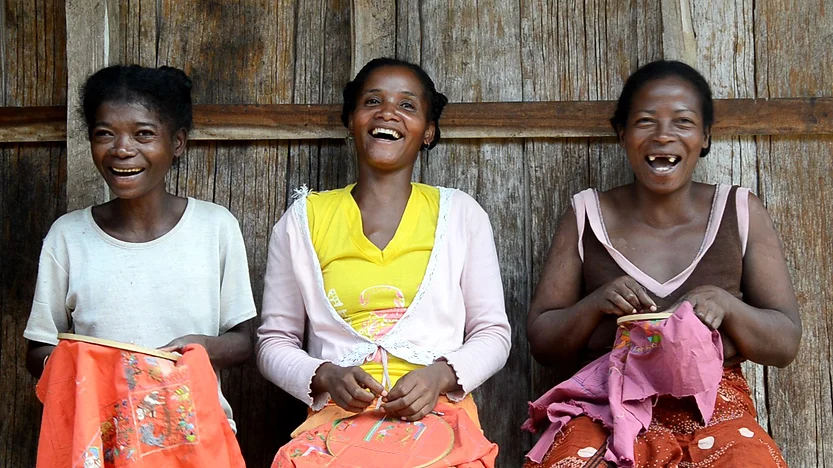
Stitch Sainte Luce is a women’s Cooperative in Madagascar, supported by the charity SEED Madagascar, which has taught embroidery, as well as business skills in maths, sales and English language, to over 100 women, so that they can produce and sell the products to help bring an income to families in the poorest country in the world, where almost 80% of the population lives on less the $1.90 per day.

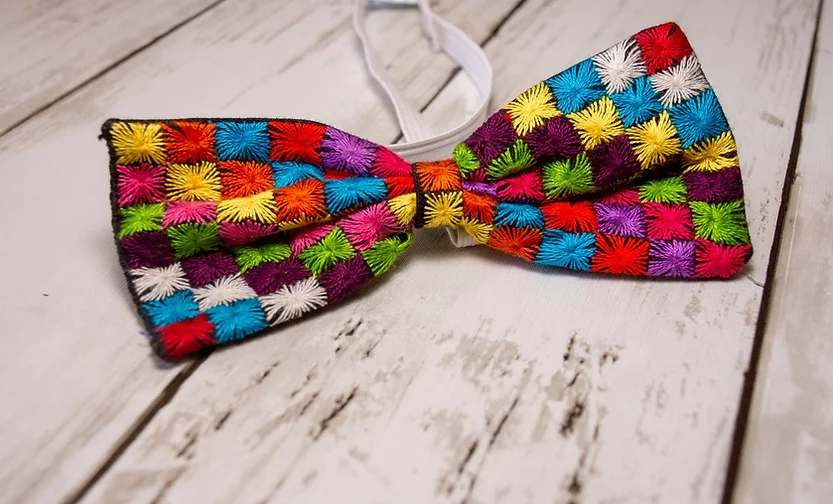
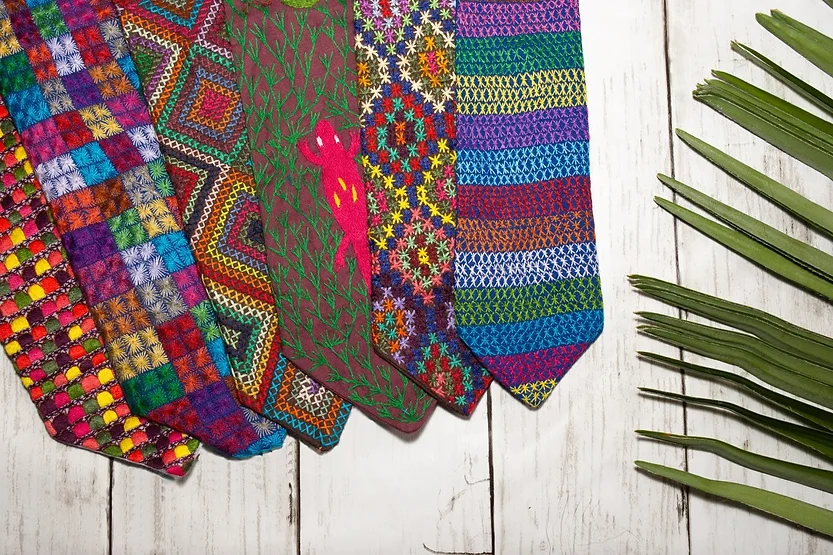
All the items are handmade one-of-a-kind pieces and include some fantastic ideas for Father’s Day gifts, including ties, bow ties, bookmarks and glasses cases, all made using recycled cottons. Each item is 100% unique and makes for a thoughtful gift that will bring a smile to Dad’s face and valuable income to the Cooperative, which needs our support now more than ever.

For more information on Stitch Sainte Luce or to browse their range simply visit :


www.stitchsainteluce.com

2121

Published June 13, 2022

In a world where we’re all trying to be greener and more eco-conscious, you may be surprised that your lunchbox could be contributing a massive amount of carbon to global output. In fact, if you indulge in a daily meal deal you could be having an unintended impact that you never even considered. So, we thought we’d look at the environmental impact of the nation’s favourite Meal Deals and how they match up against one another.

As busy people, one of our biggest challenges is acknowledging the trade-off between convenience and sustainability – and then knowing what we can do about it. Let’s face it, when we’re tired and hungry, how often do we reach for the easiest option? Usually the one with convenient, disposable packaging that needs no preparation to consume. The UK is very familiar with the supermarket Meal Deal; a popular lunchtime choice. A standard Meal Deal usually consists of a sandwich or wrap, a snack and a drink – all for a bargain price. It is no surprise that nearly 7 million meal deals are sold every day in the UK! However, …have you ever wondered about the impact that your quick and simple Meal Deal has had on the environment?

Whilst we acknowledge that there are many sustainable considerations to be had when choosing your lunch (Vegan? Line caught fish? Recycled packaging?) we were keen to keep our calculations as straightforward as possible, with the simple objective to make us stop and consider the impact that our lunch choices have on the environment. Our method for calculating the impact is explained at the end of the blog – but in essence we included the nation’s favourite crisps, drink, the packaging and the main sandwich filling. So which sandwich choice had the biggest C02e emissions? You can see the full list in our infographic at the end of the blog.

No 1 – The Prawn Mayo

Coming in at the top spot with the worst environmental impact, is the 1980s classic prawn mayo sandwich. Believe it or not, this simple sandwich contains an outstanding 19.18kg Co2e per 100g. If you choose this filling as part of your Meal Deal, then the total footprint (including your crisps and drink) is 14.8kg Co2e – that’s the equivalent emissions to having a lightbulb on in your home for a whopping 343.4 hours! If you want to look at it a different way, you will have to drive an average car (producing 280g C02e per mile) fifty-three miles to clock up the same emissions. That means if all 7 million regular Meal Deal customers chose a prawn mayo sandwich, it would be the equivalent of driving a shocking 369 million miles – which is the distance to Jupiter.

No 2 – the classic BLT

The second ‘worst’ sandwich to choose is a firm classic – the BLT. This filling consists of bacon, lettuce and tomato. For this calculation we used the bacon and tomato. The total Co2e of these two ingredients is 9kg – this is equivalent to lighting a standard 100W bulb for 216.4 hours.

No 3 – Ham & Cheese

In third place, the simple ham and cheese sandwich. The total Co2e of the ham and cheese in this sandwich is 8.6kg, nearly half of the prawn mayo emissions. This equates to a lightbulb being on for nearly 200 hours, which is over a whole week

The Meal Deal filling with the least impact?

According to our calculations, the chicken & avocado filling produces the least C02e emissions, with only 2.9kg. You’d still have to have your lightbulb on for 66 hours to clock up the same emissions though, just over a weekend. But that is a far more respectable 2.7 solid days of leaving your lightbulb on, compared to over two weeks (14.3 days) for the prawn mayo sandwich filling. If you, like us, questioned the sustainability of importing avocados, we discovered that they have a surprisingly low carbon footprint compared to dairy or meat produce. We’ve included below some of the most interesting and myth-busting articles we found during our research.

Conclusion

We have had a bit of fun looking at the impact that a humble Meal Deal can have on our precious environment. But despite the simplicity of our study, the exercise has strongly highlighted how, in a world which is driven by convenience, our split-second choices have a real and tangible impact. It’s certainly made us stop and think for a moment longer before reaching for our favourite Meal Deal. And in fact, made us think long and hard about changing our lunchtime habits. For example, choosing a home-made lunch the carbon emissions are lower due to less transport, packaging and refrigeration – and if you can grow some of your own fruit and veg at home.. even better!. So, with that in mind we thought we’d share some practical tips and ideas on how to make morse sustainable decisions when planning your lunch.

Tips for greener lunches

Packaging

Buying your lunch on the go means you can’t use your favourite reusable lunch box, but there are a few things you can look out for when it comes to packaging. The right packaging can have quite a big impact on the carbon footprint of your Meal Deal. For example, choosing a cardboard product over plastic wrapping is a great start. Knowing whether you can recycle something is important. We have a handy guide here that tells you what the different recycling symbols mean on everyday packaging. There are also a lot of brands that are choosing to use 100% recycled materials to produce the packaging which is a great way to be more planet friendly. TetraPack have a great little calculator here which tells you the C02e emissions associated with different types of packaging. Generally reducing your plastic is a great way to lower your carbon footprint. Our non-exec director Louise Boland spoke to us about her brave journey to live plastic free. You can watch the video here.

Leftover food

Not all of us can finish our lunch sometimes, and if we don’t want to save it for later, it is essential to know where to dispose of our leftovers. The UK wastes 6.6 million tonnes of food every year, and 4.5 million tonnes of it is wasted due to either lack of knowledge around proper food disposal, lack of time and lack of understanding of the impact. This is equivalent to 90 Royal Albert Halls full of wasted food. As part of our own initiative to turn our outside decking area into an eco-space, we invested in a Hotbin to compost the food we waste in the office. It’s a great way to make use of all that wasted nutrition. You can find out what we did here Love Food Hate Waste also provide some helpful tips to try and avoid food waste: – Make a shopping list to plan for your shop – Use your freezer more – Use leftover food recipes and make delicious soups and other meal.

We believe that choosing GEUK as your energy provider is a lifestyle choice and not just an energy choice. That’s why we fill our blog and our social feeds with ideas and thoughts on how we can live more sustainable lives. You can view our blog articles here or follow us on Facebook, Instagram and Twitter

How impact was calculated

First, the most popular sandwich or wrap choices were identified and then the main filling for each one was established (where data was available). So we could make easy comparisons, this was combined with the nation’s favourite snack and drink choice – which turned out to be a Walkers packet of crisps and a Coca Cola. This gave a base measurement of 250g Co2e. We combined this with the base estimate for sandwich packaging which was 39.7g Co2e.

The main ingredients of the sandwich, the snack and drink were all combined to give a total C02e (Carbon Dioxide Equivalent) calculation that helped us compare the main variables found in a Meal Deal. Note that bread was not included. To help provide context, we then compared the C02e emissions to switching on a standard lightbulb in your home. (Based on a standard 100W light bulb producing 172.6g for every 4 hours it is on.)

Interesting articles we found during our research:

Are avocados worse for the environment than meat? How Many CO2 Emissions Does the Meat Industry Produce? (Hint: Way More Than You Think) C02e emissions associated with different types of packaging) What appliances in my home have the biggest carbon footprint?


SOURCE : https://www.greenenergyuk.com/blog/news/environmental-impact-of-your-meal-deal

1890

Published June 8, 2022
  • The top eco wedding trends for 2022 have been revealed by wedding finance experts at money.co.uk
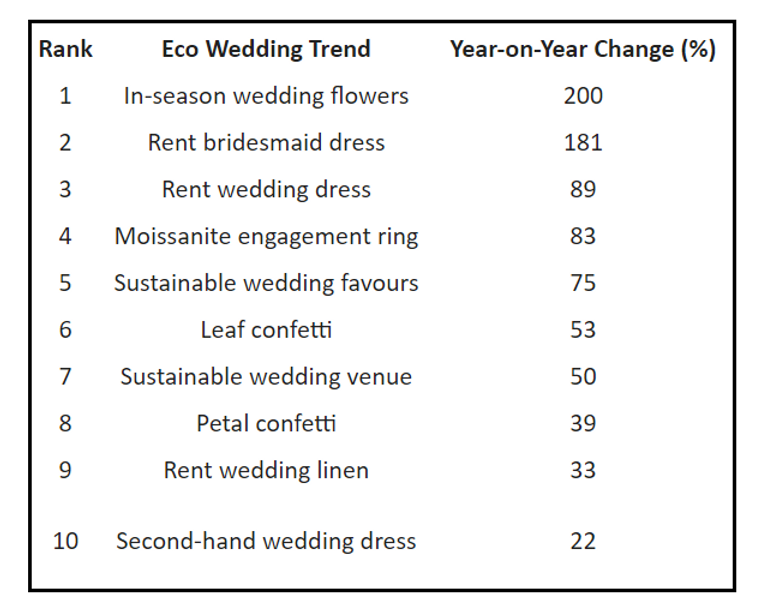
  • The biggest trend is in-season wedding flowers which have seen a 200% rise in Google searches in the last 12 months
  • Renting outfits is also trending, renting bridesmaid dresses has +181% searches and renting a wedding dress is up 89%
  • Other trends in the top 10 list include moissanite engagement rings, sustainable wedding favours, and leaf confetti

A new study by wedding finance experts at money.co.uk has revealed the biggest eco wedding trends for the year ahead, proving that in-season flowers come out on top.

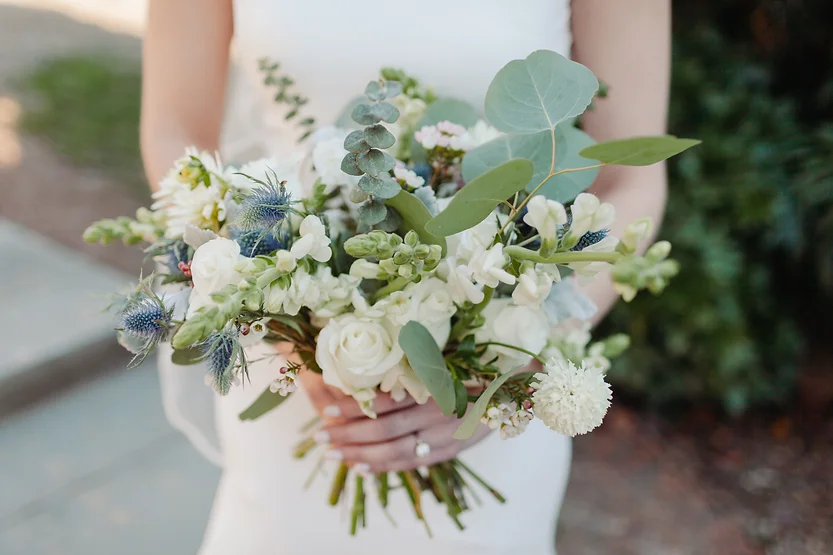
By analysing Google search data from the last two years, the wedding finance experts at money.co.uk compared the year-on-year difference in searches for various eco wedding trends to reveal the top trending. With a 200% rise in searches, it is in-season flowers that come out on top. Many bouquets are created using flowers that brides would prefer such as peonies, lilies, and dahlias; however, this often means importing them from hundreds of miles away when you could use locally sourced and in-season flowers.

The second-biggest eco-trend on the list is renting bridesmaid dresses which have spiked by 181% compared to the following year, and interestingly, renting wedding dresses is the third on the list seeing +89% more searches. The fashion rental scheme is a great way to avoid purchasing and disposing of a dress that is only worn once and instead gives a dress multiple lives.

Moissanite engagement rings are fourth on the list of eco wedding trends in 2022 with a +83% increase. The discussion of moissanite stones has been made ever more popular thanks to a viral TikTok video which explains how much more ethically they are sourced than diamonds and shows how similar the two stones look when side-by-side.

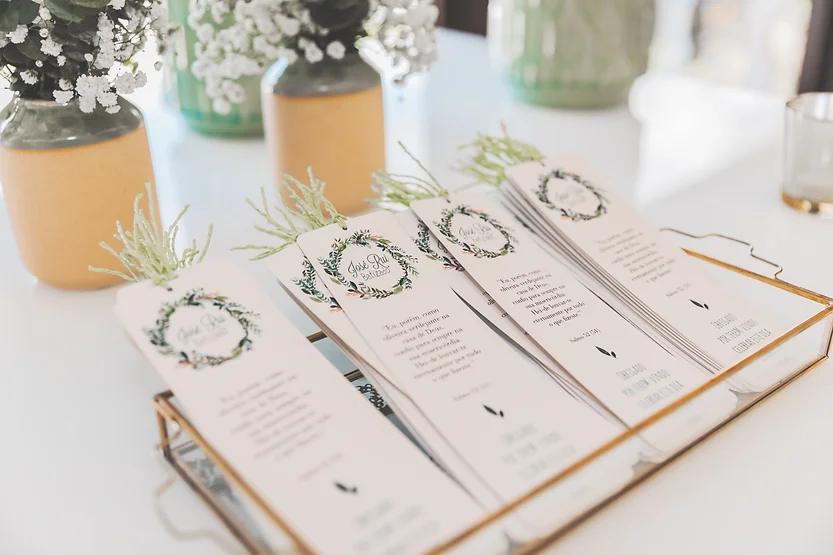
Rounding off the top five is sustainable wedding favours which have gone up by 75% by those trying to make their weddings less wasteful, followed by leaf confetti and sustainable wedding venues. Completing the top 10 list petal confetti, renting wedding linen and second-hand wedding dresses.

Top 10 Eco Wedding Trends

#ecoweddings #weddings #married #marriage #weddingdays #ecoweddingplans #ecoweddingdecor #weddingdecor #ecofriendlywedding

1815

Published June 6, 2022

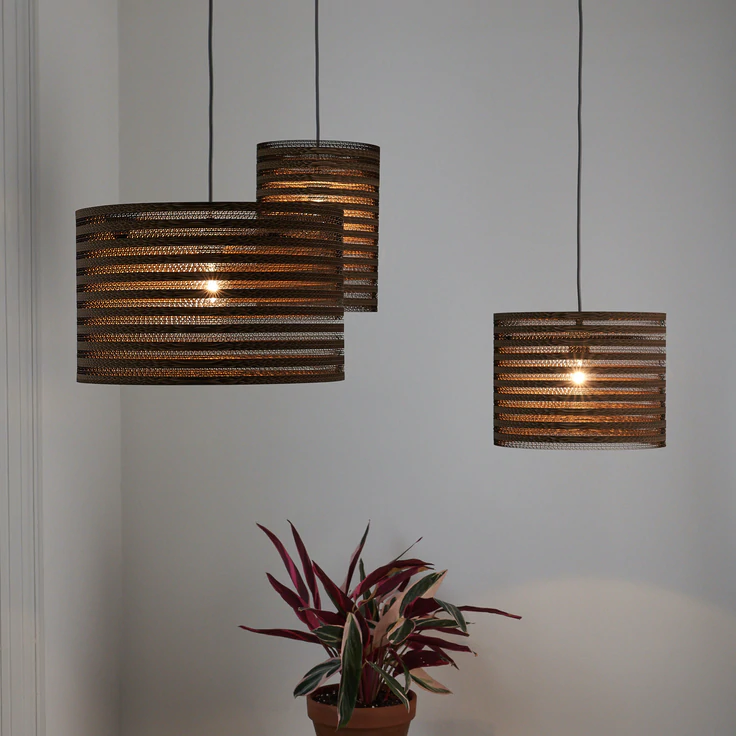
Hi, I’m Tabitha Bargh and I make sustainable cardboard lighting.

As a student my desk was packed with egg boxes, paper and card. I loved creating the unexpected from materials most people might throw away.

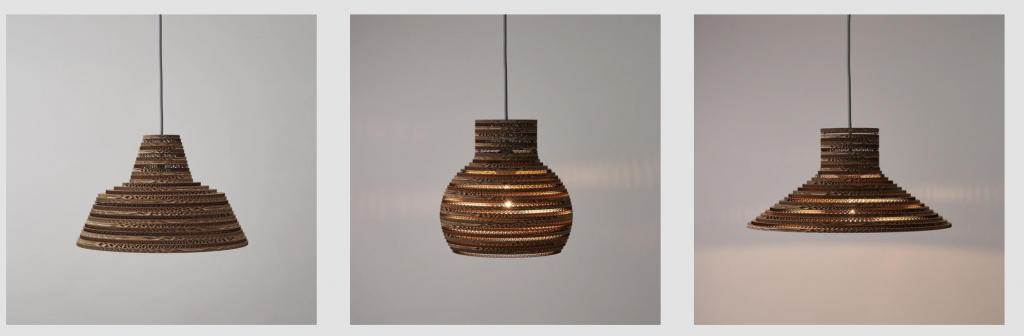
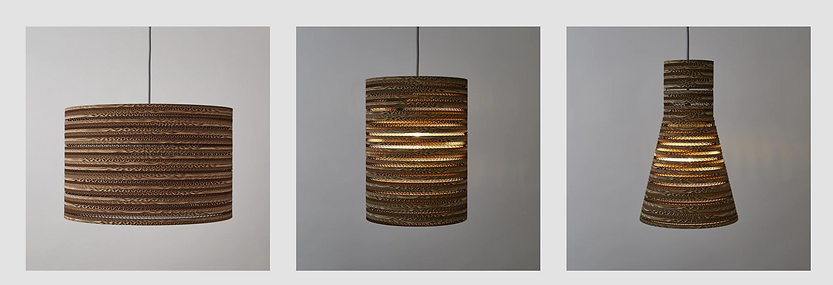
By the time I went to work in a lighting shop after college, I’ll admit my love for cardboard was bordering on the obsessive! I decided to create my own cardboard lighting, layering the material by hand to make a stunning pattern of light and dark.

Since then I’ve created a range of cardboard lampshades with a focus on craftsmanship, hand-making and sustainability. I use non toxic, biodegradable glue, source local, FSC certified materials and recycle whatever I don’t use.

I love to elevate the ordinary into something new and hand-make products that are so precise they might even have been mass produced. To me, this is the design of the future; surprising, covetable and completely sustainable.

https://tabithabargh.co.uk/


#cardboard #cardboardlighting #lighting #homelights #lampshades #homeinterior #homedesign #homerenovations #renovations

1614

Published May 31, 2022

WOVEN is a unique sustainable womenswear collection that uses traditional Indian handloomed fabrics in modern shapes and sophisticated colours.

Designed in London and produced in rural India by collectives supporting local women, WOVEN creates contemporary clothing in a considerate and caring way.

Its beautiful sustainable fabrics, using only natural fibres such as cotton, silk and linen, are created using traditional handloom weaving techniques by Womenweave in Maheshwar and the Karghewale collective working with the new generation of handweavers in Madyha Pradesh, central India.

The collection of skirts, dresses, shirts and robes are sewn near Maheshwar by Kumbaya, a sewing cooperative that supports vulnerable women and pays them fairly.

WOVEN uses only AZO-free dyes,organically produced elastic for waistbands, and corozo buttons that biodegrade naturally. The brand is working towards using 100% natural dyes within the next 18 months.

WOVEN ships its products to consumers using recycled and re-useable packaging and minimum labelling. The collection is shipped from India using Freighbrokers, a courier broker who are 125% carbon positive.

At the Womenweave Collective senior weaver Sunita Arande explains: “We weave to pay for our children’s educations or to feed our families. It’s work we love because we’re all together facing the same challenges and sharing the same successes. We don’t know all the places our weaves go in this world, but we know that people everywhere like them very much.”

London-based textile designer Laura Miles set up WOVEN in 2019 after visiting Maheshwa to help the Womenweave Collective expand their collection of designs and broaden their market throughout the fashion world.

Over several visits to India Laura fell in love with the collection. The idea to create a modern fashion collection in a versatile colour palette from the marvellous sustainable fabrics was born.

An in-demand freelance textile designer for more than 20 years, Laura understands the skill and process involved in hand weaving cloth. She wanted to translate this love of the craft into a collection of modern wearable garments.

That collection is WOVEN.

It is available via www.woven-london.com and at Laura Miles’ shop at 400, Caledonian Road, London N1 1DN

The selection of garments changes regularly as new fabric designs are created by the handloom weavers in India. The price range runs from £125 for a shirt to £160 for a set of pyjamas. The size range runs from a UK 8 -16

Working through her London studio, Laura has travelled the world to work with indigenous weaving groups in countries as varied as Uzbekistan, Indonesia and India. She had felt for many years that highly specialised weaving techniques and handloom fabric deserved to be seen and worn by a wider global market.

In her “day job”, Laura designs woven fabrics and consults for fashion houses, interior brands and textile mills throughout the world. Her clients have included Calvin Klein, Marc Jacobs, Givenchy, Ralph Lauren, Roksanda, Christopher Kane and Erdem.

For further details and more images, contact Laura Miles at WOVEN on laura@wovenstudiolondon.com or 07930534721

#sustainablefashion #sustainable #fashion #woven #womenswear #womensfashion

1821

Published May 27, 2022

Introducing the new clothing brand on a mission to reduce the world’s carbon footprint!

23rd May 2022

A brand-new British-based sustainable clothing brand is about to launch its first ever collection with the aim to reduce the clothing industry’s carbon footprint – starting quite literally from the ground up.

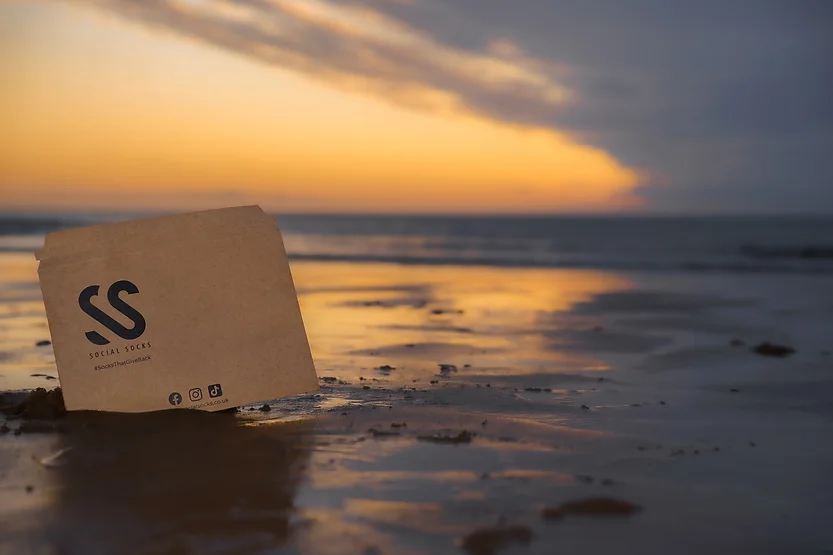
Available from June, Social Socks is launching with the sole aim to change the way we view sustainability, specialising in environmentally-friendly socks that keep your carbon footprint low and your feet on a happy high.

Social Socks

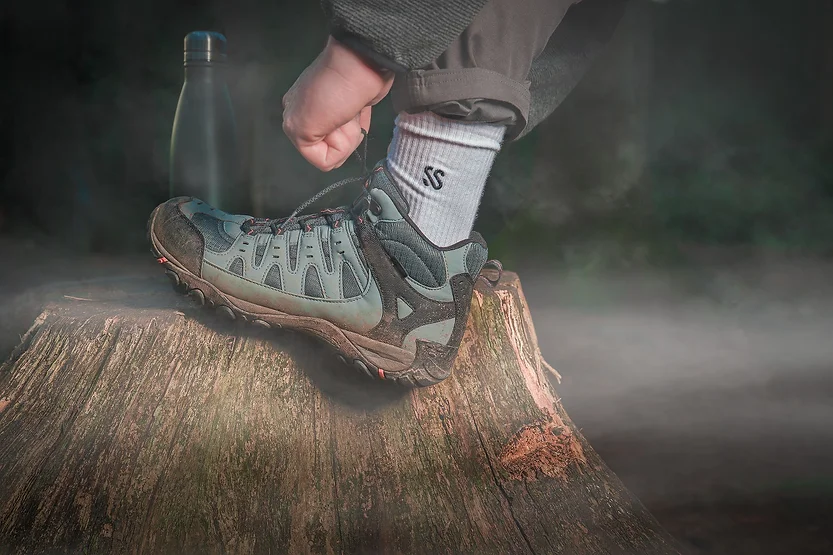
While most socks go light on design, Social Socks will be available in a variety of bold and vibrant colours – including stone grey, forest green, ocean blue, dusty pink, midnight black, ice white and plum purple, with more collections soon to be released. Carefully embroidered with a Social Socks logo and made from combed cotton, the hygge-inducing socks are perfectly primed for adventure, with cushioned soles, increased arch support, and linked toe seams.

Social Socks has made the decision to ensure all socks are fully plastic-free, and packed only in recyclable paper packaging that is FSC certified and bio-degradable. A tree is planted whenever someone makes a purchase, and to take things one step further – they’ve committed to donating 10% of every single purchase to charity.

Social Socks’ founder, Marc Bucci, says that when people think about fossil fuels and climate change, people rarely consider or think about the impact the socks they wear have.

“People should actually be seriously considering the impact their sock purchases have on the environment,” says Marc.

“More and more people are purchasing products that have plastic-free packaging, which is fantastic – but what people don’t realise, is that the majority of cheap, regular sock brands are actually made with plastic, too.”

“Social Socks is stepping up with this ground-breaking collection of eco-friendly socks that are not only high-quality, but also help you reduce your carbon footprint. We use natural and vegan-certified materials to make each pair of socks, and are proud to manufacture all of our products in Britain instead of outsourcing them from around the world. When an order is placed through our website, a tree is planted through our partners at Ecologi. You can even check our virtual forest online, to see how many trees have been planted and where.”

Many socks today are made with artificial fibres, which shed plastic micro-fibres every time they are worn or washed. With over 60% of clothes being made with synthetic textiles that have derived from oil, producing these fibers can also have a profound impact on the climate – not to mention the fact that socks made with plastic could also be loaded with dangerous BPA.

That’s why Social Socks is on a mission to create the perfect sustainable sock for everyone, with an emphasis on bold design, unbeatable comfort and long-lasting quality. Launching initially with its first collection in June, the organic socks come in a variety of colours, with each pair being ethically produced in Britain to further minimise its carbon footprint.

Donating 10% of its total sales to WWF-UK, the company has also committed to packaging its products in recyclable paper letterbox packaging that fits neatly through any letterbox, meaning you’ll never miss a delivery.

Social Socks

“Every day, more and more ‘plastic’ clothing is designed and manufactured to have a short lifespan,” says Marc.

“Fast-fashion is something everyone is starting to become aware of lately, but people rarely consider the impact their socks have when it comes to clothing. The impact isn’t just in the landfill, though, since micro-plastics are also being released into the environment at every step during use.”

“It’s safe to say that we have some pretty huge goals here at Social Socks. Not only do we want to eventually improve sustainability globally, but we hope that through our sales we will eventually raise £1 million for charity. As a father-of-two myself, I want to ensure my two daughters experience the world as we know it today – not how it’s predicted to be if people continue to ignore the impact of global warming and fast-fashion. That’s the real reason I started Social Socks, in the hope that others who agree and relate to this view will actually take a step in the right direction to reduce their global footprint from the ground up, like us.”

Socks can be purchased from £13.95 per pair online, please visit www.socialsocks.co.uk

Follow their journey via Instagram at @social.socks.uk

1722

Published May 23, 2022

Chocolate being a treat for both the environment and people

Fairtrade is a movement that started in the 1960s, to combat the growing power and exploitation of factories and corporations. There are now few people who haven’t heard of this worldwide phenomenon; an achievement that is all down to the impressive marketing of Fairtrade Certification Initiatives1, creating the Fairtrade stamp of approval. Fairtrade aims to improve the social and economic conditions of the third-world producers. Conditions that previously left countless farmers destitute. So how far has the Fairtrade movement advanced farming? And, most importantly, does this create a more environmentally friendly chocolate bar?

With an increasing concern towards environmental sustainability, there is no doubt that

chocolate production has become more environmentally friendly. In fact, over the past 20 years interest in sustainable production has seen exponential growth2. This has been achieved, helped by the environmental targets that Fairtrade sets out for farmers (where usually there would be no consequences to farmers destroying the environment). As well as this, fair trade offers education to farmers to improve their environmental standards – so that they are more sustainable. However, this does not mean that there are no more improvements to be made to environmental production. Fairtrade can increase agrochemical output3 – which goes on to negatively affect both the environment and farmer’s lives.

Yet when Fairtrade’s aim of improving economic conditions concerns female workers, there is a notable disparity. Women are seen to have been repeatedly left behind in areas when Fairtrade tries to advance economic conditions, with more men employed in the production of cocoa and coffee4.

This doesn’t mean that Fairtrade doesn’t have any positive results in improving the economic

standards of the world, as research has shown that income levels (in households of Fairtrade

cocoa production) are higher5. This does wonders in alleviating the issues of poverty, with

Fairtrade giving producers more stable and secure incomes.

As well as this, Fairtrade’s educational aims allow consumers to be aware of the change needed within this unjust international trading system6. This ensures that change is more likely to happen, and consumers are more likely to purchase through fair trade. But with the rise of more anti-slavery NGOs (non-governmental organisations), questions have

been raised over the impact of fairtrade – and the effectiveness of the organisation. FairTrade, whilst improving the economic and living standards of small-scale farmers, does little to improve the lives of the poorest of the world. Instead, alternative companies (that shoppers should also keep a look out for) like Tony’s Chocolonely have taken the responsibility of ending slavery within chocolate manufacturing.

This decision was initially made in response to the Fairtrade certified organisations refusal to

limit slavery themselves7. In fact, Tony’s Chocolonely brand won the 2022 award to stopping

slavery8 – an achievement that highlights the work it has done.

However – the improvements to the industry are undoubtable. Fairtrade has achieved the aims it set out to complete way back in the 1990s, even if there is still room for improvement. They have kickstarted the beginning of sustainability as we know it – and this has to be celebrated. And shoppers are doing good work. Whatever problem exists is down to the companies, and not to the individual. Whilst a more conscious, ethical shopper could help to reduce the hardships of exploitation – putting their money where their mouth is so to speak – this will never eradicate these issues wholly. The only way for this to occur is through the companies taking responsibility, facing the criticism, and improving their working standard

Source:

1 Nicholls, A., Opal, C., Fair Trade: Market-Driven Ethical Consumption,

https://books.google.co.uk/books?id=ZzN63m4tEi4C&lpg=PA128&pg=PA128#v=onepage&q&f=false

2 Cadby, J., Araki, T., Villacis, A., 2021., Breaking the Mould: Craft chocolate makers proritise quality, ethical and direct sourcing, and environmental welfare.,

https://www.sciencedirect.com/science/article/pii/S2666154321000247

3 Sellare, J., Meemken, E-M., Qaim, M., 2020., Fairtrade, Agrochemical Input Use, and Effects on Human Health and the Environment., https://www.sciencedirect.com/science/article/pii/S0921800920303566

4Knößlsdorfer, I., Sellare, J., Qaim, M., Effects of Fairtrade on farm household food security and living standards: Insights from Côte d’Ivoire., Global Food Security., 2021.,

https://www.sciencedirect.com/science/article/pii/S2211912421000456

5 Goff, S., 2016., Fairtrade: global problems and individual responsibilities.,

https://www.tandfonline.com/doi/full/10.1080/13698230.2016.1252993

6 Low., Davenport., 2006., pp. 315-316.

7 Van Burg, E., Blom, E., Verhagen, P., Hillen, M., 2015., Tony’s Chocolonely: How a social enterprise is changing the chocolate industry.,

https://www.researchgate.net/publication/279534601_Tony’s_Chocolonely_How_a_social_enterprise_is_c hanging_the_chocolate_industry

8 https://tonyschocolonely.com/uk/en/our-mission/news/stop-slavery-award-2022?utm_source=Social+Medi a&utm_medium=Social+Media&utm_campaign=Serious_Stop_Slavery_Award&utm_id=Serious_Stop_Sl avery_Award

1718

Published May 21, 2022

Birds Eye sows the seeds of its ‘Peas For Bees’ campaign to highlight the importance of supporting biodiversity for our own futures and the future of our planet.

It’s estimated that the global population will reach almost 10 billion by 2050[1]. In order for the planet to feed this many mouths, sourcing our food sustainably – in a way that doesn’t destroy biological diversity (biodiversity) and instead which actively replenishes it – is pivotal.

One of the main factors enabling us to source food sustainably and therefore eat ‘sustainably’ involves protecting the diversity of our flora, fauna and their ecosystems. Biodiversity is crucial to life on earth because it provides us with clean air, fresh water, good quality soil and crop pollination.

Significant damage to biodiversity would see the entire support system for food, collapse. What’s more, research suggests that agriculture is currently responsible for 60% of global biodiversity loss and 82% of the population believe companies have a moral obligation to protect it[2].

Birds Eye understands the need to act on these statistics and is committed to sustainable agricultural farming through targeting ‘regenerative agriculture’ initiatives, which aim to protect biodiversity and safeguard the planet to enable enough food for future generations. In 2020, the culmination of many years’ work led to Birds Eye’s pea farm management group becoming the first UK farm group, and the first globally in frozen food, to be awarded the highly coveted Sustainable Agriculture Initiative (SAI) Platform’s Farm Sustainability Assessment Gold level.

But the brand now feels it’s time to take their progressive sustainability work further than their fields and take it to the gardens and green spaces of the nation. This year, Birds Eye are campaigning to drive awareness of the importance of biodiversity by celebrating their peas and petits pois ranges. The campaign aims to encourage the nation to support biodiversity by growing wildflowers which in turn provide habitats for bees, butterflies and other pollinators.

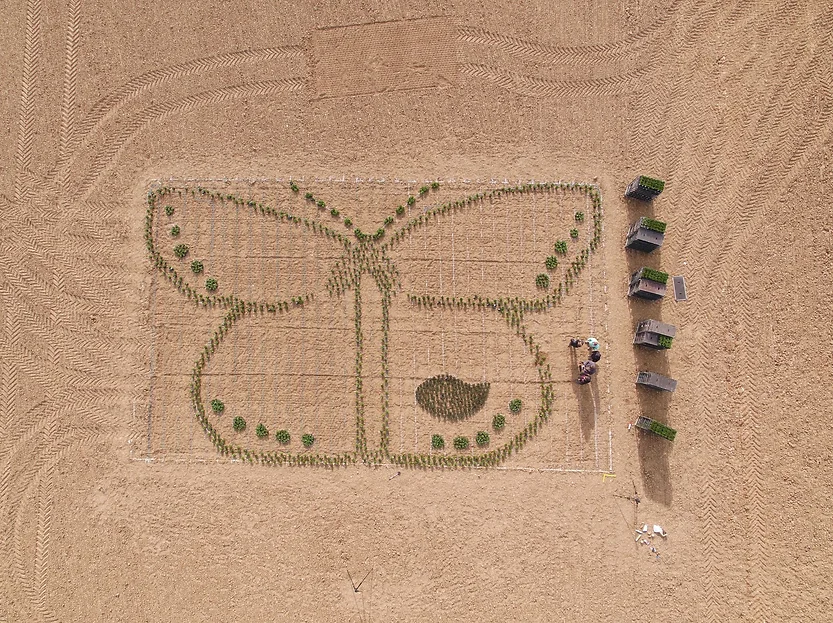
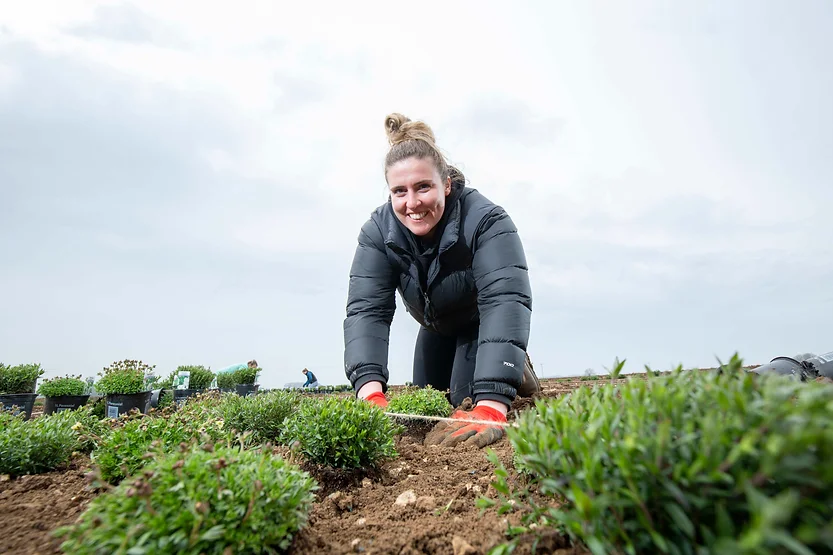
In donating a significant area within one of its active pea fields to promote biodiversity, the brand has planted a huge butterfly at one of its pea farms in North Yorkshire. The vast sculpture will be carefully crafted and made up of raked soil seeded with bright and beautiful British native wildflowers to provide a food source for bees and butterflies to symbolize the beauty, power and importance of soil. The native wildflower species will encourage a wide range of pollinating insects and other wildlife to thrive in the area and the brand wants this to inspire the public to sow their own wildflower seeds.

Biodiversity loss currently stands at an estimated global level of 100 to 1000 times higher than the naturally occurring background extinction rate[3]. Acknowledging the enormity of the work to be done to tackle this issue, Birds Eye is giving shoppers an opportunity to support biodiversity in their own green spaces through an on-pack giveaway competition where 20,000 wildflower seedboxes are up for grabs.

The bloomed butterfly also kicks off the brand’s pledge to plant 75 acres of wildflowers across the UK in the next three years, in celebration of the 75 years that Birds Eye has been growing peas in North Yorkshire.

Birds Eye’s ‘Peas For Bees’ campaign will run across TV, Digital, PR, in-store and on-pack to educate the nation on the importance of biodiversity and the impact of its loss, as well as what we can all be doing to help protect it.

James Hopwood, Head of Agriculture Operations at Birds Eye, says: “We are committed to playing our part in helping solve the biodiversity crisis. In fact, it’s embedded in Birds Eye’s resolution to ‘serve the world with better food’: we are dedicated to providing quality food to our consumers and the impact of its production on the planet is part of this quality standard. 40% of raw materials used by Birds Eye, annually, are now vegetables and potatoes: by constantly creating and improving sustainable and resilient agricultural systems and by continuing to work alongside the farming community who we source these from, we can actually bring back diversity, replenish soil and landscapes and help recover biodiversity loss.”

We also want, and need, to highlight the importance of biodiversity to everyone at home as well. Through the ‘Peas For Bees’ campaign we aim to educate shoppers on the link between biodiversity and the food chain and hope our on-pack competition, which offers shoppers the chance to win wildflower seed boxes when they buy packs of Birds Eye Peas and Petits Pois*, inspires everyone to help pollinators like bees and butterflies and help protect biodiversity”.

Daisy Payne, TV gardener and presenter adds: “The past year has been huge for gardening! More people than ever before are embracing gardening and there’s a whole new generation getting into it. In fact, according to a survey from the Horticultural Trades Association, the first lockdown created three million new gardeners[4]. This is brilliant news for biodiversity because lots of us can contribute to preserving green spaces in our own local communities. It’s great that Birds Eye’s farming practices support biodiversity and even better that they’re encouraging us all to get planting. I’ve included some of my simple tips on what we can do day-to-day to help protect biodiversity and care for the land for future generations.”

Daisy Payne’s Tips to Help Preserve Biodiversity

1. Keep it native: Try to use plants that will encourage a wide range of pollinating insects and other wildlife

2. Go wild: If you have a garden, allow a small area to grow ‘wild’, or leave a patch of fallen leaves. Insects, birds and small mammals will benefit from the cover and native plants.

3. Tree planter: if you don’t have access to a garden or outdoor space, why not look out for a tree down your street, they often have soil at the base so you can grow the Birds Eye wildflower seeds there quite easily

4. Inspire the future: Get children involved in gardening activities – inspiring future generations to love and respect wildlife is the best way to protect nature in the long-term

5. Know the source: When buying foods, take a look at what the manufacturers are doing to support sustainability. You can do this by looking at their website or on the pack.

[1] https://www.un.org/development/desa/en/news/population/world-population-prospects-2019.html [2] https://www.cbd.int/article/cosmetic-shift [3] https://www.zora.uzh.ch/id/eprint/98443/1/Conservation_Biology_2014_early-view.pdf” [4] https://www.insightdiy.co.uk/news/hta-survey-shows-lockdown-created-three-million-new-gardeners/8897.htm

#birdseye #peas #biodiversity #peasforbees #planting #wildflowers #wildmeadows #fields #farming #growyourown