1379

Posted 3 years ago

CARGO REVOLUTION, is a new campaign to champion cargo bikes as a scalable, economical and zero emission solution that can be adopted by businesses, supported by Impact on Urban Health and run by Glimpse with Clean Cities Campaign, MP Smarter Travel and Team London Bridge.

More than half of Londoners consider climate change impacts an important factor when it comes to ordering goods, a new YouGov poll has found.

56% rated climate impacts a 4 or 5 as a consideration for making or receiving deliveries on an importance scale of 1-5. This is in contrast to only 17% who gave them a 1 or 2, deeming them less important.

The proportion is the same for London residents from higher and lower income backgrounds, and is broadly similar across age groups, with 45-54 year olds the most motivated by climate considerations (60% rating climate impacts a 4 or 5 out of 5 in importance).

The finding follows research by the University of Westminster showing that delivery services by cargo bike in London can be 60% faster than those performed by van, as well cutting overall carbon emissions compared to delivery by either diesel or electric van[1].
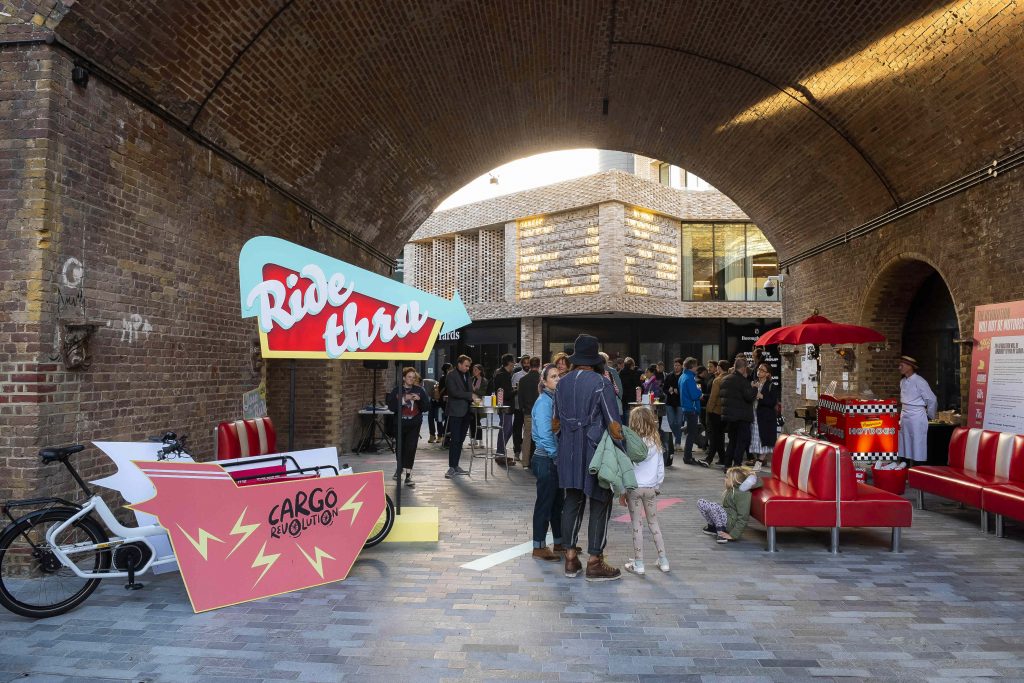
New campaign Cargo Revolution launches to promote cargo bikes as the faster and cleaner transport solution, as polling reveals climate impacts are a public priority when it comes to deliveries.

“Three billion miles were driven by vans in London last year – an increase of twenty per cent in the past decade,” says Oliver Lord, UK Head of Campaigns at the Clean Cities Campaign.

“It’s shocking that the number of diesel vans in the UK has increased by almost a million since 2015, speaking to an urgent need to decarbonise our goods and services and clean up our air. And while it’s essential for vans to go electric, we can’t just replace one for another, because we’ll still end up with noisy, polluted and gridlocked cities.

“It’s time to think outside the delivery box. We’re calling on everyone to join the ‘Cargo Revolution’ by supporting and celebrating businesses that are switching to cargo bikes and helping to rid our cities of dirty diesel for good.”

On Wednesday, London welcomed its first ‘ride-thru’ in Borough Yards, with a cheeky nod to US 1950s drive-thru culture.

Everything for the evening – set, entertainment, food and drink – was brought to the space by cargo bike: demonstrating the power of this transport mode to take over the heavy lifting from vans.

A showcase of local businesses who have already made the switch to cargo bike. Cycle mechanics offering free servicing for the first 5 guests to arrive by bike. The Mayor of London’s Walking and Cycling Commissioner Will Norman was also in attendance.

[1] Research led by Dr Ersilia Verlinghieri, Senior Research Fellow at the Active Travel Academy, University of Westminster https://www.westminster.ac.uk/news/using-cargo-bikes-for-deliveries-cuts-congestion-and-pollution-in-cities-study-finds

https://static1.squarespace.com/static/5d30896202a18c0001b49180/t/61091edc3acfda2f4af7d97f/1627987694676/The+Promise+of+Low-Carbon+Freight.pdf

1722

Posted 3 years ago

Looking back over the past few years can feel a bit overwhelming. Countries around the world have declared a climate emergency, plastic pollution is at an all-time high, we’ve seen the hottest years on record, and more animals have reached extinction.

Ultimately, we’ve seen the impact of our consumerism skyrocket to new levels, even during this recession.

Although this paints quite a bleak picture, it’s not all bad. The past decade has also seen much of the world wake up to climate change – with some governments actually trying to do something about it now. We’ve seen an ever-growing use of renewable energy, climate strikes beyond belief, and the lowest use of coal in some countries since records began.

But there are still a number of major industries that are continuing to damage the environment. Read on to find out which ones are polluting the world the most, and what we can do about it.

The Eco Experts have researched and launched their studies!

Combining insights from various industry reports, the new research focuses on how seven industries – including Energy, Transport, Manufacturing/Construction – are contributing to air, water, and soil pollution, which cause the most harm to humans. The industries are ordered on how much they contribute to global greenhouse gas (GHG) emissions.

Here’s the Top 7 Polluters by Industry with GHG emissions and key insights:

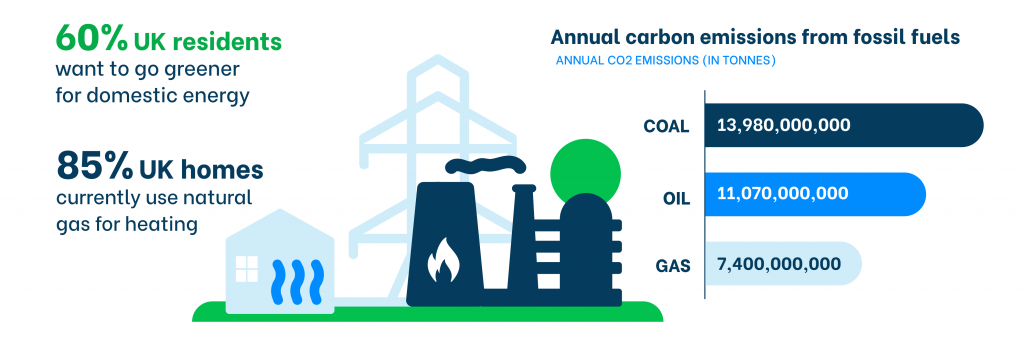
1. Energy (Electricity and Heating): 15.83 billion tonnes of GHG emissions per year.

Key stat: Coal contributes the most CO2e of any fossil fuel at 13,980,000,000 Tonnes a year. Oil: 11,070,000,000 tonnes, Gas: 7,400,000,000 tonnes.  

2. Transport: 8.43 billion tonnes of GHG emissions per year.

Key stat: Road transport contributes to 74.5% of all CO2 emissions in the transport industry.

3. Manufacturing and construction: 6.3 billion tonnes of GHG emissions per year.

Key stat: Responsible for 50% of all natural resource extraction worldwide, accounting for one-sixth of global freshwater consumption, one-quarter of wood consumption, and one-quarter of global waste.

4. Agriculture: 5.79 billion tonnes of GHG emissions per year.

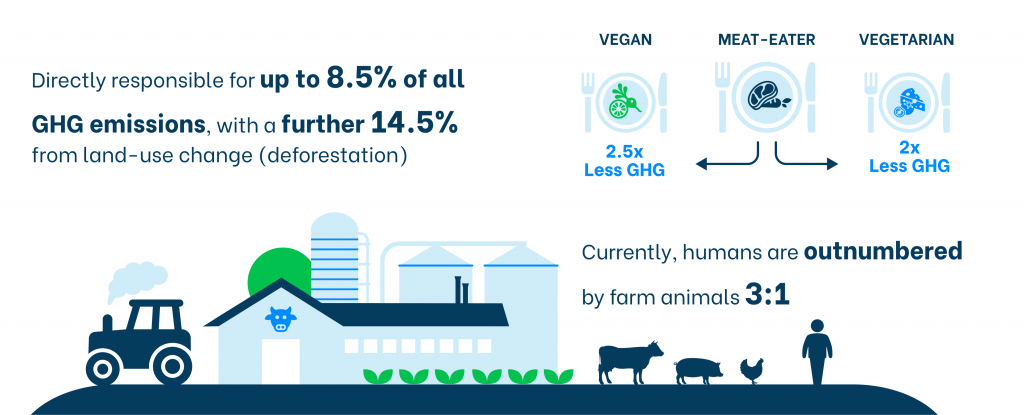
Key stat: Agriculture is directly responsible for up to 8.5% of all greenhouse gas emissions, with a further 14.5% coming from land-use change (mainly deforestation used to clear land for food production).

5. Food retail: 3.1 billion tonnes of GHG emissions per year.

Key stat: Global food miles are generating 3 billion tonnes of carbon dioxide equivalent (CO2e) each year. Food transportation is responsible for 25% of all miles covered by heavy goods traffic in the UK.

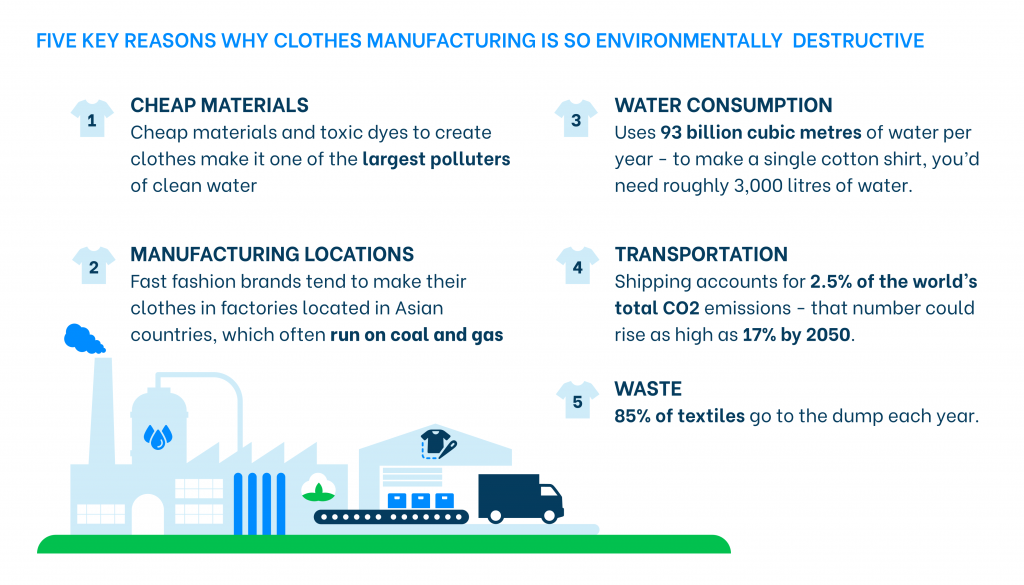
6. Fashion: 2.1 billion tonnes of GHG emissions per year.

Key stat: The fashion industry emits about the same amount of greenhouse gases per year as the entire economies of France, Germany, and the United Kingdom combined.

7. Technology: 1.02 billion tonnes of GHG emissions per year. 

Key stat: There are around 30 billion internet-connected devices in the world. It’s estimated that the IT industry could use 20% of all electricity produced by 2025, emitting up to 5.5% of the world’s carbon emissions.

Read more on this blog – https://www.theecoexperts.co.uk/blog/top-7-most-polluting-industries

1371

Posted 3 years ago

As thousands of athletes took part the 2022 TCS London Marathon, they all saw the genius of two Swindon-based engineers without even knowing it!

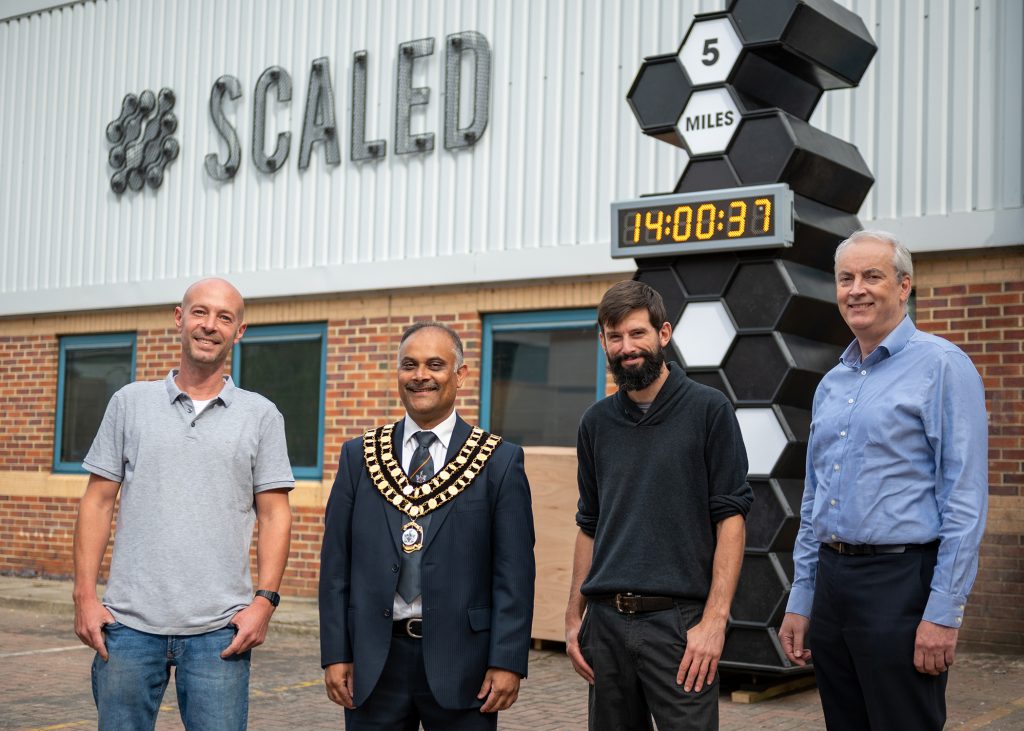
Bob Bradley and David Speight of Scaled Ltd, based in Swindon, spent months creating 51 mile markers for the event from recycled plastic, using their large-scale 3D printing facilities and their own problem-solving skills.

In fact the project, which has been almost three years in the making, having been postponed for a year due to the COVID19 pandemic, led to 14 tonnes of plastic waste being recycled to create new mile markers for the Marathon – and much of that came from waste material from previous London Marathons. 

The six-figure contract has been a game-changer for the engineers, who have recently been joined by experienced business executive Alex Marshall, who is the new CEO. 

David Speight, co-founder of Scaled, explains how the project came about:

“It was back in 2019 that we took a call from an architectural student about designs for a new mile marker for the London Marathon. The student was part of a team that had entered a competition being run by the Stephen Lawrence Charitable Trust (now known as Blueprint For All) to redesign all the marathon mile markers. This followed the success of a previous competition to design mile marker 18. 

“In previous years, the mile markers used scaffolding with signage attached, however, these students wanted to explore a more eye-catching, yet sustainable design. 

“We took the student team’s concept to see if it could be done and it could! Over time, the concept evolved and once our student partners were announced as the winning team, we bid for replacing all of the mile markers with the new design using entirely recycled plastic. 

“The journey has been interesting, we’ve learned so much along the way and we’re so proud of how well the markers have turned out – showcasing our engineering  skills and the design of the winning students, especially Chantal Banker and Davina Lyn.”

Each mile marker was made from a combination of 3D printed parts and recycled boards constructed into a distinctive hexagonal pattern. The student team took inspiration from the way in which runners of all abilities and demographics come together in a spirit of unity and togetherness – like bees gathering around the hive.

The markers were revealed publicly for the first time at the traditional Runners Show on Wednesday September 28 prior to the London Marathon itself. 

Each mile marker stands over 3.5m high with prominent sponsor branding and some of them also featured the faces of globally known marathon runners. Many of the markers had digital clocks on them so runners can keep abreast of their running times. 

The design is modular for easy setup and with pieces that fit together to save space during storage. Over 14 tonnes of recycled plastic has been used in the markers, including plastic from beach cleans, waste from industrial processes and signage from previous athletic events – a high value use of plastic waste. 

CEO of Scaled Alex Marshall said: “This has been a brilliant opportunity for us to take something from concept, through engineering design, to manufacturing the end product. We hope now to work with organisers of other large scale events, festivals, concerts and the like to support them with creating signs and other temporary structures which are far more impactful and, importantly, sustainable. 

“It is reassuring to know that when the mile markers reach the end of their useful life, they can be recycled again; that feels like a win for the environment.”

For more information about Scaled visit https://scal3d.com

Scaled, 3D printing company who have printed the mile markers for the London Marathon. Based in Swindon, Wiltshire, photos taken by Barbara Leatham Photography on September 22nd 2022

1324

Published October 15, 2022

Action Net Zero, the community interest company set up to help people and businesses embrace a greener future, has launched its latest campaign – to reduce our reliance on fossil fuel. 

Across 2022 and 2023, the focus will be on supporting individuals, communities and businesses to take ownership of how they buy and use energy.

Pamela Barbato, founder of Action Net Zero, said: “We all share the responsibility for making changes to live more sustainably. This campaign, over the next year, will highlight the many ways that people can act, helping everyone understand that small incremental changes really do make a difference”.

“For businesses, we want to support them to be at the forefront of change with projects both large and small which align to their business goals; reducing costs, consumption and their carbon footprint whilst increasing energy resilience. We hope this will help the rest of the UK see the South West as a pioneer in reducing its reliance on fossil fuels and increasing its generation of renewable energy; supporting 2030 net zero targets”. 

As part of the campaign activity it will host, in October, a private roundtable event which brings together subject matter experts and influencers to discuss ‘what do businesses in the South West need to know to decarbonise and reduce their reliance on traditional energy sources?’. 

One of those ‘round the table’ will be the West of England’s Metro Mayor Dan Norris who said:  

 “There is a climate and ecological emergency. We desperately need everyone to do their bit to help end our reliance on dirty fossil fuels and make that transition to a zero-carbon economy, so important for the West of England. I welcome this really important campaign to support and guide all of us – companies, communities and individuals – to act now and decarbonise. This will be vital if we are to reach our super-ambitious net-zero-by-2030 targets locally”. 

This event will lead, later in 2022, to a white paper and action framework, based on what was discussed including practical steps can be taken to move towards a net zero future,  mobilised through Action Net Zero’s outreach activity. 

Pamela Barbato, said: “We can take action and we can bring about change, our programmes are evidence of that. We’re already supporting community venues to install EV chargers, we’re running community events to engage people around simple ways to reduce their energy bills and switch to renewable energy and we’re working with our partners to deliver change across the South West.”

Neil Mehta, General Manager, Product Company Clevedon says:

“Our solutions, made in the South West, help reduce the environmental impact of the manufacturing process of semiconductors found in every day electronics. For us it is essential everyone takes responsibility for the current climate crisis and together look for solutions. That equates to governments, business and the individual. This initiative by Action Net Zero is of key strategic importance because it brings all three parts together to work as one to find the right answers and implement them”. 

Maria Connolly, executive board member responsible for sustainability at law firm TLT, says: 

“We’re extremely proud of our 2040 net zero target, because it’s been done in the most rigorous of ways and sets a gold standard for decarbonisation right here in Bristol. It sets us on a clear path to net zero, and we have already achieved some significant milestones, for example launching an electric car leasing scheme for staff to make them more affordable. Collaboration is a key part of achieving net zero, and we are pleased to be a partner of Action Net Zero’s, sharing our experiences and working together on decarbonising as quickly as possible.”

To find out more about the campaign or to find information about how anyone can make positive changes to be more sustainable visit https://www.actionnetzero.org

1366

Posted 3 years ago

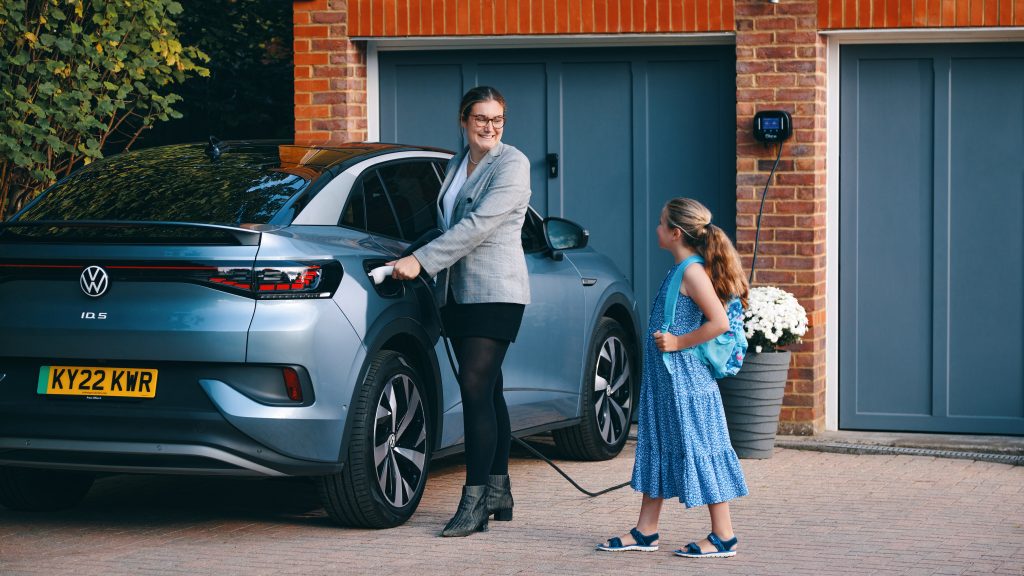
Award-winning smart charging company Ohme is the new official charging partner for the Volkswagen Group brands Volkswagen, Volkswagen Commercial Vehicles, ŠKODA, CUPRA and SEAT.

The agreement will see five Volkswagen Group brands recommend Ohme chargers for all of its electrified vehicle sales with an Ohme Home Pro charger in showrooms for customers to view.

“Our partnership with these Volkswagen Group brands underlines Ohme’s position as one of the UK’s fastest growing smart charging companies,” said David Watson, CEO at Ohme. “The Volkswagen Group has one of the most comprehensive electrified vehicle choices available to British car buyers. We are looking forward to introducing those drivers to the benefits of smart charging with reduced running costs and low CO2 charging.”

“We are delighted to announce that we will be partnering with Ohme as our preferred home wallbox supplier,” says Alistair Shields, Group Commercial Services Director for the Volkswagen Group. “Earlier this year, we conducted a review of leading home wallbox providers and it was clear from customer feedback that smart and intelligent charging, together with carbon optimisation, were among their top expectations for a wallbox provision, which is why we chose Ohme.  Its award-winning Home Pro product and excellent attitude towards customer service represents a clear differentiator in the market.”

Ohme’s Home Pro smart charger can connect with the national grid in real time and automatically adjust its charging for drivers to take advantage of all the times of low price charging with smart off-peak tariffs.

Charging a 77kWh Volkswagen ID.3 from zero to 100 per cent with an Ohme Home Pro on a smart off-peak tariff, such as Octopus Intelligent, could cost just £5.78 compared to more than £26 on the Standard Variable Tariff*.

Ohme also offers drivers the option to charge their car when renewable energy generation on the National Grid is at its highest, further lowering their CO2 impact.

Ohme is the official charger provider for customers on the Motability scheme, the largest UK fleet operator in the UK, and has been named as the Best Electric Charging Point Provider by Business Motoring.

* Octopus Intelligent at 7.5p/kW, SVT at 34p/kW

https://ohme-ev.com/

1660

Published October 15, 2022
  • Nine in ten British people are planning to significantly cut their outgoings over the next year[1]
  • But 64% of people would still happily spend more money on British-made products
  • A further 32% of people would consider spending more if a product was made in Britain
  • A product’s place of origin is more important to shoppers than brand, ability to recycle or its carbon footprint

Now is not the time to be thinking about spending money, with consumer confidence hitting a record low[2] during the summer of ‘22. The outlook is very uncertain with regards to household bills and a looming recession, but despite this gloomy landscape, the majority of Britons would still be happy to spend more money on a British-made product.

In a survey of 118 individuals, Exercise.co.uk found that 64.4% would be happy to spend more money on an item that is Made in Britain, while 32.2% would consider spending more. Only four respondents would not spend more money on a British-made product.

The survey also found that, unsurprisingly, price is the most important factor in purchase decisions, closely followed by the quality and longevity of the product. The third most important factor is the source of the product, which is more important to shoppers than brand, the ease of recycling, or an item’s carbon footprint. This once again highlights the importance of manufacturing to a high standard on home soil, along with the power of extended warranties to instil more confidence and trust.

Following the events of the last three years, including a pandemic, political unrest and economic uncertainty, Exercise.co.uk is one of the many business that’s turning its attention to British manufacturing. With four in 10 shoppers being more concerned about sustainability than before the pandemic[3], locally-sourced products are more important than ever.

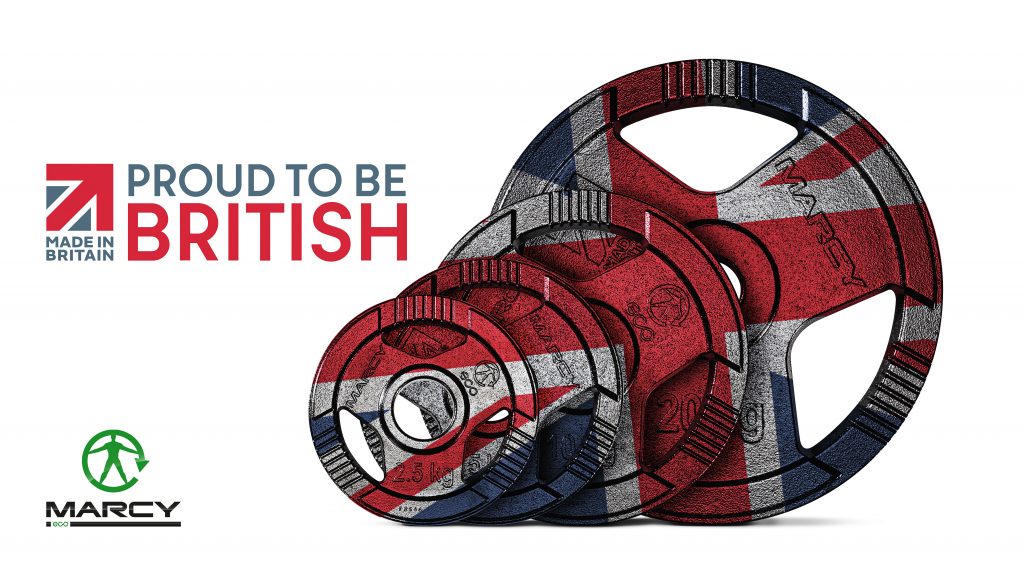
Exercise.co.uk, which is part of Pure-Tec Limited, has chosen to focus on British-made gym equipment – specifically, weight plates. These are designed in Yorkshire and manufactured in the West Midlands, with steel from British manufacturers, as well as 97% recycled materials. The packaging is also made in the UK, which caused an initial delay in the initial product launch, because it was so difficult to source packaging during the height of the pandemic.

David Gilson, MD of Pure-Tec Limited, explained: “Importing from China would have been a quick fix, but we wanted to do the right thing. By designing, manufacturing and delivering a product that is 100% British-made, we were able to support our economy at a time of great uncertainty.”

“Over the last few months, we’ve certainly taken a hit in terms of sales,” adds Amy Kilvington, Project Manager at Exercise.co.uk. “However, it is heartening to see that shoppers see the benefit of British-made products and are willing to invest in them. There are challenging times ahead, but by offering items that are made in Britain and made to last, we can do our bit for the economy, and for our customers, too.”

Exercise.co.uk is a home gym equipment website and part of Pure-Tec Limited. Their distribution center and operations are based in Britannia Road, Goole.

https://www.exercise.co.uk

https://www.exercise.co.uk/brands/made-in-britain


[1] https://www.grantthornton.co.uk/news-centre/households-look-to-cut-back-25-billion-worth-of-non-essential-spending/

[2] https://www.gfk.com/en-gb/press/uk-confidence-remains-at-historic-low-of-41-in-july

[3] https://yougov.co.uk/topics/resources/articles-reports/2021/12/17/consumers-have-sustainability-their-minds-and-are-

1599

Published October 10, 2022

Perennis, inspired by the Perennial Philosophy, aims to educate communities on how to care about the environment and their health, and create a circular food system that starts at home

London, UK — 5 October 2022 — Perennis, a British female-led community engagement project inspired by the Perennial Philosophy, has just announced its two upcoming events, which will take place at the London Central Mosque and Anomalous Space in October 2022, in partnership with Algbra, the home of ethical finance.

Perennis refers to ‘The philosophy of Unity’, advocating for environmental protection with stewardship of man as the centre of environmentalism. In this philosophy, sustainability is a holistic approach in which the wellbeing of the environment is compatible with our own.

Perennis was founded by Sofia Zolghadriha in 2022, and stands for an environmental movement that starts within ourselves. Its mission is to create a circular food system through the strength of our communities. To achieve this mission, the social enterprise wants to educate people on how to care about the environment and their health, and how to live, cook, and eat sustainably, locally, and seasonally.

With local events and workshops throughout the year, Perennis ultimately aims to change the way communities consume food and manage waste, in order to finally close the loop.

“For us, sustainability is simple and can be practised by anyone, anywhere, irrespective of social, economic or ethnic backgrounds,” says Sofia Zolghadriha, founder of Perennis. “We believe that a circular food system starts in our homes.”

The first event will take place on 13th October 2022 at the London Central Mosque, from 6.30pm to 8.30pm, followed by a full day of workshops on 23rd October at Anomalous Space in London, from 10am to 5pm. Both events are free to register and will include free gift bags to inspire sustainable eating. The full day event on 23rd October will include three workshops: “How to do urban composting at home”, “Food preserving techniques” and “How to follow healthy seasonal eating”. A seasonal lunch will also be served.

“We want to teach people the type of knowledge that all our grandmothers knew but has sadly been lost upon our generation,” says Sofia Zolghadriha. “This way, people can take control of their own food cycle and sustainability becomes accessible to all.”

For more information about Perennis, or register your interest for the events, visit www.perennis.org.

1763

Published October 3, 2022

There are so many celebrations in the year when we give fresh flowers. In the UK, the cut-flower industry is worth more than £1bn, and the demand for blooms has only boomed post-pandemic, as we focus more on our homes and gardens. The way we gift flowers is another thing we can easily change to support our planet. A few ideas for you below.

Reduce the miles

Less than 15% of cut stems are grown in the UK at the moment. The remainder are grown overseas, using a range of pesticides, fungicides and refrigerated storage and transport. According to a study published by Lancaster University (https://www.lancaster.ac.uk/sci-tech/about-us/news/archive/2018/feb/say-it-with-british-flowers/), an imported mixed bouquet produces 10 times more CO2 than a British-grown equivalent. Sticking to our seasons and buying from UK growers can easily be done through Flowers from the Farm (https://www.flowersfromthefarm.co.uk/). This is a not-for-profit membership association supporting more than 1,000 independent, artisan flower growers in the UK. It has a great website where you can plug in your postcode and it will give you the names of 50 local flower farms that you can buy from directly.

Buy everlasting bouquets

After a week or so when the flowers fade, they’re put in the bin (unless you compost) and sent to landfill, where they decay and emit methane, a potent greenhouse gas. Opting for longer lasting flowers can help reduce consumption and waste.

Dried flowers and foliage have made a real come-back in interiors. They can last for many months. Many florists include this option in their product offering. One of our favourite new dried foliage producers is Leaflace (Leaflace.co.uk). The individually crafted leaves are striking and sculptural, and last for many months.

Preserved flowers which use natural plant-based glycerine and dyes enable blooms to last a whole year, while keeping their vibrant colours. Shida Preserved Flowers (https://www.shida.florist/) is one florist that has based their collection on this method.

Gift from your garden

There is something wonderful about home-grown gifts. A tied posy of fragrant home-grown herbs can make anyone’s day. For inspiration, Poppy Okotcha (LINK https://www.poppyokotcha.com/) is a fountain of knowledge on everything from the nutritional and medicinal benefits of plants to foraging responsibly. If you don’t have space to grow your own flowers, a beautifully made pot and a packet of seeds could be a thoughtful gift.

Don’t forget, Christmas is also on its way! What a beautiful idea for a sustainable Christmas present.

#leafleave #flowers #sustainable #sustainableflowers #homedecor #ecodecor

1504

Published September 29, 2022

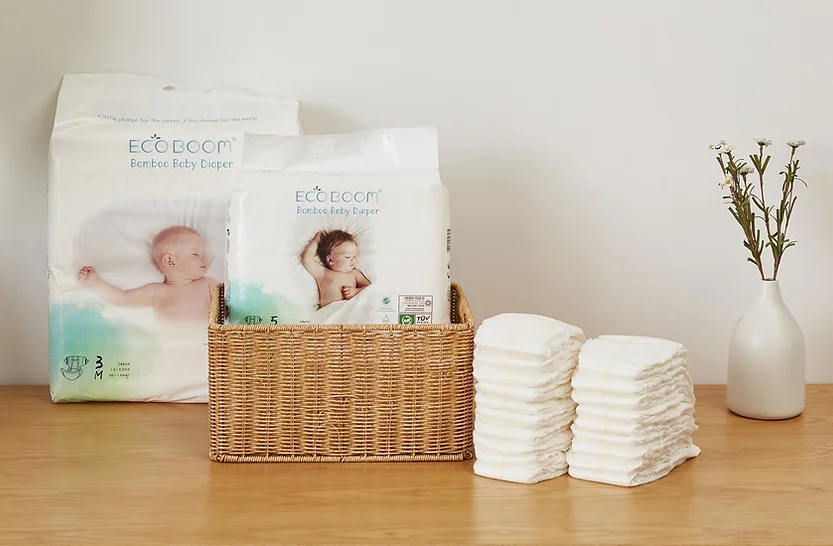
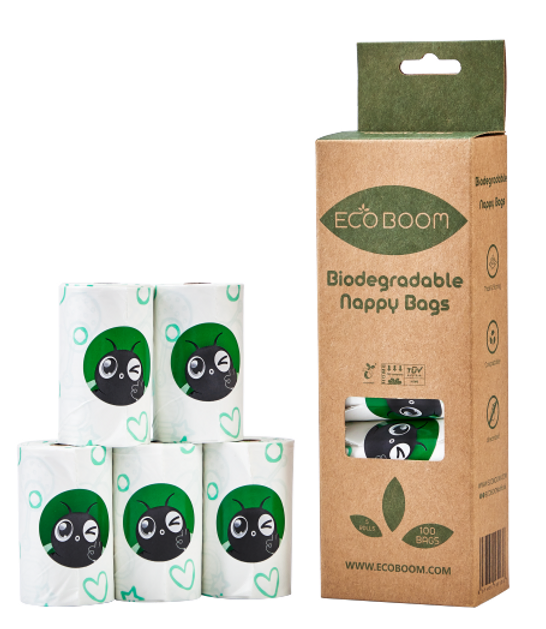
Launching biodegradable, chemical and toxic free, environmental nappies into the UK. Using bamboo as the primary ingredient to produce the softest, most absorbent, and environmental nappies on the market. Supported by certified compostable nappy bags and compostable wipes, the Eco Boom nappy range is set to make direct changes to environmental buying behaviour in parenting.

The most essential component of a parent’s journey is to keep our baby safe, away from danger and away from chemicals. Typically, organic and chemical free choices are a priority. On average, a baby goes through 4,000 disposable nappies before they reach their first birthday. With approximately 625,000 babies born last year in the UK alone, the combined total of disposable nappies used by babies aged one and under is almost 3 billion. That’s for one year only.

Once used and disposed of the nappies end up in landfill where it can take up to 500 years to decompose, all while emitting harmful greenhouse gases such as methane.

Eco Green Living are proud to be combatting against plastic waste and are extremely thrilled to partner with Eco Boom, launching an eco-alternative nappy which is certified biodegradable, giving babies the best natural start in life. This means the nappy will degrade in at least 75 days – a huge contrast in comparison to regular disposable nappies. Julie Cook, manager at Eco Green Living, speaks with excitement regarding the new product, “bamboo is an underrated material to be working with, naturally organic, regrowth is fast and with lots of amazing benefits – unlike cotton. I am so excited for this product range. There is simply no need for the historic standard disposable products to be on shelf, it must stop, and we are launching this range in partnership with Eco Boom to challenge the status quo. “

Made using bamboo, which is 7 times more durable, absorbent, and softer than cotton – these nappies are naturally hypoallergenic and free of any harmful chemicals therefore suitable for the most sensitive of skins. Packed with naturally occurring Aloe oil to keep the babies’ skin soft and delicate, preventing any rash or irritation that would usually occur with regular nappies.

Due to the vast amount of bamboo available and the speed in which it replenishes, it is fantastic for naturally lowering CO2 gases and generating 30% more oxygen than trees. Eco Green Living are always striving to lower their carbon emissions by planting a tree for every purchase made.

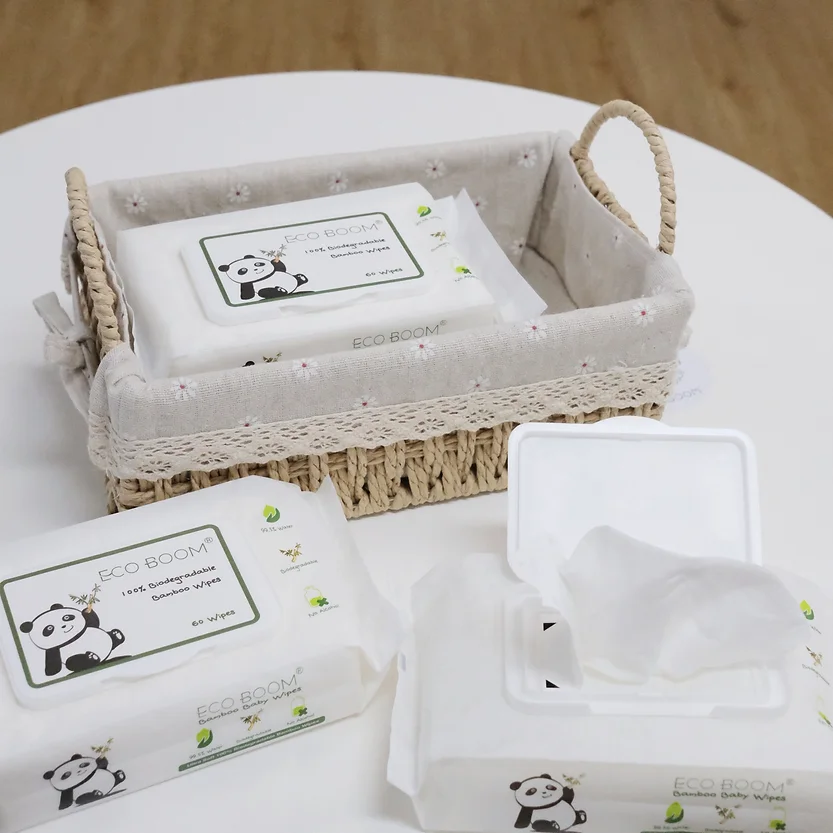
Complementary to this product, Eco Green Living also has compostable nappy bags, bamboo baby wipes, and sanitary pads available for purchase.

1645

Published September 27, 2022

Gift Wild creates eco-friendly cards and gifts that support conservation. Founded by Katy Haynes, who has a MSc in Conservation, to give eco-conscious wildlife lovers a place to shop, celebrate wildlife and support it too. 10% of sales are donated to conservation charities and the brand has sustainability at its heart. All products are made from recycled paper or organic, fairtrade cotton and packaged plastic free.

Struggles with depression, triggered by work related stress, made working in a normal structure a huge challenge for Katy. So she took the gamble to invest in herself, her passions and the people she cares about by launching her own ethical brand.

The ranges feature stunning nature designs by the super talented Penny Smallshire, Katy’s dear friend and fellow self-confessed nature weirdo. And with Katy’s wonderful sister Bex as the order dispatcher, this trio of wildlife-loving women bring love, laughter and positivity to this forward-looking brand.

Greetings cards, notebooks, shopping bags, wash bags and cushion covers are priced from £3.49 to £29.99 and are available at giftwild.co.uk

Shop for Christmas